
Rhinoplasty, commonly known as a “nose job,” is a surgical procedure to reshape the nose. It can be performed for cosmetic enhancement of appearance or for functional improvement of breathing (and often both). If you’re medically informed and considering rhinoplasty, it’s important to understand the types of rhinoplasty, what the surgery involves, and how the recovery process works. This comprehensive guide will walk you through everything patients want to know before a nose job – from cosmetic vs. functional goals, to open vs. closed techniques, to the healing timeline and risks. We’ll also highlight the expertise of Dr. Amit Agarwal of Kayakriti (Lucknow, India), a board-certified plastic surgeon (FRCS) with extensive facial surgery experience, to ensure the information aligns with the highest standards of care.
(Medically appropriate disclaimer: This article provides general information. Every patient is unique – please consult a qualified plastic surgeon for personalized advice.)
Cosmetic vs. Functional Rhinoplasty: Understanding Your Goals
Cosmetic Rhinoplasty is focused on enhancing the nose’s appearance. Patients seeking cosmetic rhinoplasty typically want to change the shape, size, or proportions of the nose for better facial harmony. Common cosmetic requests include removing a dorsal hump (bump on the bridge), refining a bulbous or droopy nasal tip, narrowing wide nostrils or a broad bridge, or straightening a crooked nose for symmetry. The goal is an aesthetically pleasing nose that flatters your unique facial features. For example, a person might seek to reduce a pronounced bump or make a large nose more proportional to the face. Cosmetic rhinoplasty is elective and done to improve appearance and confidence.
Functional Rhinoplasty (Septorhinoplasty) is performed to improve nasal function (breathing) or correct internal problems, often while also addressing appearance. Patients who have difficulty breathing through their nose, frequent congestion, or structural issues (like a deviated septum or previous trauma) may need functional rhinoplasty. This often involves a septoplasty (straightening the nasal septum – the cartilage dividing the nostrils) and other internal corrections. For instance, a deviated septum (which can be due to natural development or injury) can block airflow; straightening it helps air move freely. Enlarged turbinates (inner nasal structures that warm and humidify air) can also impede breathing, and a turbinate reduction may be done to open the airway. Functional rhinoplasty is sometimes medically necessary – for example, after nasal trauma or to relieve chronic breathing issues – and it can have the added benefit of improving the nose’s external shape at the same time. In fact, form and function often go hand-in-hand: correcting internal issues can lead to visible straightening or improvement of the nose’s appearance.
Many patients actually require a combination of both cosmetic and functional rhinoplasty. This means the surgeon will improve breathing and fix internal problems while also reshaping the outside of the nose for a better look. This dual approach is commonly called septorhinoplasty (addressing the septum and external nose together). The good news is that you can achieve both goals in one surgery – gaining a nose that looks better and works better. Always communicate your primary concerns (appearance, function, or both) during the consultation so your surgeon can tailor the plan accordingly.
Open vs. Closed Rhinoplasty: Surgical Techniques Explained
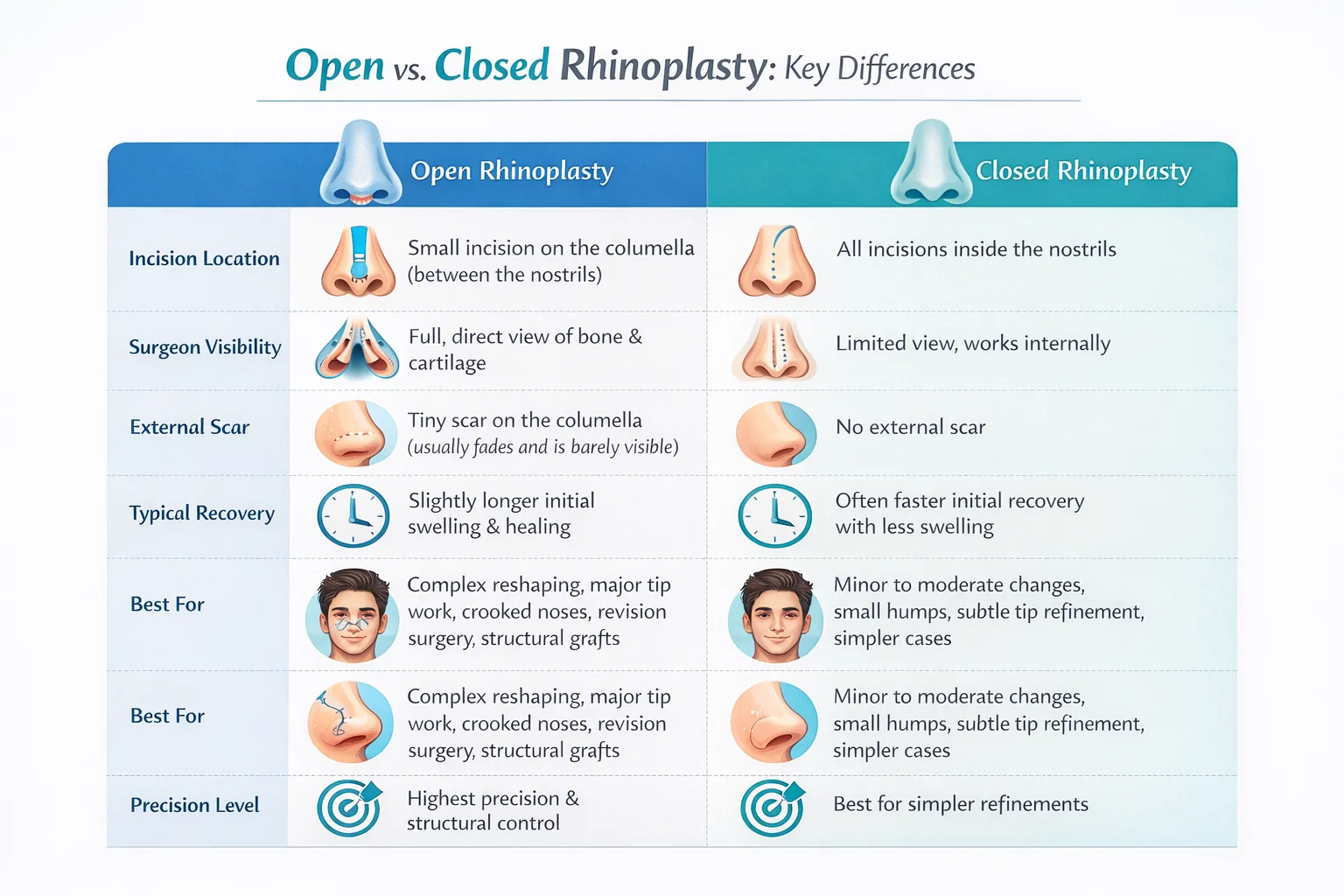
One of the key decisions in nose surgery is whether to use an open or closed rhinoplasty technique. Both approaches aim to achieve the desired changes, but they differ in incision placement and the access they provide. Your surgeon will recommend the method best suited to your needs, but as a patient you should understand the basics:
- Open Rhinoplasty: In an open approach, the surgeon makes a small incision on the columella (the strip of skin between your nostrils) and lifts the nasal skin to directly view the underlying bone and cartilage framework. This full visibility allows for very precise and extensive reshaping. Advantages: The open technique gives the surgeon better access and visibility to all nasal structures, which is especially helpful for complex cases or major changes (such as significant crookedness, major tip modifications, or revision surgeries). It also allows placement of structural grafts and sutures under direct vision, helping ensure the nose is properly supported to prevent long-term collapse. In fact, open rhinoplasty makes it easier to stabilize the nose with grafts or sutures, reducing chances of future weakening. Limitations: The trade-off is a small external scar on the columella, though this scar usually heals to be nearly invisible over time (skilled surgeons place it discreetly). Open rhinoplasty may involve a slightly longer surgery and more initial swelling/bruising because the dissection is more extensive. Patients might also experience temporary numbness of the nasal tip due to the greater exposure. The recovery can be a bit longer for open techniques, but the difference is modest (we’re talking perhaps a few more days of swelling).
- Closed Rhinoplasty: In a closed approach, all incisions are made inside the nostrils, so there is no external scar at all. The nasal skin is not lifted off the structure; the surgeon works through the nostril openings. Advantages: Closed rhinoplasty avoids any visible incision, and because it involves less extensive dissection, it often results in a shorter surgery and initial recovery time. Swelling may resolve slightly faster, and there tends to be less impact on the tip’s blood supply (which can be beneficial for healing). Bruising is generally similar between open vs. closed, but some patients report feeling that they “bounce back” a bit quicker with the closed technique. Limitations: The main drawback is limited visibility and access for the surgeon. The surgeon must perform changes without directly seeing all structures, which can make very delicate or complex adjustments more challenging. Closed rhinoplasty is typically best for more moderate changes – for example, removing a small dorsal hump, minor refining of the tip, or correcting a simple deviation can often be done closed. However, for major reconstructions, significant asymmetry, or very refined tip work, a closed approach might not allow enough precision. Additionally, some surgeons note that certain maneuvers in closed rhinoplasty require more force or can weaken nasal support if not done carefully. Therefore, not every case is suitable for closed technique.
When to choose which? In general, open rhinoplasty is preferred when substantial reshaping is needed – e.g. complex crooked noses, revisions of a prior surgery, big changes to tip shape or structure, or when adding grafts for support. Closed rhinoplasty can be ideal for simpler cases like small humps, minor tip tweaks, or purely internal corrections (like straightening a septum) where extra incisions aren’t necessary. Ultimately, the choice depends on your nose’s specific needs and your surgeon’s expertise. Many experienced surgeons (like Dr. Agarwal) are adept at both and will choose the method that will achieve the best result for you with the least invasiveness. Don’t be too worried about the technique – what matters most is the surgeon’s skill. A well-done open or closed rhinoplasty can both yield excellent outcomes. Your surgeon will explain why a particular approach is recommended in your case.
Infographic suggestion: Consider including a side-by-side Open vs. Closed Rhinoplasty comparison chart showing differences in incision location, visibility, scar, typical recovery, and ideal use cases for each technique.
The Surgical Consultation Process and Pre-Operative Planning
Before undergoing a nose job, you’ll have a detailed consultation with your surgeon. This is a crucial appointment that sets the foundation for a successful rhinoplasty. Here’s what typically happens during the consultation and planning phase:
- Discussion of Goals: You will discuss what you dislike about your nose and what changes you desire. It helps to be as specific as possible – for example, “I want to smooth this bump” or “I’d like a narrower tip” is more useful than simply saying “make it better.” Having clear goals helps the surgeon understand your expectations. Keep in mind, the aim is improvement, not absolute perfection – a good surgeon will ensure your expectations are realistic. Feel free to bring reference photos of noses you find attractive, but understand that your nose has unique anatomy; the goal will be to harmonize it with your face, not copy someone else exactly.
- Medical Evaluation: The surgeon will review your medical history and ask about any breathing issues, past injuries to the nose, allergies, prior surgeries, etc. They will perform a physical examination of both the external nose and inside the nostrils. The internal exam checks for a deviated septum, turbinate enlargement, nasal valve collapse, or other structural issues. This dual evaluation of form and function helps the surgeon plan a rhinoplasty that addresses both appearance and breathing if needed (remember, form and function are intertwined).
- Imaging and Simulation: Many modern clinics use advanced tools like computer imaging or 3D simulations to help you visualize potential changes. For instance, Dr. Agarwal uses computer imaging to show a preview of potential outcomes. The surgeon can morph your profile photo to illustrate possible adjustments – for example, how your face might look if that bump is removed or the tip refined. This is an invaluable communication tool: it ensures you and the surgeon are on the same page regarding the expected result. It also sets realistic expectations – you’ll see a possible outcome, not a “perfect new nose.” (Remember that the simulation is an estimate, not a guarantee, but it helps in planning.) Seeing a preview can be reassuring and allows you to give feedback (e.g., “That looks great, but maybe not too much reduction here,” etc.).
- Surgical Plan & Technique Discussion: Based on the exam and your goals, the surgeon will formulate a surgical plan. They will explain what can realistically be achieved and whether it will involve a closed or open rhinoplasty (and why). If there are functional problems like a deviated septum or sinus issues, the plan might include addressing those (e.g., septoplasty or turbinate reduction) during the same operation. The surgeon should clearly communicate the scope of the surgery – which parts of the nose will be altered, how, and what kind of result you can expect. This is a good time to ask questions about anything you don’t understand. By the end of the consultation, all your questions should be answered and you should feel confident in the approach. A reputable surgeon will also be honest if rhinoplasty cannot achieve what you want; for example, if someone has extremely thick skin, there may be limits to how sharp the tip can become – such candidness is important for trust.
- Review of Before/After Photos: Your surgeon may show you before-and-after photos of patients with similar noses or concerns. This can give you an idea of the surgeon’s aesthetic style and what changes are feasible. Seeing real results can be very informative and also builds confidence that your surgeon has achieved outcomes you admire.
- Pre-Operative Instructions: Once you decide to proceed, you’ll receive instructions to prepare for surgery. Typically, you will need to get some basic pre-op tests (like blood work) done to ensure you’re fit for anesthesia. You’ll be advised to stop smoking well before surgery (at least 2-3 weeks prior) because smoking impairs healing. You’ll also be told to avoid certain medications or supplements that can increase bleeding risk – for example, aspirin, ibuprofen, vitamin E, and some herbal supplements are often restricted for 1-2 weeks before surgery (always tell your surgeon all meds and supplements you take). If you’re on any chronic medications, the plan for those around the time of surgery will be discussed.
- Logistics and Planning: The clinic will help schedule the surgery date and discuss the facility (whether it’s an outpatient surgical center or hospital). Rhinoplasty is typically done under general anesthesia (meaning you’re completely asleep) or deep IV sedation with local anesthesia – your surgeon will explain which is recommended for you and an anesthesiologist will be involved for safety. Make sure you arrange for someone to drive you home after the procedure and stay with you the first night, since you’ll be groggy from anesthesia. If you live far away, plan for lodging nearby. Discuss the estimated time off work or school you’ll need (more on recovery timeline below). Essentially, plan ahead so you can focus on healing afterwards without stress.
Throughout this consultation process, transparency is key. A good surgeon will ensure you understand the benefits and limitations of rhinoplasty in your case. Don’t hesitate to ask questions about the surgeon’s experience, how often they do rhinoplasties, their complication rates, etc. (For example, Dr. Amit Agarwal has performed hundreds of rhinoplasty and facial surgeries and prioritizes patient education and safety.) You should come away from the consult feeling informed, realistic, and comfortable with your surgical plan. If you have any lingering doubts, it’s perfectly fine to seek a second opinion. Rhinoplasty is a significant decision – take the time to fully understand the process before you commit.
Expected Results: Limitations, Realistic Expectations, and Common Misconceptions
One of the most important aspects of a successful rhinoplasty is going in with realistic expectations. Patients who are well-informed about what a nose job can (and cannot) accomplish tend to be the happiest with their results. Let’s address some common misconceptions:
- “I want the perfect nose.” It’s natural to want a great outcome, but perfection is not a realistic goal in any surgery. No human face is perfectly symmetrical, and no nose can be made perfectly straight or identical on both sides. Instead, think in terms of improvement. As one plastic surgeon aptly said, “Rhinoplasty is about improvement, not perfection”. The surgery can produce significant enhancements – for example, making a crooked nose much straighter or refining a bulbous tip – but expecting a 100% flawless nose will set you up for disappointment. A good surgeon will ensure you understand that you can’t get an entirely new nose transplanted onto your face; your result will be based on your existing anatomy, just artfully improved. The goal is to achieve a nose that looks natural and balanced with your other features, not a one-size-fits-all ideal. In fact, the “perfect nose” is different for each person, and beauty is subjective. Focus on the specific changes that will make you happier rather than an unrealistic ideal of perfection.
- “Can I get a nose like [Celebrity]?” You can certainly bring photos to communicate what you find attractive, but copying someone else’s nose exactly is usually not feasible or wise. Your facial structure, skin thickness, and genetics are unique – a nose that looks great on someone else might not suit your face. Surgeons can take inspiration from a shape you like (for example, a subtle upturn or a straight bridge), but they will adapt the plan to your anatomy. The best rhinoplasty results look like your nose, just better. As Dr. Agarwal often emphasizes, the outcome should fit your face so naturally that it seems like you could have been born with it. A skilled surgeon will enhance your nose in harmony with your other features (sometimes even suggesting complementary procedures like a chin augmentation if it would improve overall balance, though that’s optional). In summary: be yourself – the surgery is to refine your nose, not to turn you into someone else.
- “Will my breathing be affected?” If you only undergo cosmetic changes, rhinoplasty should not worsen your breathing when done by an expert. In fact, many patients experience improved breathing after surgery if even minor internal adjustments are made. During cosmetic rhinoplasty, surgeons are careful to preserve or improve the airway – they may correct a slight septal deviation or support the nasal valves if needed to prevent collapse. If you’re having functional rhinoplasty, then improved breathing is a primary goal. It’s not uncommon for patients to report they breathe better than ever once healed, especially if they had a deviated septum fixed or turbinates reduced. Immediately after surgery, due to swelling or internal splints, you will feel congested (like having a stuffy nose) for a short time, but this is temporary. Long-term, rhinoplasty should help, not hurt, your airflow – provided you choose a qualified surgeon who prioritizes function.
- “People will immediately notice I had a nose job.” Not necessarily! Good rhinoplasty results tend to be natural-looking. The goal is often to make your nose blend in better rather than stand out. When done well, your friends and family might comment that you look great or that “something’s different” but not be able to pinpoint exactly what. Dramatic, overdone “nose job” results (like an overly scooped bridge or pinched tip) are usually the mark of an aggressive surgical approach which modern surgeons avoid. Dr. Agarwal, for example, follows a philosophy of “enhancement, not drastic change,” aiming for a balanced look that doesn’t scream “plastic surgery”. Of course, if you had a very prominent hump and now it’s gone, close acquaintances who remember your old nose might notice that specific change. But casual observers should feel your nose looks completely natural for your face. The best compliment is when someone says “I can’t tell you had anything done – you just look better.”
- “My results will be visible right away.” Patience is key in rhinoplasty. While you will see an immediate change in the shape once the cast comes off (about a week post-surgery), that is not the final result. Swelling can make the nose look puffy or the tip overly turned up initially. Bruising (if present) around the eyes typically resolves in 1-2 weeks, but internal swelling of the nasal tissues and subtle swelling of the nose itself can take much longer to fully subside. It’s often said that rhinoplasty’s final results take 6-12 months (or even up to 18 months) to fully materialize, especially for the nasal tip. During that time, swelling can wax and wane – some days your nose might look more refined, other days a bit puffy, which can be frustrating. This is normal. The changes month to month are usually slight, but over time, you’ll notice your nose getting more definition. Think of it as a long journey to the finish line – the majority of swelling is gone by 3-4 months, but that last 10-20% (especially in tip) is slow. Set your expectations that the nose will look “photo-ready” after a few weeks for the public, but you will notice minor swelling fluctuations for many months. Don’t judge the outcome too early – your surgeon will usually schedule follow-ups up to a year to monitor the gradual changes.
- “Rhinoplasty will fix everything I dislike about my nose.” Rhinoplasty can address many issues – bumps, size, shape, asymmetry – but there are limits based on anatomy. For example, if you have thick skin, there is a limit to how sharp or narrow the tip can be made, because the skin may not contract enough to show extreme definition. If you have very thin skin, tiny imperfections might show through more easily, so the surgeon must be very meticulous. Some noses require cartilage grafts to build structure; sometimes your anatomy (e.g., weak cartilage or scar tissue from prior surgery) can constrain what’s achievable. A good surgeon will inform you of any such limitations during planning. It’s also worth noting that while rhinoplasty can significantly improve your facial harmony, it won’t change other features – so it’s important to be happy with the face around the nose too or manage those expectations. In summary, rhinoplasty is a powerful procedure, but it works within the bounds of your natural tissues. Expect a better nose, not a magically perfect one.
By understanding these points, you’ll approach your nose job with a healthy mindset. Misconceptions can lead to dissatisfaction, so it’s great that you’re educating yourself. Remember, the success of rhinoplasty is measured in patient satisfaction and confidence gained, not an arbitrary notion of perfection. If you trust your face to an experienced, board-certified surgeon, follow their guidance, and keep realistic expectations, you’re likely to love your results – a nose that looks improved yet still unmistakably you.
The Rhinoplasty Procedure: What Happens During Surgery
(Briefly, let’s touch on the day of surgery itself, so you know what to expect when you go in for your nose job.)
Rhinoplasty is typically performed under general anesthesia, so you will be fully asleep and feel no pain during the procedure. Some minor cases can be done with heavy sedation and local anesthesia, but general is most common for patient comfort and safety. The surgery usually lasts about 2 to 3 hours, depending on the complexity and whether it’s open or closed (complex cases can take longer).
During the operation, the surgeon will make the planned incisions – either hidden inside the nostrils for a closed approach, or inside plus a small columellar incision for open. Through these openings, the bone and cartilage framework of your nose is meticulously modified. If a hump is being removed, the bony/cartilaginous hump is shaved down. If the tip is being refined, cartilage might be trimmed or stitched together to narrow it. The surgeon may also need to fracture (break) the nasal bones in a controlled manner (called osteotomies) to narrow a wide bridge or correct asymmetry. If augmentation is needed (for example, building up a low bridge or adding support), the surgeon might use cartilage grafts (often from your nasal septum, or ear or rib if more material is needed) to add structure. For functional improvements, they will straighten a deviated septum, remove or reduce any obstructive tissue, and ensure the internal valves (support structures of the nasal airway) are adequate. Throughout, the surgeon must blend art and science – reshaping for beauty while preserving (or improving) breathing.
Modern advancements have given surgeons better tools and techniques for rhinoplasty. For instance, at Kayakriti they utilize ultrasonic rhinoplasty instruments, which use high-frequency vibrations to cut or shape nasal bones more precisely and gently. This technique can reduce collateral trauma to surrounding tissues, meaning less bruising and swelling for the patient and very smooth bone cuts. Not all centers have this technology, but it’s an example of how rhinoplasty is continually evolving to improve outcomes and recovery.
Once the structural work is done, the skin is re-draped over the new framework and incisions are carefully closed with fine sutures. If it was an open approach, a few tiny stitches will be on the columella (these usually come out in 5-7 days). The nose is then stabilized: you will have a firm splint applied on the outside of your nose to maintain the new shape and protect it. This is often a custom-formed thermoplastic or plaster splint that covers the bridge and sometimes tape across the nose. You might also have internal splints or packing: if the septum was corrected, surgeons often place soft silicone splints inside the nostrils to support the septum; these have little tubes to allow breathing. Some use gauze packing, but many modern surgeons avoid full packing for patient comfort. If splints/packing are used, they are usually removed in a couple of days. Expect that right after surgery, your nose will be stuffy (you’ll have to breathe through your mouth initially) and there may be a little bloody oozing – a small gauze dressing is taped under your nostrils to catch any drainage.
After the procedure, you’ll wake up in the recovery area with a nurse monitoring you. You might feel groggy or nauseous from anesthesia (which is normal and fades in a few hours). Your nose will feel congested and swollen, and there could be some soreness or pressure, but severe pain is not typical. In fact, many patients describe it more as discomfort or heavy congestion rather than sharp pain. You will have pain medications prescribed to ensure you stay comfortable, as well as antibiotics (to prevent infection), and maybe medications to reduce swelling. Most rhinoplasties are done outpatient – meaning you go home the same day after a few hours of observation. Make sure you have your ride arranged and a responsible adult with you.
The surgeon will give you specific instructions for the first night and week: how to use cold compresses, how to clean inside your nose with saline, any ointments for incisions, etc. They will also schedule your follow-up visits (often the first one is about 1 week post-op for splint removal). Now, let’s go into detail on the recovery timeline after you head home.
Recovery After a Nose Job: Your Healing Timeline
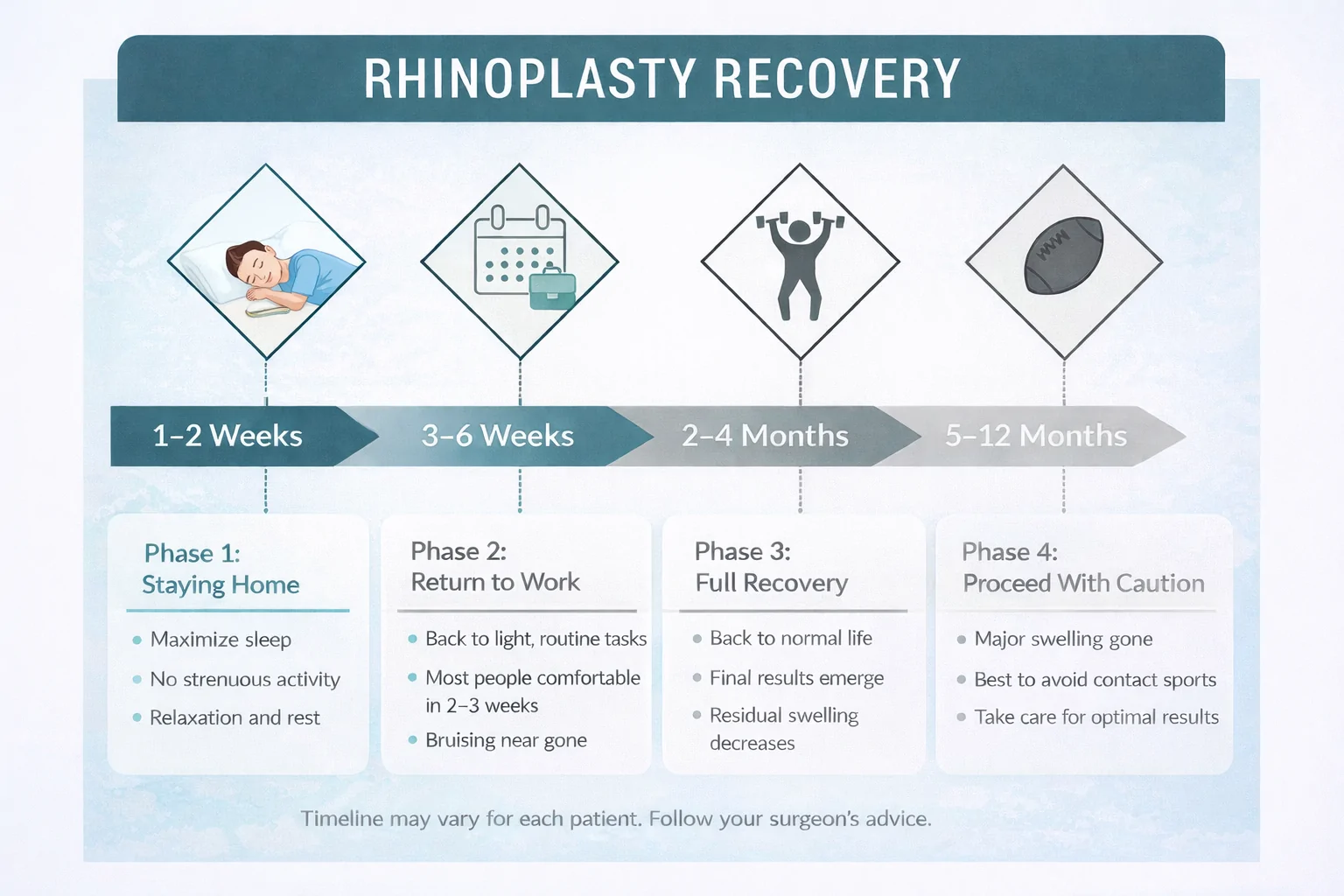 Recovery from rhinoplasty is a journey that unfolds over weeks and months. Below, we outline the typical timeline and what you can expect at each stage. Keep in mind that individual experiences vary, but this is a general guide.
Week 1: The Immediate Post-Op Period – Plan to take it easy and stay home for the first week. You will experience swelling (nose and often around the eyes) and possibly bruising under the eyes. The swelling and any bruising usually peak around day 2-3 after surgery, then begin to improve. During this time, you should rest with your head elevated (sleep propped up with pillows) to help reduce swelling. Apply cold compresses gently around the eyes (not on the nose itself) as instructed, typically for the first 48 hours, to minimize bruising. You’ll be advised not to blow your nose and to avoid getting the splint wet. If you have packing, it is usually removed within 1-2 days after surgery (removal is quick and provides great relief once out). Breathing will gradually get easier each day as swelling goes down. Pain is usually mild to moderate; you’ll have pain medication, but many patients find that after the first 2-3 days they switch to plain Tylenol for discomfort. The feeling is often more of a pressure/congestion than sharp pain. You might have a dry mouth from mouth-breathing – keep hydrated and use a humidifier if needed. By the end of Week 1, you should be feeling much better: the bruising starts to yellow or fade, and you’re adapting to the sensations. You’ll likely be very curious to see your new nose!
Week 1 Follow-Up (Day 7) – Around 7 days after surgery, you’ll visit your surgeon to remove the external splint and any stitches. This is an exciting milestone – you (and your surgeon) get the first true look at your reshaped nose. Don’t be alarmed by the initial appearance: there will still be significant swelling, so the nose might look puffy, the tip may be turned up more than expected, and the bridge might look wider – this is all normal in the early phase. Even with swelling, you’ll likely notice improvements (like a straighter profile or refined tip) but it’s far from the final result. The surgeon may place small adhesive tapes on your nose after removing the splint, to provide gentle support and help swelling resolve. If so, those tapes usually stay on a few more days. After the splint is off, you’ll feel more comfortable going out in public. By the end of week 1 or early week 2, much of the obvious bruising is gone, especially with makeup, so you can be socially presentable.
Most patients can return to desk work or school by ~7-10 days post-op, once the splint is off and major bruises fade. If your job is physically demanding, you’ll need a bit more time off. You still must avoid strenuous activities at this point, but light walking is fine (in fact, it’s good to move around lightly to keep circulation going).
Weeks 2-3: Early Healing Phase – Swelling is rapidly coming down. By the two-week mark, the majority of bruising should be gone and swelling notably reduced, so you won’t look “post-surgery” to others. Your nose will continue to feel stiff and maybe a bit numb at the tip. It’s normal for the tip especially to feel wooden or have less expression in early healing. You might also experience some tingling or numbness in the tip or upper lip; this improves over the next few weeks. Inside your nose, you’ll have to keep doing saline rinses to clear out any crusting. Breathing should be much improved by now compared to week 1, although it can take a few weeks to feel completely normal airflow. Around 2 weeks, many surgeons allow you to resume light exercise (such as brisk walking, light stationary biking) as long as it doesn’t raise your blood pressure too much. Bending over or heavy lifting is still a no-go (it can cause nasal pressure or even a bleed). By 3-4 weeks, you can increase activity as tolerated. Usually by the 4-week (1 month) point, you’re cleared for more vigorous exercise like jogging or aerobics – but no contact sports or any risk of bumping the nose yet. The nasal bones, if they were broken (osteotomies), take about 6 weeks to heal solidly, so you must protect your nose from any trauma during this period. That means avoiding situations where your nose could get hit – no basketball games, no wrestling with kids or pets, and even be careful with pulling clothes over your head. Also, avoid wearing glasses or sunglasses on the bridge of the nose until your surgeon gives the OK (often after 4-6 weeks, or use tape to suspend glasses off the nose).
By the end of Month 1, you will likely be feeling back to normal in day-to-day life, aside from your nose still healing internally. Most swelling in the bridge will have resolved, and the tip swelling will be gradually coming down. People meeting you for the first time won’t have any idea you had surgery; even friends may just notice you look great, without guessing you had your nose done (unless you tell them).
Months 2-6: Ongoing Refinement – Between 2 to 3 months after surgery, your nose starts looking really good – many patients at this stage feel camera-ready and are delighted with their results, as the nose appears much more refined than week 1 and continues to soften in contour. If there was any lingering slight discoloration, it’s gone. At 3 months, roughly 80% (give or take) of the swelling is gone. The tip might still feel firm if you press it, but it’s gradually getting more supple. You’ll likely have a follow-up around the 3-month mark for the surgeon to check your progress and perhaps take “after” photos. Around this time or a bit earlier (6-8 weeks post-op), you’re usually allowed to resume full activities including contact sports with caution – but confirm with your surgeon, as each case differs.
One thing to note: swelling can fluctuate day to day or with activity. For example, some patients notice their nose is a bit more swollen in the morning (fluid can accumulate overnight) and then it sharpens as the day goes on. Or a very intense workout might cause a tad of temporary swelling. This is normal in the first few months. By 6 months, your nose should be very close to the final shape, and usually at this point any minor asymmetries or issues would be assessed. The vast majority of healing is complete by 6 months.
1 Year and Beyond: Final Result – The 1-year mark is typically considered the point of the “final result” in rhinoplasty. All lingering swelling (especially in the tip) should have resolved by now, or be very close to it. Any tiny changes that remain after 1 year will be subtle and usually only noticeable to you or the surgeon. Scars (for open rhinoplasty) are usually faded to the point of being imperceptible by one year. Your nose at 1 year is essentially how it will look going forward. For some patients with thicker skin, the final refinement can take up to 18 months, but by a year you’ll have a very good idea. Surgeons often schedule a 1-year follow-up to take final photos and ensure everything turned out as expected. It’s also the time when, if there are any concerns or if something healed sub-optimally, the discussion of a possible revision might come up – but thankfully, in the hands of an expert, major issues at 1 year are uncommon.
During the entire recovery process, it’s crucial to follow your surgeon’s instructions. That includes things like taping the nose if advised (some surgeons have patients tape the nose at night for several weeks to reduce swelling), performing gentle nasal massages or exercises if recommended, and avoiding sunburn on your nose (use sunscreen and hats, as the skin can be a bit sensitive and you want to protect any incisions from darkening). If you experience anything concerning – like unusual swelling, pain, fever, or anything that doesn’t feel right – you should contact your surgeon. At Kayakriti, for example, they provide 24/7 support during recovery so patients can reach out with any questions or worries, no matter how small.
The emotional aspect: Don’t be surprised if your emotions fluctuate along with the healing. It’s common to feel an initial high when the cast comes off, then maybe a bit of disappointment a few days later when swelling seems worse, then happiness again as it improves, and so on. The term “post-rhinoplasty blues” is sometimes used for the temporary funk some patients feel when the process takes longer than expected or swelling obscures results. Just know that this is temporary and part of the journey. Patience truly pays off with rhinoplasty.
Infographic suggestion: A healing timeline graphic could be helpful here – showing a timeline of recovery: e.g., Week 1: swelling/bruising peak, splint on; Week 2: splint off, back to work; Week 4: exercise resumes; 3-6 months: most swelling gone; 12 months: final result. This visual can reassure patients of what to expect at each stage.
Risks, Safety, and Revision Rates: What You Should Know
Rhinoplasty is a safe procedure when performed by a qualified, experienced surgeon in an appropriate medical setting. However, like any surgery, it carries some risks and potential complications. Being informed about these risks is part of being a good candidate (and it’s a sign of a good surgeon to discuss them openly). Here are the key things to know:
- General Surgical Risks: These include things like adverse reactions to anesthesia, bleeding, or infection. Serious complications are rare in rhinoplasty, but they are possible. You’ll be screened pre-operatively to minimize anesthesia risks, and given prophylactic antibiotics to prevent infection. Following post-op care instructions (like not smoking and keeping incisions clean) further reduces risk. Bleeding is usually minor; occasional nosebleeds in the first days are common, but significant bleeding (requiring intervention) is uncommon. If you were to have heavy bleeding, your surgeon can pack the nose to stop it. Hematoma (a collection of blood under the skin) can occur but is rare.
- Breathing Difficulties: Initially after surgery, swelling can make breathing hard (as discussed). The concern is whether surgery could cause long-term breathing issues. In the hands of a skilled surgeon, this is unlikely because they take measures to support the nose internally. However, if too much cartilage is removed or if scar tissue contracts excessively, a complication called valve collapse or adhesions could affect airflow. This underscores why choosing an experienced surgeon is critical – they know how to preserve structural support. Some patients might notice a slight whistle or noise when breathing in the early weeks (due to swelling or crusts) but this typically resolves. Septal perforation (a hole in the septum) is a rare complication that can occur if the septum is damaged; it can sometimes cause crusting or whistle sounds when breathing. Its risk is very low, especially if septoplasty is done carefully – most modern techniques avoid this, but it’s something mentioned in consent forms.
- Cosmetic Dissatisfaction: Despite best efforts, there is a chance you may not be 100% satisfied with the aesthetic outcome. Perhaps the change is too subtle, or maybe you desired a slightly different refinement. This is subjective; hence the importance of good communication during planning. Sometimes what the surgeon considers an optimal result might differ from the patient’s ideal. Open dialogue and imaging beforehand mitigate this risk a lot. Nonetheless, minor asymmetries or irregularities can occur. For example, a tiny bone chip might cause a slight bump, or scar tissue might make one side of the tip a bit fuller than the other. Often these are subtle and not noticeable to others, but a perfectionist patient might notice. This is where expectations (improvement, not perfection) are important again.
- Need for Revision Surgery: Rhinoplasty has one of the higher revision rates in cosmetic surgery, simply because the nose is complex and healing can be unpredictable. Even with a skilled surgeon, some patients (especially those with very challenging anatomy or very specific goals) may end up desiring a second procedure. Studies have shown revision rates in rhinoplasty of about 5% to 15%[41]. That means up to 1 in 10 patients might undergo a revision at some point, often for minor tweaks. Common reasons for revision include: a small residual bump, persistent asymmetry, a scar contracture that caused slight deformity, or ongoing breathing issues. The good news is that the majority (85-95%) of patients are satisfied after one surgery. Choosing a reputable, board-certified surgeon known for rhinoplasty reduces the chance of needing a revision. For instance, at Kayakriti, meticulous planning and technique have resulted in extremely low revision rates among their rhinoplasty patients. Dr. Agarwal typically advises waiting at least 1 year before considering any revision, as the nose can continue to change and often what worries a patient at 6 months has resolved by 12 months. If a revision is needed, it’s often smaller in scope than the first operation, but it can be more technically challenging due to scar tissue. Always approach revision with the same careful consideration – sometimes a touch-up can be done under local anesthesia if it’s very minor, but other times a full revision (open approach) is needed.
- Scarring: In closed rhinoplasty, there are no external scars. In open rhinoplasty, the small columella scar is usually very well-hidden. It typically heals as a thin line that’s hard to see unless you’re looking under the nose closely. Hypertrophic (thick) scars or keloids are extremely uncommon in this area because the columella skin is thin. Internal scars inside the nose generally aren’t an issue, though rarely excessive internal scarring could affect breathing (again, quite rare). Proper surgical technique and sometimes postoperative measures (like steroid injections if a scar seems thick) can manage these concerns. Overall, scarring is minimal to none with rhinoplasty when done properly.
- Changes in sensation: You may have some numbness or reduced sensitivity on the nose, especially the tip, for a while after surgery. This occurs because small nerves are cut during the lifting of skin (in open rhinoplasty) or during other maneuvers. Typically, sensation returns gradually over a few months. Rarely, some numbness might persist long-term, but it’s usually mild and not bothersome. Conversely, some patients get occasional tingling or odd sensations as nerves recover – this is a sign of healing.
- Other rare issues: Very rare risks include things like chronic pain (unusual for rhinoplasty), or dissatisfaction severe enough to cause emotional distress. In extremely rare instances, complications such as vision changes or serious infection can occur (there are published cases, but these are outliers usually tied to severe infection or unnoticed injury to certain areas – again, exceedingly rare and practically unheard of in routine practice). These are often listed for completeness, but not something to lose sleep over with an experienced surgeon.
To maximize safety, ensure your surgeon is well-qualified (e.g., plastic surgeon or facial plastic surgeon with board certification) and that the surgery is done in an accredited facility. Follow all pre- and post-op instructions. The anesthesiologist should also be board-certified. When these boxes are checked, rhinoplasty is very safe and complications are uncommon.
Always keep in mind: No question or concern is too small to ask your surgeon about. If something doesn’t feel right during recovery, reach out. Surgeons would rather hear from you and reassure you (or see you to double-check) than have you worry in silence. It’s your nose and your health – you have every right to be proactive in your care.
The Cost of Rhinoplasty in India (Especially Lucknow)
Cost is an important practical consideration when planning for surgery. Rhinoplasty costs in India can vary widely depending on the city, the surgeon’s expertise, the complexity of the case, and the facility where it’s done. In major metro areas or with very renowned surgeons, the cost might be on the higher end; smaller cities or less experienced surgeons may charge less – but one should be careful not to choose based on price alone, since experience and safety are paramount.
As a general ballpark, in India rhinoplasty can range roughly from ₹70,000 to ₹2,00,000 INR in most cases. Simple cases might be at the lower end, whereas very complex or revision cases (which take more operative time and skill) or high-end clinics can be toward the upper end.
In Lucknow (Uttar Pradesh) specifically – which is where Kayakriti clinic is located – the cost tends to be quite reasonable compared to metros like Mumbai or Delhi, while still offering world-class expertise. At Kayakriti, rhinoplasty typically ranges from around ₹80,000 up to ₹1.5 lakh (₹150,000) for most cases. The exact quote depends on the complexity of your surgery, whether it’s a primary rhinoplasty or a revision, and whether additional procedures like septoplasty are involved. The type of anesthesia (local sedation vs general) and hospital charges can also factor in, though most rhinoplasties are done under general anesthesia for comfort.
Importantly, when comparing costs, find out what is included in the price. Reputable centers will give you a transparent breakdown. For example, the quote at Kayakriti includes the surgeon’s fee, anesthesia fee, operating facility charges, standard medications, and routine follow-up visits. There should not be hidden costs. Always clarify if the OT (operation theater) charges and anesthesia are separate or included, as well as any post-op kit (sometimes clinics provide things like nasal sprays, tapes, etc., as part of the package).
Some clinics offer financing options or payment plans, which can be very helpful. At Kayakriti, they mention flexible EMI payment plans and even seasonal discounts that can make the procedure more affordable. It’s worth asking about 0% EMI or any tie-ups with medical finance companies if you prefer to pay in installments.
One common question is “Does insurance cover rhinoplasty?” In India, insurance generally does not cover purely cosmetic rhinoplasty. However, if there is a documented functional issue (like a deviated septum causing breathing problems or reconstruction after an accident), some portion (like the septoplasty or reconstructive part) might be covered. You would need an ENT evaluation and evidence of medical necessity for insurance. Many patients simply treat rhinoplasty as an out-of-pocket expense since it’s often cosmetic. Always check with your insurance provider on their policy if you think you have a case for coverage.
While cost is undoubtedly a factor, remember the old saying: “Don’t choose your surgeon based on price alone.” This is your face – a revision to fix a botched job can end up costing much more than getting it done right the first time. So, prioritize the surgeon’s qualifications and your comfort level with them. In places like Lucknow, you fortunately can get top-notch expertise at a more affordable cost than maybe in some metro cities. Dr. Amit Agarwal, for instance, is American board-certified and FRCS-trained yet offers his services in Lucknow at accessible rates – providing high value for patients in that region. The key is to ensure quality and safety, and within the range of quality providers, you can then compare costs.
If you’re from out of town or abroad considering Lucknow for surgery (medical tourism), factor in travel and accommodation costs. Kayakriti often assists out-of-town patients with logistics and even suggests local sightseeing once you’re recovering, since Lucknow is a historic city. They recommend patients from afar stay at least 7-8 days post-op (until initial follow-up and splint removal) before traveling back. These are extra considerations when planning your budget and schedule.
In summary, expect to invest somewhere in the ₹80k–1.5L range for a quality rhinoplasty in Lucknow, and slightly higher in metro cities. Make sure you understand what’s included, and don’t be shy about discussing payment plans or any financial concerns with the clinic – many are willing to help make it feasible because they want you to get the care you need.
Choosing the Right Surgeon: The Expertise of Dr. Amit Agarwal
Perhaps the most important decision you’ll make in this journey (aside from deciding to get a rhinoplasty in the first place) is selecting your surgeon. Rhinoplasty is widely regarded as one of the most complex cosmetic surgeries, requiring both technical finesse and an artistic eye. Even a millimeter change can affect the appearance or breathing function. Therefore, you want someone who is highly qualified and experienced in nasal surgery.
Dr. Amit Agarwal is a prominent example of the caliber of surgeon you should look for. He is the founder and lead plastic surgeon at Kayakriti Clinic in Lucknow, and his credentials exemplify experience, expertise, authoritativeness, and trustworthiness (EEAT) in the field:
- Board-Certified Plastic Surgeon: Dr. Agarwal is American Board Certified in plastic surgery. This means he has met rigorous standards and examinations by the American Board, which is a hallmark of quality training. He also holds the prestigious FRCS (Fellow of the Royal College of Surgeons, Edinburgh, UK) title, indicating international qualifications.
- Extensive Experience: He has over 15 years of surgical experience, including hundreds of rhinoplasty and facial surgery cases. Rhinoplasty is a large part of his practice, and he has handled everything from straightforward cosmetic cases to complex reconstructions (such as trauma cases or revision surgeries). This volume and variety of experience means he has encountered many different nose types and scenarios – a big plus for anticipating and handling any challenges.
- Leadership and Academic Roles: Dr. Agarwal is not just a private clinic surgeon; he is the Chief Plastic Surgeon heading the Department of Plastic, Microvascular, and Craniofacial Surgery at Vivekananda Polyclinic & Institute of Medical Sciences in Lucknow. Holding such a position at a reputable institution speaks to his authority and trust in the medical community. It also means he is up-to-date with the latest surgical techniques and involved in training or mentoring others.
- Comprehensive Qualifications: His list of degrees and memberships is extensive – e.g., MS, DNB in General Surgery; MCh and DNB in Plastic Surgery; MNAMS; FACS; FICS; FRCS (Edin). He’s affiliated with international and national plastic surgery societies. This demonstrates a commitment to ongoing education and adherence to global standards of care.
- Artistic Philosophy: Beyond paper qualifications, Dr. Agarwal emphasizes a natural artistic approach. He believes in enhancing natural beauty, not overdoing. Patients have consistently praised his ability to deliver noses that look unoperated and harmonious with the face. Having a surgeon with an aesthetic sense means your result will likely be something that flatters your face shape, ethnicity, and gender, rather than a cookie-cutter nose.
- Patient Satisfaction: Kayakriti and Dr. Agarwal have excellent patient reviews and satisfaction rates. According to their data, they boast a 95%+ satisfaction rate among rhinoplasty patients, which is a strong testament in this tricky field. Many patients come via word-of-mouth referrals, which implies trust and good outcomes. Additionally, Dr. Agarwal’s friendly and honest communication style helps patients feel at ease – important for the overall experience.
- Modern Techniques: Dr. Agarwal is adept in all rhinoplasty techniques – open, closed, ultrasonic, and even non-surgical fillers for minor tweaks. He tailors the approach to the patient. For example, he is one of the few in the region offering ultrasonic (piezo) rhinoplasty for gentler bone reshaping. Having a surgeon who can offer the full spectrum of options (and knows when to use each) is a big advantage.
In choosing your surgeon, look for similar qualities: board certification, specific experience in rhinoplasty (ask how many they do per year), a solid reputation, and before/after examples of their work. A personal rapport is also important – you should feel comfortable asking them questions and confident in their understanding of your goals.
Dr. Amit Agarwal ticks these boxes, making him one of the top choices for rhinoplasty in North India. Patients often travel from other cities (Kanpur, Varanasi, even NRIs from abroad) to Lucknow to have surgery with him, knowing they will get world-class care at reasonable cost. In fact, Kayakriti’s combination of an internationally trained surgeon and personalized patient-centric care (they even assist with travel logistics and provide free initial consultations) exemplifies the level of commitment you want in your surgical team.
Ultimately, the success of your rhinoplasty is highly dependent on the surgeon you choose. So do your homework, have consultations with your shortlisted doctors, and select someone who instills confidence. Rhinoplasty is a journey – having an expert like Dr. Agarwal guiding you means you’ll be in safe, skilled hands from start to finish.
Conclusion: Final Thoughts and Advice Before Your Nose Job
Deciding to get rhinoplasty is a big step, but armed with knowledge, you can approach it with excitement rather than anxiety. We’ve covered a lot of ground – from understanding cosmetic vs. functional goals, to knowing what open vs. closed surgery entails, to walking through the consultation, surgery, recovery, and risks. Here are a few key takeaways to remember:
- Educate Yourself: You’ve already started this by reading a comprehensive guide. Keep learning and asking questions. Understanding the process will make you a more confident patient.
- Have Realistic Expectations: Aim for an improved nose, not a perfect one. Small asymmetries or quirks are normal even after surgery – the goal is a nose that looks natural for your face and boosts your self-confidence, not a “one-size-fits-all” perfect nose.
- Choose Your Surgeon Wisely: Look for qualifications (board certification, specialized training), ample experience in rhinoplasty, and before/after results you admire. A surgeon who listens to you and communicates transparently (like Dr. Agarwal) is invaluable. Don’t bargain hunt with your face – quality and safety first.
- Follow Pre- and Post-Op Instructions: They directly influence your healing and outcome. If you’re told to avoid certain meds, do it. If you need to sleep elevated and not exercise for a few weeks, do it. These temporary inconveniences pay off in better healing. Also, attend all follow-up appointments; they help ensure everything is on track.
- Be Patient During Recovery: The first couple of weeks can be a rollercoaster, but it gets better every day. By one or two weeks you’ll feel much better, and by a few months you’ll likely be thrilled. Don’t panic over early swelling or if your nose doesn’t look perfect right away – it’s not the final product yet. Patience truly is key to rhinoplasty happiness.
- Consider Both Form and Function: Don’t neglect breathing for beauty. Fortunately, a well-done rhinoplasty can give you both – a great-looking nose that also works well. Make sure your surgeon evaluates and addresses internal issues if you have them, so you come out of surgery not only looking better but maybe breathing better than before.
- Plan Your Life Around the Surgery: Take enough time off work or school. Line up help at home if needed for the first few days. Avoid important social events for a couple of weeks until bruising subsides. It might be a few months before you want to do professional photos or big events (due to swelling). So schedule smartly to reduce stress.
- Mental Preparation: It’s normal to feel nervous. Trust in the process, and lean on your surgeon’s team for support – good clinics are there for you if you have any concerns. Keeping a positive yet realistic mindset will help you through recovery. And imagine the boost in confidence you’ll get from the result – that can be a great motivator.
Before we wrap up, a final word on safety and personalization: Rhinoplasty should always be customized to you. What’s right for someone else (technique, amount of change, etc.) may not be right for you. That’s why an in-person consultation is irreplaceable – you need a personalized assessment. Also, ensure you’re doing this for yourself. The best reason to have a nose job is because you want it, not due to pressure from others. When done for the right reasons and by the right hands, rhinoplasty can be a wonderfully positive, life-enhancing experience, improving both appearance and self-esteem.
We hope this guide has answered your questions and demystified the nose job journey. If you’re considering rhinoplasty and have more questions or want to take the next step, schedule a consultation with a qualified plastic surgeon. If you’re in or near Lucknow, Dr. Amit Agarwal at Kayakriti is an excellent choice – he and his team pride themselves on honest advice, world-class surgical skill, and compassionate care from start to finish. Remember, no online information can substitute a face-to-face evaluation, but being informed will help you make the best decisions.
Good luck on your journey to your ideal nose – with realistic expectations, expert guidance, and a bit of patience, you’ll soon be able to breathe easier and face the world with newfound confidence!
Disclaimer: This article is for informational purposes and does not constitute medical advice. Each individual’s case is unique. Consult a board-certified plastic surgeon for an evaluation to get recommendations tailored to your specific needs. All surgeries carry risks, and results vary from person to person.
