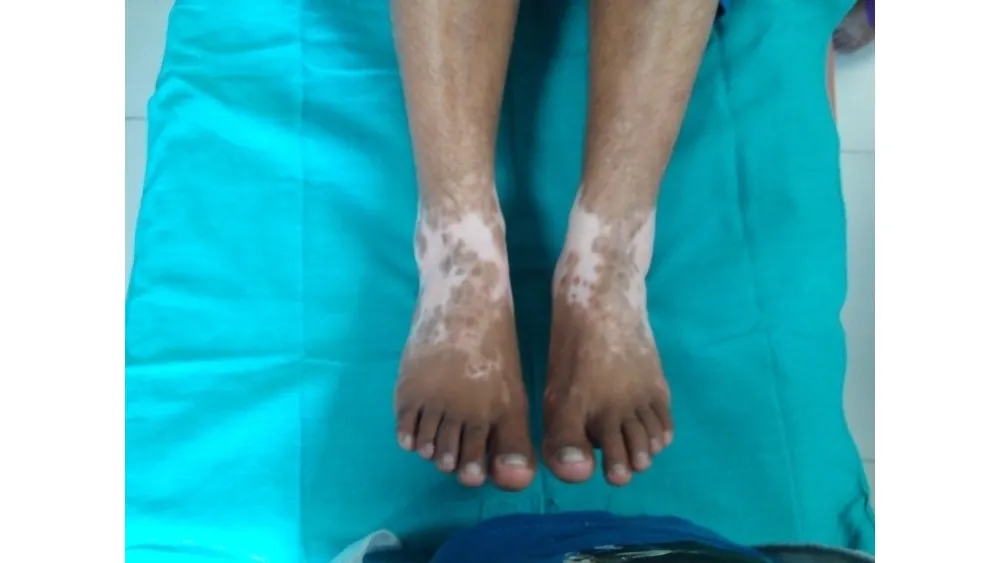

Vitiligo is a long-term skin condition in which patches of skin lose their color. It can affect people of any age, gender, or ethnic group. In vitiligo, melanocytes, the cells responsible for skin color, are destroyed, leading to the loss of skin pigment (melanin) and the development of white patches on the skin.
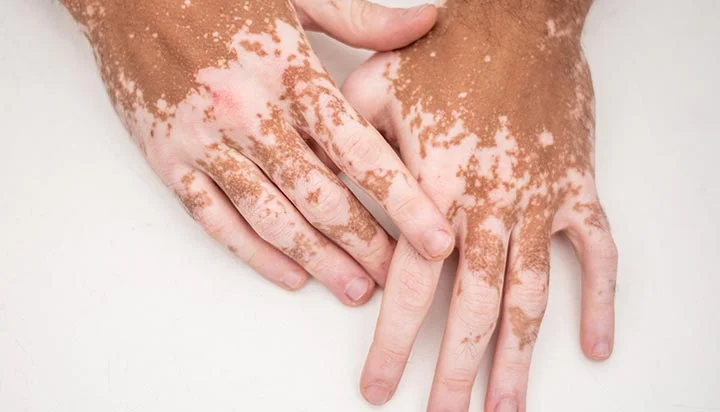
Treatment options depend on the severity, location, and response to treatment. Dr. Amit Agarwal recommends suitable options based on individual cases. Medical treatments include:
Topical Creams: Corticosteroid creams can help return color to white patches. Others slow the progression but may have side effects like skin shrinkage and thinning.
Oral Medications: Steroids and certain antibiotics may be effective.
Psoralen and Ultraviolet A (PUVA) Therapy: Involves taking psoralen and exposure to UVA light to activate pigmentation. It has side effects like sunburn, nausea, itching, and hyperpigmentation.
Depigmentation: Used when over 50% of the body is affected. It fades unaffected skin to match depigmented areas but may cause inflammation and sensitivity to sunlight.
Ultra-Thin Skin Grafting: Removes pigmented skin from one area and transplants it to depigmented areas. Risks include infection, scarring, or graft failure.
Blister Grafting: Creates blisters on unaffected skin and transfers the top to depigmented areas. Risks include scarring and a cobblestone appearance.
Melanocyte Transfer: Harvests melanocytes from healthy skin and transplants them to depigmented areas.
Micropigmentation: Tattoos pigment into the skin, suitable for lip areas.
Ready for Your Transformation? Contact Dr. Amit Agarwal Today for Expert Vitiligo Treatment Surgery and Reveal Your Best Self!
Are you ready for a consultation?
Your treatment will be performed by board certified plastic surgeon. Schedule your appointment now!
Are you ready for a consultation?
Your treatment will be performed by board certified plastic surgeon. Schedule your appointment now!
Related Videos
A True Devotion to Healing
Where Compassionate Care Meets Advanced Medicine, Guiding You on the Path to Recovery and Well-being.
24/7 Patient Support
We understand that questions and concerns don’t have office hours. That’s why we offer round-the-clock support, ensuring you have access to the care and information you need, whenever you need it.
Premium Quality Materials
We commit to only using the highest-grade materials and the latest technology in your procedures. This commitment is our promise to you for superior outcomes and your utmost satisfaction.
Safety and Hygiene Promise
Your well-being is our top priority. Across our practice, we adhere to stringent safety and hygiene protocols, reassuring you of your safety and comfort at every step of your journey with us.
Vitiligo is not painful. However, you can get painful sunburns on the lighter patches of skin. It is important to protect yourself against the sun with measures like using sunscreen, staying out of the sun during the hours that it is strongest, and wearing protective clothing. Some people with vitiligo have reported having itchy skin sometimes, including before the depigmentation starts.
Quitting smoking is a perfect solution even without surgery as it involves many health risks, but it’s totally up to your wish whether you want to quit or not. But you should surely stop smoking at least 2 weeks before the surgery.
Segmental or focal: White patches tend to be smaller and appear in one or a few areas. When vitiligo appears in a focal or segmental pattern, it tends to stay in one area on one side of the body. Many times it continues for a year or so, then stops. It also progresses slower than generalized vitiligo.
Non-segmental or generalized: Widespread white patches appear symmetrically on both sides of the body. This is the most common pattern and can affect pigment cells anywhere in the body. It often starts and stops many times over the course of a person’s lifetime. There’s no way to determine when, if, or how fast patches will develop.
Privacy is of utmost importance to us. Rest assured, all your personal and medical information is handled with strict confidentiality.
TRUST
Our Surgeon is highly qualified and internationally certified with a team of skilled staff to perform any surgical or non-surgical treatment on your body.
SAFETY
Safety is our priority. We maintain stringent protocols to ensure a secure environment for all patients and staff members.
Breast augmentation and breast reduction are two very different procedures. Augmentation (breast enlargement) increases breast volume and alters shape, usually for cosmetic or reconstructive goals. Reduction removes breast tissue and skin to make breasts smaller and relieve symptoms. In general, augmentation is chosen by patients who want fuller, more symmetrical breasts (or as reconstruction after…
Rhinoplasty, commonly known as a “nose job,” is a surgical procedure to reshape the nose. It can be performed for cosmetic enhancement of appearance or for functional improvement of breathing (and often both). If you’re medically informed and considering rhinoplasty, it’s important to understand the types of rhinoplasty, what the surgery involves, and how the…
When diet and exercise don’t address certain stubborn fat deposits, liposuction can be a safe and effective solution—when chosen for the right reasons and in the right patient. As a commonly performed body-contouring procedure, liposuction reshapes specific areas of the body rather than serving as a weight-loss method. At Kayakriti Plastic Surgery & Dental Center…