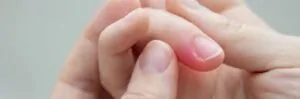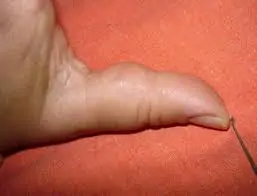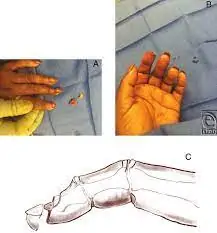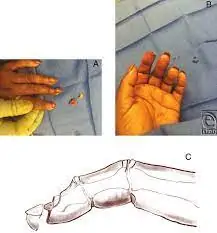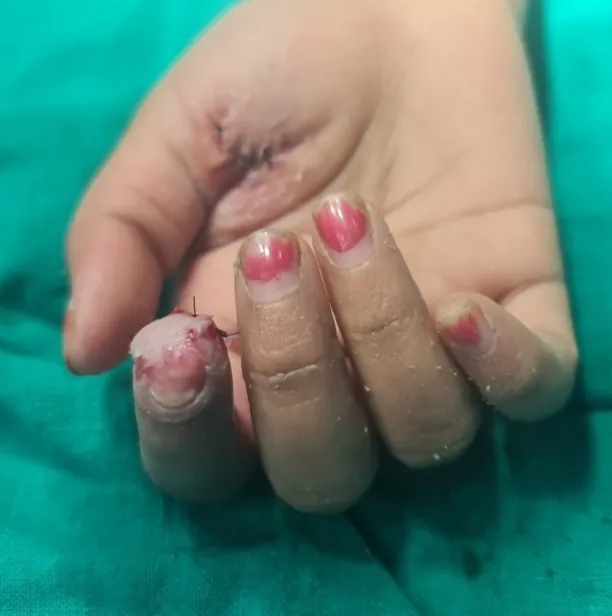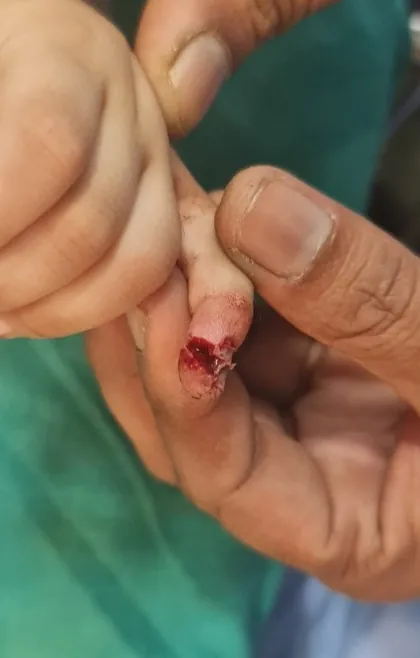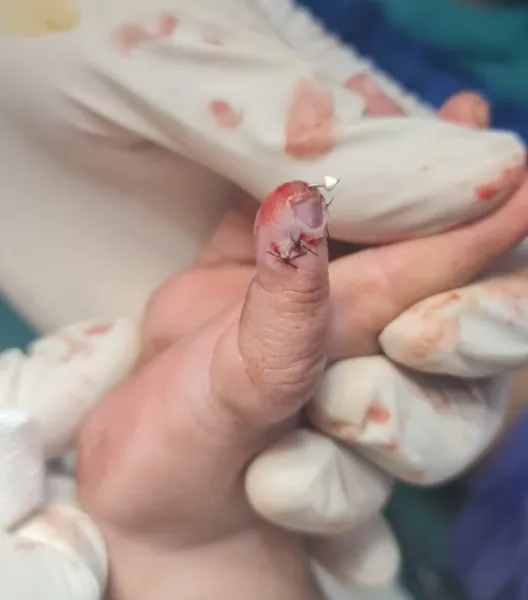
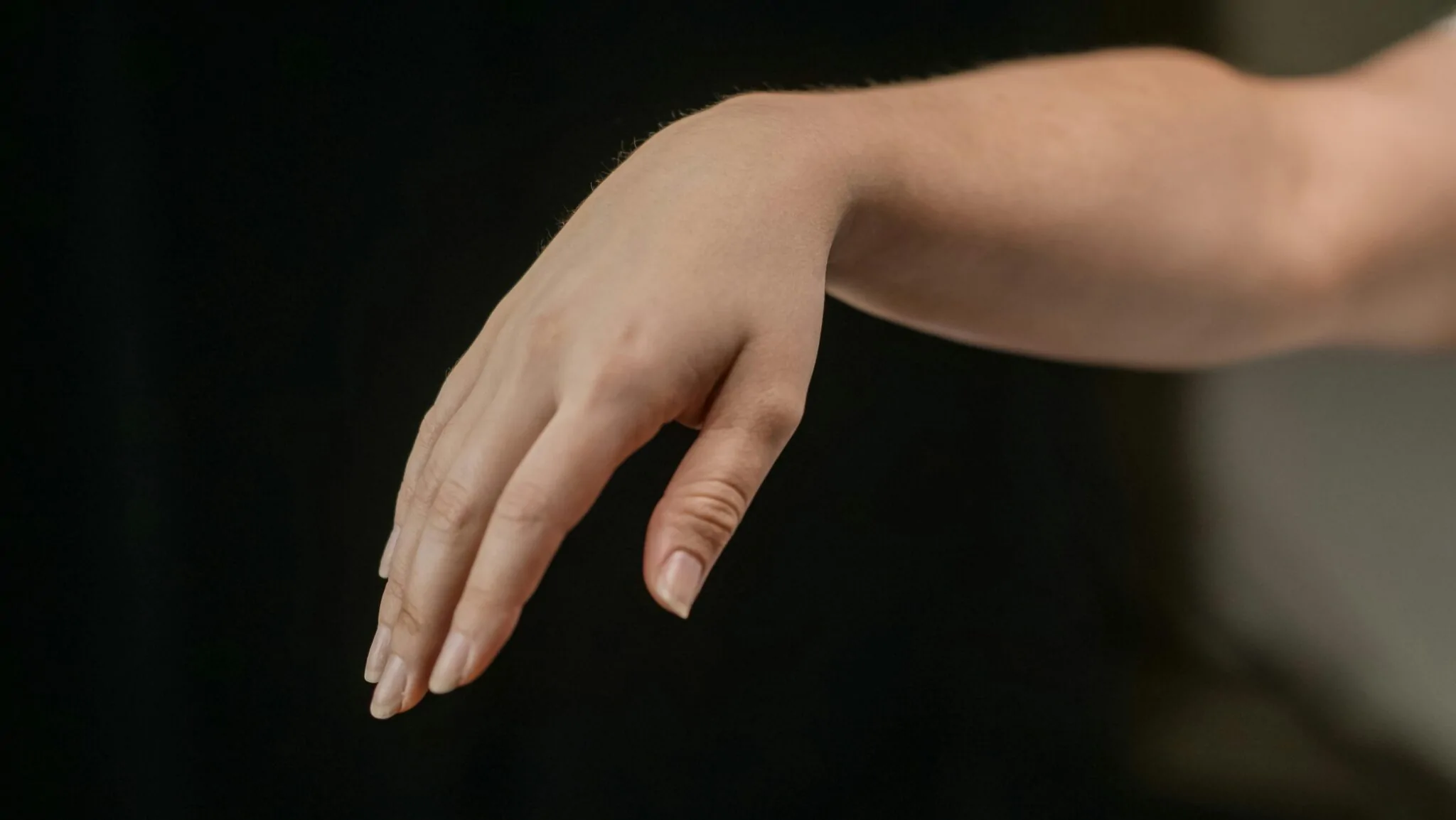
Fingertip injuries and nail bed injuries are among the most common hand injuries, impacting both function and aesthetics. Fingertips play a crucial role in our daily lives by providing tactile sensation, and healthy nails contribute to the aesthetics of our hands. This comprehensive guide explores the causes of fingertip injuries, the importance of prompt treatment, various treatment options, and the recovery process.
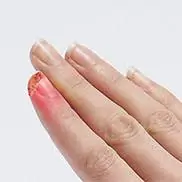
Fingertip injuries, often the result of crushing forces, are particularly common in children. Accidents such as finger entrapment in doors can lead to various types of fingertip injuries, which may involve amputation, laceration, or crushing.
Reimplantation of severed fingertips is a possibility if the amputated part is brought in a well-preserved condition to a medical facility within an acceptable timeframe. This procedure is technically demanding and challenging, requiring immediate attention and a patient’s cooperation.
The success of fingertip reimplantation depends on timing:
The acceptable time limit for successful reimplantation is typically between 4 to 6 hours. In some cases, it can extend up to 10 to 12 hours due to the absence of significant muscle mass in the fingertip.
Fingertip reimplantation is a technically challenging procedure due to the small size of vessels in the fingertip. The success rate of digital reimplants hovers around 50% to 60%. The outcome is influenced by the nature of fingertip injuries, which are often crush injuries with compromised blood flow.
In cases of reimplantation failure, the patient is closely monitored in the hospital for 8-10 days post-surgery. If signs of withering or blocked blood circulation appear after 2-3 days, the reimplanted part is removed, and appropriate flap reconstruction is considered.
The choice of soft tissue reconstruction technique depends on various factors. Some techniques include:
Secondary Healing: Small wounds are allowed to heal with dressings over 4-6 weeks. However, this may result in contour deformity, sensation loss, and no donor site morbidity.
Skin Grafting: For defects limited to the skin, split or full-thickness skin grafts are used to cover well-vascularized areas. Composite grafts, such as cap grafts, can also be considered.
Local Flaps: Various options are available to reconstruct the fingertip pulp. Common flaps used by Dr. Amit Agarwal include volar V-Y advancement flaps and lateral V-Y advancement flaps.
Cross Finger Flap: This versatile flap utilizes skin from the adjacent finger to resurface the fingertip. It is a two-stage procedure.
In the first stage, the flap is harvested from the back of the finger and the raw area is covered by Skin graft.
In the second stage-(after 2- 3 weeks) When the flap has restored its blood supply over the defect, it is detached from the adjacent finger. Some amount of cosmetic deformity of the grafted back of the finger (area of the harvested cross-finger flap) should be acceptable to the patient.
Thenar Flap: The thenar flap is another two-stage surgery that efficiently resurfaces fingertips with minimal morbidity to the hand.
In the first stage, the flap is harvested from the skin of the palm and inset over the defect and
In the second stage after 2-3 weeks, the flap is detached from the palm, and exercises start.
Fingertip injuries, while common, require careful assessment and treatment. Swift action, expert surgical care under Dr. Amit’s guidance, and appropriate postoperative management significantly contribute to successful outcomes, ensuring the restoration of both function and aesthetics in these crucial parts of the hand.
Are you ready for a consultation?
Your treatment will be performed by board certified plastic surgeon. Schedule your appointment now!
Are you ready for a consultation?
Your treatment will be performed by board certified plastic surgeon. Schedule your appointment now!
A True Devotion to Healing
Where Compassionate Care Meets Advanced Medicine, Guiding You on the Path to Recovery and Well-being.
24/7 Patient Support
We understand that questions and concerns don’t have office hours. That’s why we offer round-the-clock support, ensuring you have access to the care and information you need, whenever you need it.
Premium Quality Materials
We commit to only using the highest-grade materials and the latest technology in your procedures. This commitment is our promise to you for superior outcomes and your utmost satisfaction.
Safety and Hygiene Promise
Your well-being is our top priority. Across our practice, we adhere to stringent safety and hygiene protocols, reassuring you of your safety and comfort at every step of your journey with us.
Diagnosis of Fingertip Injuries involves a physical examination and, in some cases, imaging studies like X-rays to evaluate bone involvement or foreign objects.
Kayakriti Clinic specializes in Fingertip Injury management with a focus on preserving fingertip function and aesthetics. Their approach involves meticulous wound repair and reconstruction to achieve the best possible outcomes.
Kayakriti Clinic offers a patient-centric approach to Fingertip Injury treatment, providing specialized wound care, finger rehabilitation, and guidance to optimize fingertip function and appearance.
Privacy is of utmost importance to us. Rest assured, all your personal and medical information is handled with strict confidentiality.
TRUST
Our Surgeon is highly qualified and internationally certified with a team of skilled staff to perform any surgical or non-surgical treatment on your body.
SAFETY
Safety is our priority. We maintain stringent protocols to ensure a secure environment for all patients and staff members.
Breast augmentation and breast reduction are two very different procedures. Augmentation (breast enlargement) increases breast volume and alters shape, usually for cosmetic or reconstructive goals. Reduction removes breast tissue and skin to make breasts smaller and relieve symptoms. In general, augmentation is chosen by patients who want fuller, more symmetrical breasts (or as reconstruction after…
Rhinoplasty, commonly known as a “nose job,” is a surgical procedure to reshape the nose. It can be performed for cosmetic enhancement of appearance or for functional improvement of breathing (and often both). If you’re medically informed and considering rhinoplasty, it’s important to understand the types of rhinoplasty, what the surgery involves, and how the…
When diet and exercise don’t address certain stubborn fat deposits, liposuction can be a safe and effective solution—when chosen for the right reasons and in the right patient. As a commonly performed body-contouring procedure, liposuction reshapes specific areas of the body rather than serving as a weight-loss method. At Kayakriti Plastic Surgery & Dental Center…