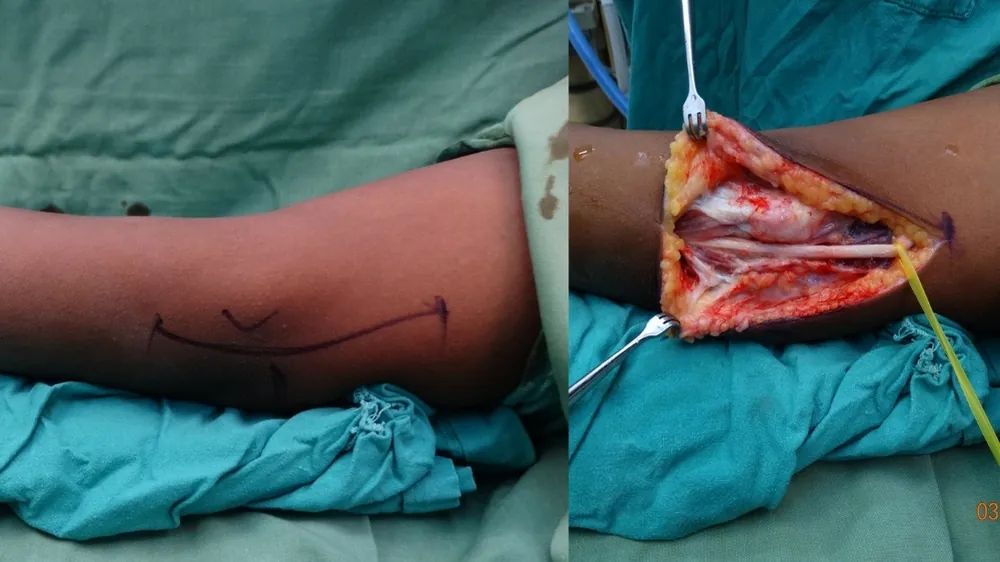
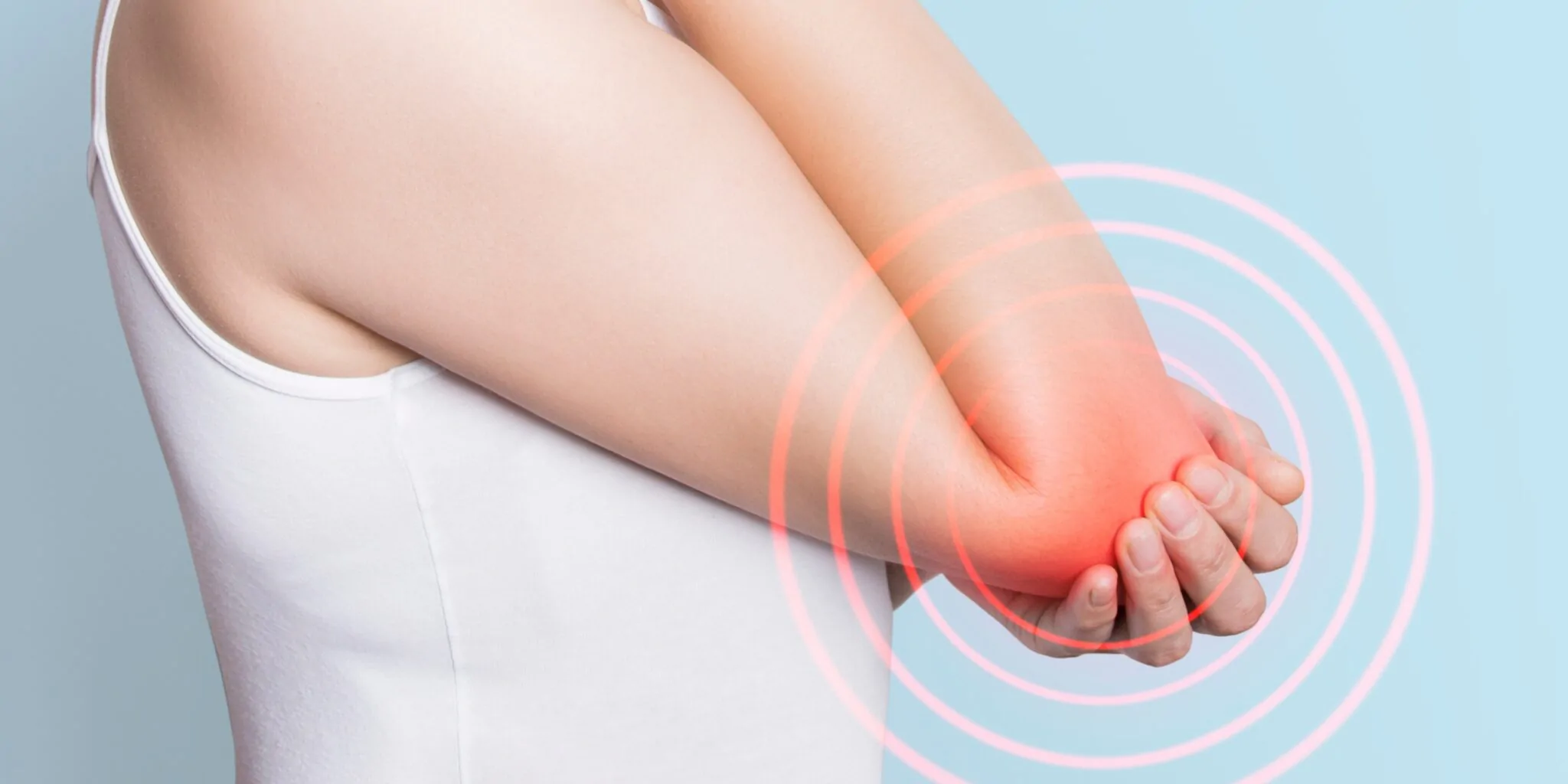
Cubital tunnel syndrome refers to the compression of the ulnar nerve within the elbow region, specifically at the medial epicondyle. This vital nerve traverses a confined space known as the cubital tunnel, where it’s susceptible to injury and compression. The familiar “funny bone” sensation occurs when the ulnar nerve is compressed, primarily affecting the little finger and the ring finger.
In the arm, there are three principal nerves: the median, the ulnar, and the radial. The ulnar nerve extends from the neck, down the arm, through the forearm, and into the hand. It serves to provide sensation to the small finger and part of the ring finger while controlling fine finger movements. Compression of the ulnar nerve can occur at the elbow, higher up in the arm, or at the wrist within Guyon’s canal.
Cubital tunnel syndrome is typically triggered by factors like increased pressure on the ulnar nerve within the elbow. Risk factors include pressure from casts or splints, arthritis of the joint, prolonged elbow bending, bone spurs, cysts near the elbow joint, and elbow joint fractures or dislocations.
Ulnar nerve compression can be caused by leaning on an armrest, nerve snapping over the medial epicondyle during elbow movement, or prolonged bending of the elbow (as seen when working on a computer or during sleep). Repeated and extended compression, snapping, and overstretching can lead to nerve inflammation, pain, and nerve damage.
Symptoms start gradually and may include inner elbow and forearm pain, intermittent numbness and tingling in the hand, especially in the little finger and ring finger, and difficulties in finger movement when they fall asleep.
As the condition progresses, symptoms become more constant with:
Weakness in the hand, curling of the little and ring fingers.
increased pain, and diminished ability to perform intricate tasks.
Severe cases may exhibit muscle atrophy or fingertip ulcers.
Diagnosis often involves a clinical assessment that includes history, physical examination, and occupational/lifestyle details. Clinical signs may include weak forearm and hand muscles, decreased sensation in the little and ring fingers, and a positive Tinel’s sign.
Few investigations are done to confirm the diagnosis-
a) Nerve Conduction Velocities (NCV) and Electro-Myographic Studies (EMG) of the affected hand are quite diagnostic for cubital tunnel syndrome
b) An MRI of the elbow is done in a few cases if any tumor or mass is suspected.
c) Blood tests for diabetes or thyroid disease.
d) X-rays to check for bone spurs, arthritis, and places where bone might compress the ulnar nerve.
Surgery is recommended for more severe cases or when non-surgical methods fail to alleviate symptoms. Surgical procedures involve cubital tunnel release and anterior transposition of the ulnar nerve to reduce pressure on the nerve.
Post-surgery, finger movements will be initiated as anesthesia effects wear off. Recovery involves a period of discomfort, immobilization of the elbow, suture removal, and crucial post-operative physiotherapy to maximize outcomes.
Finger movements are started once the effect of the brachial plexus block is gone or when the patient is out from anesthesia.
You might be in brief discomfort for about 24 to 72 hours after surgery.
Immobilization of the elbow in the flexion position is done till sutures are removed.
Sutures are removed after a period of 10-12 days.
Physiotherapy post-operative is most important for the hand, wrist, and fingers.
The prognosis is good if muscle atrophy has not started.
You might be unable to do heavier activities with the affected hand for about four to six weeks
Tendon transfers involve re-routing tendons from the forearm and hand to improve finger extension, allowing for meaningful finger movement and thumb pinch. This surgical procedure is usually performed under anesthesia, followed by immobilization and rehabilitation.
The surgery is usually done under brachial block or general anesthesia and a splint or slab is given for immobilization in the post-operative period.
The patient is usually discharged on the second day after the surgery. Sutures are removed 14 days after surgery.
Splint is removed 3 to 4 weeks after the surgery and gradual training of the transferred muscles or tendons is started so that they regain their newly assigned function.
Are you ready for a consultation?
Your treatment will be performed by board certified plastic surgeon. Schedule your appointment now!
Are you ready for a consultation?
Your treatment will be performed by board certified plastic surgeon. Schedule your appointment now!
A True Devotion to Healing
Where Compassionate Care Meets Advanced Medicine, Guiding You on the Path to Recovery and Well-being.
24/7 Patient Support
We understand that questions and concerns don’t have office hours. That’s why we offer round-the-clock support, ensuring you have access to the care and information you need, whenever you need it.
Premium Quality Materials
We commit to only using the highest-grade materials and the latest technology in your procedures. This commitment is our promise to you for superior outcomes and your utmost satisfaction.
Safety and Hygiene Promise
Your well-being is our top priority. Across our practice, we adhere to stringent safety and hygiene protocols, reassuring you of your safety and comfort at every step of your journey with us.
Cubital Tunnel Syndrome is a condition characterized by compression of the ulnar nerve at the elbow, leading to symptoms in the hand and forearm. It differs from other elbow and hand conditions based on its specific nerve involvement.
Cubital Tunnel Syndrome is often caused by repetitive elbow bending, pressure on the ulnar nerve, or underlying medical conditions. Contributing factors can involve occupational activities or anatomical variations.
Symptoms of Cubital Tunnel Syndrome may include numbness, tingling, and weakness in the ring and small fingers. These symptoms can limit hand function and cause discomfort, especially when the elbow is bent.
Diagnosis typically involves a clinical examination by a healthcare professional. Nerve conduction studies and electromyography (EMG) may be used to confirm the condition and determine its severity.
Management of Cubital Tunnel Syndrome often includes conservative approaches like splinting, avoiding activities that exacerbate symptoms, and physical therapy. In more severe cases, surgical intervention may be recommended.
Kayakriti Clinic offers specialized care for Cubital Tunnel Syndrome, including surgical options and a personalized approach to rehabilitation. They provide a patient-centric approach to relieve symptoms and restore hand and elbow function.
Privacy is of utmost importance to us. Rest assured, all your personal and medical information is handled with strict confidentiality.
TRUST
Our Surgeon is highly qualified and internationally certified with a team of skilled staff to perform any surgical or non-surgical treatment on your body.
SAFETY
Safety is our priority. We maintain stringent protocols to ensure a secure environment for all patients and staff members.
Breast augmentation and breast reduction are two very different procedures. Augmentation (breast enlargement) increases breast volume and alters shape, usually for cosmetic or reconstructive goals. Reduction removes breast tissue and skin to make breasts smaller and relieve symptoms. In general, augmentation is chosen by patients who want fuller, more symmetrical breasts (or as reconstruction after…
Rhinoplasty, commonly known as a “nose job,” is a surgical procedure to reshape the nose. It can be performed for cosmetic enhancement of appearance or for functional improvement of breathing (and often both). If you’re medically informed and considering rhinoplasty, it’s important to understand the types of rhinoplasty, what the surgery involves, and how the…
When diet and exercise don’t address certain stubborn fat deposits, liposuction can be a safe and effective solution—when chosen for the right reasons and in the right patient. As a commonly performed body-contouring procedure, liposuction reshapes specific areas of the body rather than serving as a weight-loss method. At Kayakriti Plastic Surgery & Dental Center…