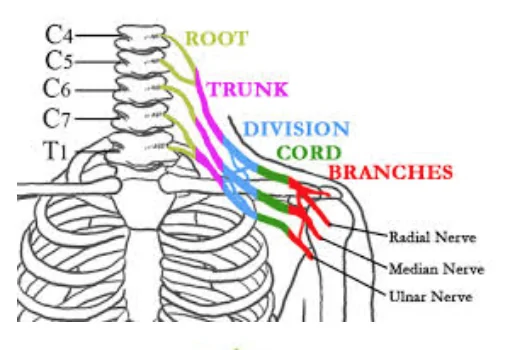
Complete Brachial Plexus Injuries result from a complete transection of the C5, C6, C7, C8, and T1 nerve roots in the neck. This leads to weakness, numbness, or the complete loss of movement in the affected shoulder, arm, forearm, and hand. In cases of Complete BPI, the limb is entirely nonfunctional, rendering the patient unable to lift the affected shoulder, elbow, and hand, as well as making it impossible to grasp objects or perceive sensations in that limb.
One of the major challenges in treating Brachial Plexus Injuries is delayed presentation due to limited awareness about these injuries. Often, patients seek medical attention late after the injury has occurred. This emphasizes the importance of consulting plastic surgeons specialized in Brachial Plexus surgery for the management of such cases. Dr. Amit Agarwal specializes in this field with over 14 years of expertise, making him well-equipped to handle all aspects of treatment.
In Brachial Plexus injuries, the adage “sooner the treatment, better the outcome” holds true. Surgery involves exploring, repairing, and transferring nerves. If no recovery is observed within 3 months of the accident, nerve transfer surgery is performed as early as possible. Although surgery can still be considered for injuries occurring within 9 months to 1 year of the accident, the chances of recovery diminish compared to surgeries performed within the first 3 months.
Attempting nerve transfer surgery after 1 year of the accident is associated with significantly reduced chances of success. There is insufficient time left for nerve regeneration. Consequently, specific targeted muscle and tendon transfers become the preferred option instead of nerve transfer surgery in cases of Complete BPI beyond 1 year of the accident.
When a patient presents more than one year after the accident, and no surgery has been performed during that time, or no recovery has been observed after the initial nerve repair, targeted muscle and tendon transfers are carried out. These procedures aim to achieve acceptable movements in the shoulder, elbow, wrist, and finger joints.
After one year of the accident, specific investigations like MR Neurography and NCV studies are not typically performed. However, a thorough examination of the brachial plexus, muscle movements, sensory return, history of previous surgeries, fracture assessments, and evaluations of the patient’s vocational abilities are essential before proceeding with reconstruction.
For late presentations of Complete Brachial Plexus Injuries, targeted muscle and tendon transfers are the primary surgical approach. These procedures are also recommended when initial nerve repair surgeries fail to yield any response even after one and a half years.
Free Functioning Muscle Transfer (FFMT) – For Elbow Flexion
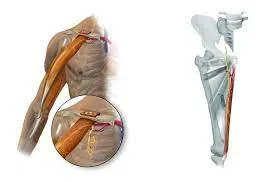
FFMT surgery is the primary procedure recommended for restoring elbow flexion, which is a major goal in the reconstruction of complete Brachial Plexus injuries. This surgery involves harvesting a muscle from the thigh and transferring it to the paralyzed arm to replicate the action of the biceps muscle, restoring elbow flexion.
In some cases, even after nerve repair surgery, the results for elbow function might be disappointing. Therefore, FFMT, in addition to nerve surgery, should be considered in late cases presenting after one year of the injury.
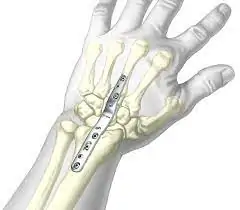
Wrist joint fusion is a surgical procedure that stabilizes the wrist in a completely paralyzed hand. This procedure places the wrist in a stable functional position, allowing subsequent muscle or tendon transfers to enhance finger function and increase grip strength. It can also improve movement and power in the elbow.
In this procedure, a muscle is harvested from the thigh and transferred to the paralyzed forearm to replicate the action of the finger flexor muscles, restoring finger movement.
This surgery is often performed after wrist stabilization. The patient should be able to extend their wrist and/or fingers after the primary FFMT surgery for elbow flexion and wrist extension. This provides functional restoration of the hand after a complete BPI.
Trapezius transfer is a surgical procedure used to partially restore the outward movement of the shoulder joint (abduction) in cases of complete Brachial Plexus injuries.
In patients seen after a year of the accident, FFMT is the first surgery performed to restore elbow flexion. Surgery to restore shoulder joint movement can be considered in the second stage but is ideally done as a final-stage procedure.
The trapezius muscle is a large upper back muscle. It is usually spared because of its innervation by the spinal accessory nerve in addition to contributions from C3 and C4 neck nerves. Additionally, it often increases in bulk after deltoid muscle paralysis, making trapezius transfer the most common tendon transfer for shoulder abduction movement in adult brachial palsy.
Your treatment will be performed by board certified plastic surgeon. Schedule your appointment now!
Are you ready for a consultation?
Your treatment will be performed by board certified plastic surgeon. Schedule your appointment now!
A True Devotion to Healing
Where Compassionate Care Meets Advanced Medicine, Guiding You on the Path to Recovery and Well-being.
24/7 Patient Support
We understand that questions and concerns don’t have office hours. That’s why we offer round-the-clock support, ensuring you have access to the care and information you need, whenever you need it.
Premium Quality Materials
We commit to only using the highest-grade materials and the latest technology in your procedures. This commitment is our promise to you for superior outcomes and your utmost satisfaction.
Safety and Hygiene Promise
Your well-being is our top priority. Across our practice, we adhere to stringent safety and hygiene protocols, reassuring you of your safety and comfort at every step of your journey with us.
A Complete BPI involves extensive nerve damage in the brachial plexus. Kayakriti Clinic specializes in diagnosing and treating Complete BPI cases that have occurred more than one year after the injury, often involving muscle and tendon transfers.
Kayakriti Clinic can provide insights into common causes and discuss the options available for managing Complete BPI when the injury occurred more than one year ago.
Kayakriti Clinic employs a comprehensive evaluation process, including physical examinations and imaging studies like MRI, to accurately diagnose and assess the condition of individuals with Complete BPI after more than one year.
Kayakriti Clinic offers specialized treatment options, including muscle and tendon transfers, to address the challenges posed by Complete BPI when it has been present for more than one year. They can discuss the potential benefits of these procedures.
Kayakriti Clinic can provide insights into the expected outcomes, functional improvements, and potential for enhanced arm function resulting from muscle and tendon transfers in individuals with Complete BPI after an extended period.
Kayakriti Clinic can describe the rehabilitation process, including the types of therapies and exercises involved in helping individuals maximize the benefits of muscle and tendon transfer procedures and regain arm function.
Privacy is of utmost importance to us. Rest assured, all your personal and medical information is handled with strict confidentiality.
TRUST
Our Surgeon is highly qualified and internationally certified with a team of skilled staff to perform any surgical or non-surgical treatment on your body.
SAFETY
Safety is our priority. We maintain stringent protocols to ensure a secure environment for all patients and staff members.
Breast augmentation and breast reduction are two very different procedures. Augmentation (breast enlargement) increases breast volume and alters shape, usually for cosmetic or reconstructive goals. Reduction removes breast tissue and skin to make breasts smaller and relieve symptoms. In general, augmentation is chosen by patients who want fuller, more symmetrical breasts (or as reconstruction after…
Rhinoplasty, commonly known as a “nose job,” is a surgical procedure to reshape the nose. It can be performed for cosmetic enhancement of appearance or for functional improvement of breathing (and often both). If you’re medically informed and considering rhinoplasty, it’s important to understand the types of rhinoplasty, what the surgery involves, and how the…
When diet and exercise don’t address certain stubborn fat deposits, liposuction can be a safe and effective solution—when chosen for the right reasons and in the right patient. As a commonly performed body-contouring procedure, liposuction reshapes specific areas of the body rather than serving as a weight-loss method. At Kayakriti Plastic Surgery & Dental Center…