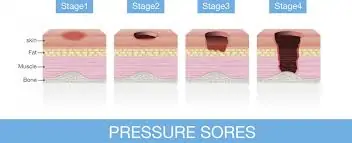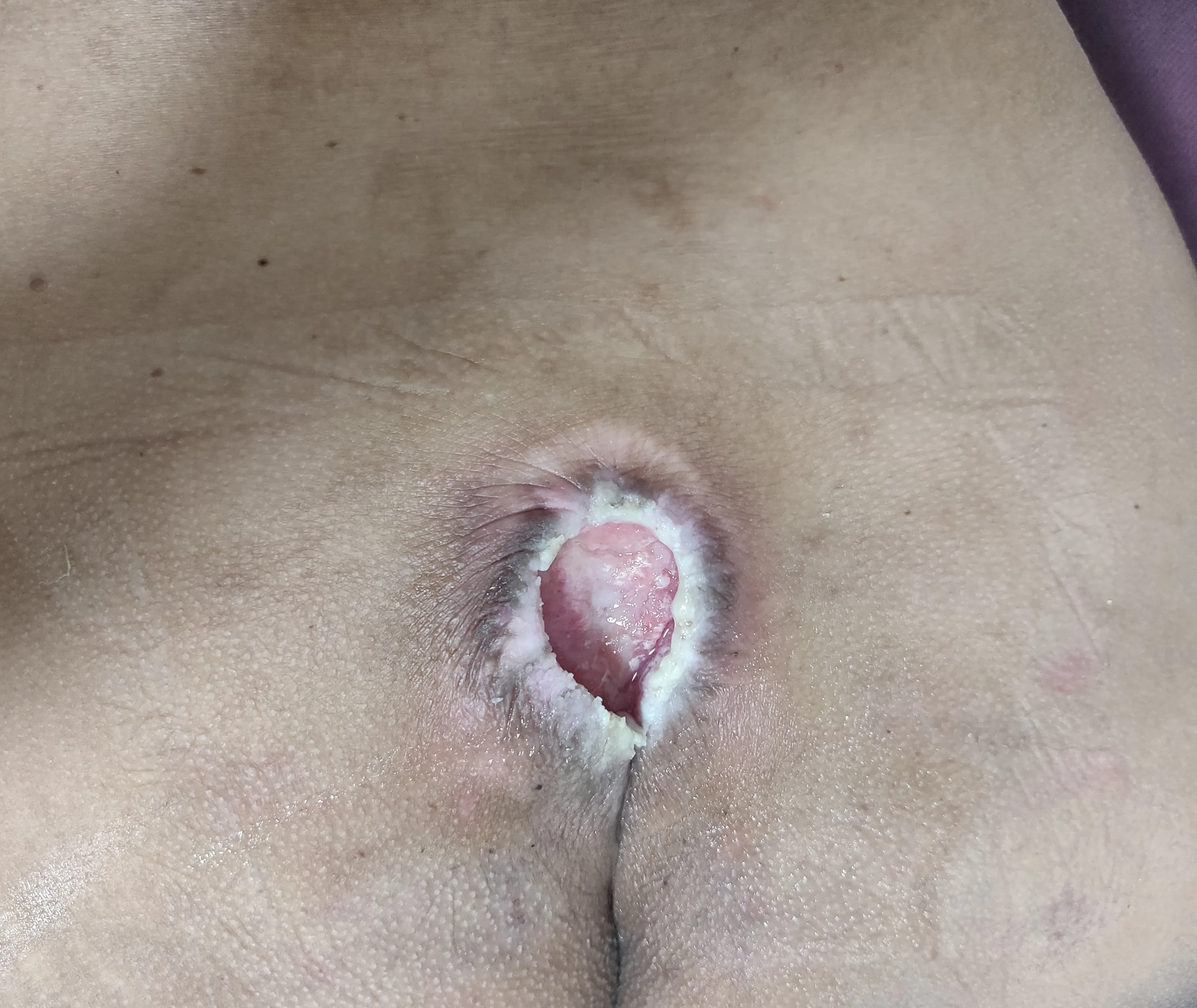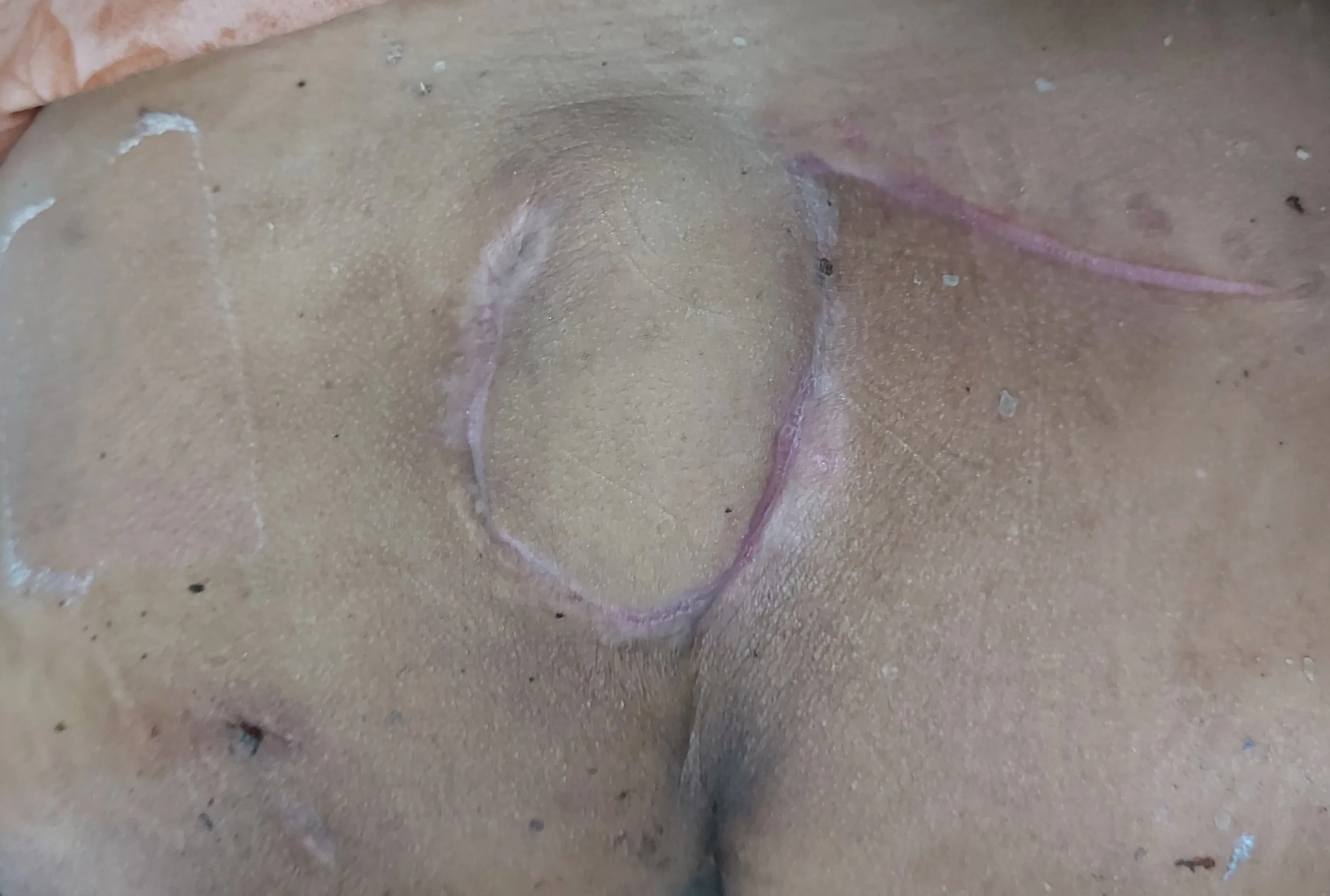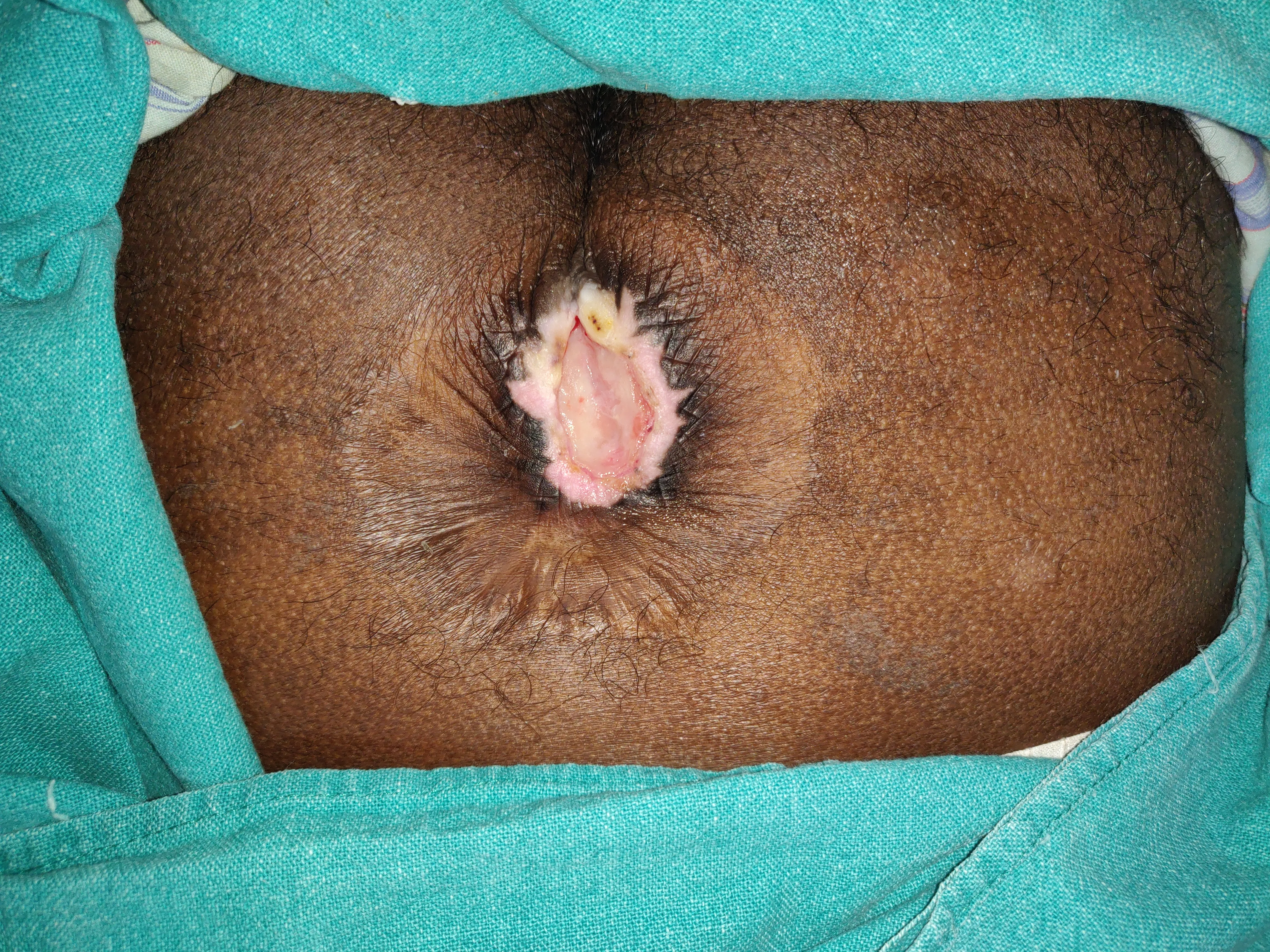
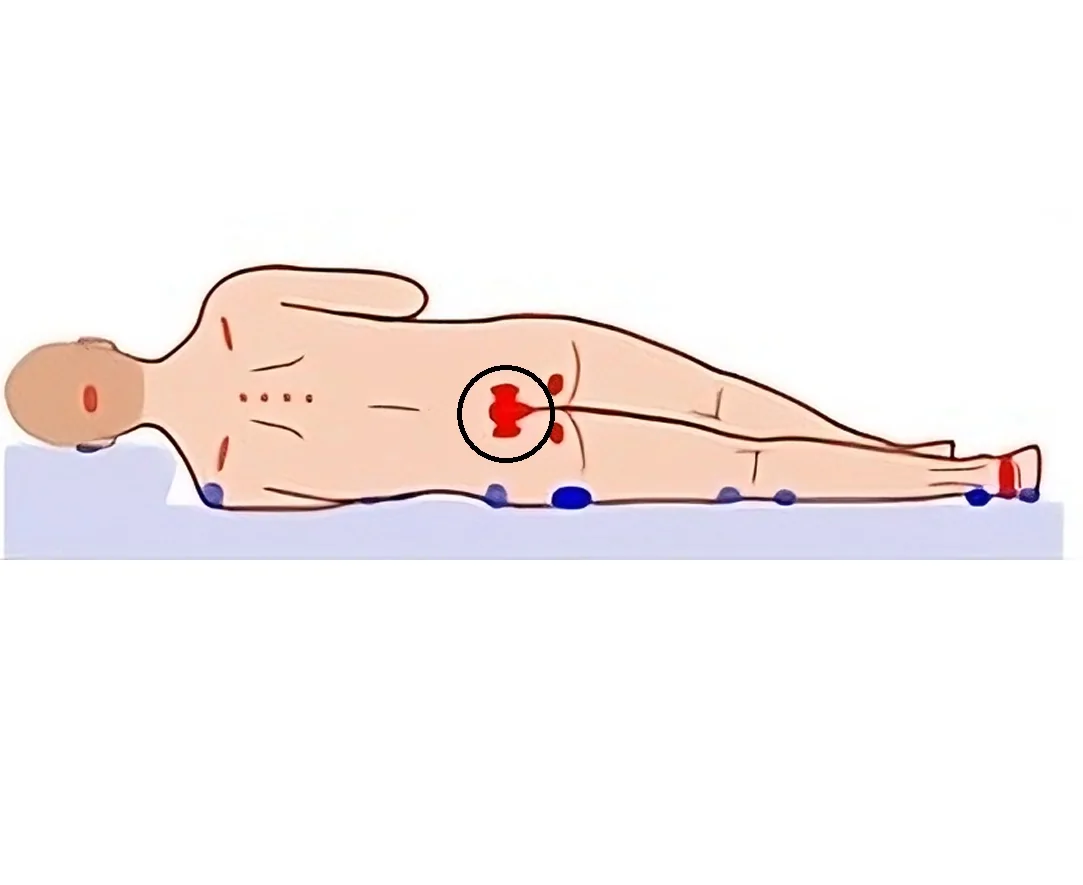
Bedsores, or pressure ulcers, can develop when a person remains in the same position for an extended period. The location of the bedsore depends on the patient’s body position:
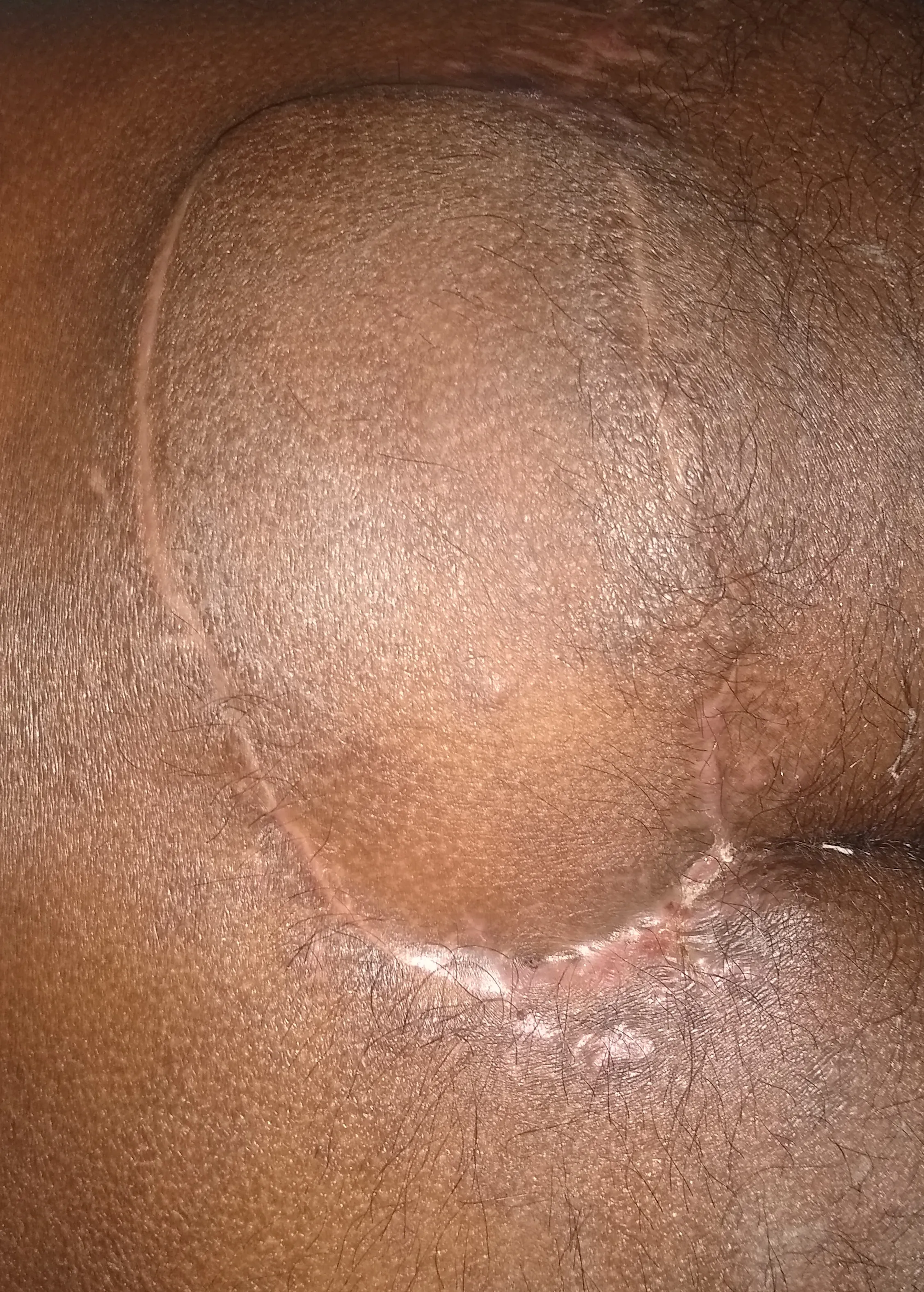
Sacral bed sores, or lower back bedsores, typically occur in patients who are very sick and unable to move due to primary ailments such as paralysis, trauma, fractures, old age, etc. Patients admitted to the hospital for extended periods, particularly in the ICU or on ventilators, are also prone to developing sacral bedsores. The prolonged pressure over the lower back region makes these patients susceptible to this condition.
Patients with Category I or II sacral bed sores may not require admission if other factors and comorbidities are well controlled. They are educated about wound management, and specific dressings are advised. Follow-up is typically scheduled weekly initially, and later, once a month for three months after complete healing.
For Categories III and IV:
Patients with Category III or IV sacral bed sores require hospital admission. A comprehensive evaluation of their nutritional status and surgical fitness is conducted. After admission and after ensuring that the patient is vitally stable and medically cleared for surgery, surgical treatment is planned.
Single-Stage Surgery: In some cases, a single-stage surgery is performed, which involves proper debridement to remove the entire bedsore, excising the infected portion of the sacral bone, and closing the resultant defect using a flap from the surrounding area.
Two-Staged Surgery: Two-staged surgery may be necessary in certain cases, including when the wound is severely infected and needs further debridement or when the defect is too large to be closed in one stage. The patient may also be too ill to undergo immediate flap coverage.
In the first stage, debridement of the sore is performed, and Negative Pressure Wound Therapy (VAC) is applied for 5-7 days.
After about a week, the VAC is removed. If there are no signs of active infection, and the patient’s condition has improved, a flap cover surgery is planned for the second stage.
In the second surgery, wound closure is typically achieved with a local flap. This involves using the skin and soft tissue from the surrounding normal area, such as the gluteus maximus muscle flap with the overlying skin, rotation flap, and V to Y advancement flap, among others.
In rare cases where the defect is too large, microvascular free flap surgery may be necessary. In this procedure, a flap is harvested from another part of the body and transferred to the sacral area. Microsurgical techniques are used to connect the vessels of the flap to the vessels of the sacral region.
Flap is being monitored regularly for any color changes, or any infection.
The patient is kept on a soft diet for a few days, to decrease the frequency of stools.
Dressing is done every alternate day.
The patient is kept in the hospital for at least 2 weeks.
Suction is removed once the amount is less than 10-15 ml in 24 hours.
Sutures are removed after 2 weeks.
Once the flap is settled and the patient is vitally stable, discharge is planned.
Patients are educated about home care, including the use of an air mattress, hygiene, and regular side-to-side turning. Follow-up visits are scheduled after one week and later once or twice a month for the next three months.
Are you ready for a consultation?
Your treatment will be performed by board certified plastic surgeon. Schedule your appointment now!
Are you ready for a consultation?
Your treatment will be performed by board certified plastic surgeon. Schedule your appointment now!
Related Videos
A True Devotion to Healing
Where Compassionate Care Meets Advanced Medicine, Guiding You on the Path to Recovery and Well-being.
24/7 Patient Support
We understand that questions and concerns don’t have office hours. That’s why we offer round-the-clock support, ensuring you have access to the care and information you need, whenever you need it.
Premium Quality Materials
We commit to only using the highest-grade materials and the latest technology in your procedures. This commitment is our promise to you for superior outcomes and your utmost satisfaction.
Safety and Hygiene Promise
Your well-being is our top priority. Across our practice, we adhere to stringent safety and hygiene protocols, reassuring you of your safety and comfort at every step of your journey with us.
A Bedsore over the Sacrum, also known as a pressure ulcer or pressure sore, is a skin injury that occurs due to prolonged pressure on the skin and underlying tissues, typically in the lower back or sacral area.
Diagnosis involves a clinical assessment of the sore’s appearance and staging. Imaging studies may be used to assess tissue damage and potential complications like infection.
Treatment options include wound care, pressure relief, and addressing underlying factors. The treatment plan is tailored to the sore’s stage, depth, and potential complications.
Kayakriti Clinic specializes in wound care and pressure ulcer management. They provide a multidisciplinary approach to ensure comprehensive care, including plastic surgery interventions when necessary.
Privacy is of utmost importance to us. Rest assured, all your personal and medical information is handled with strict confidentiality.
TRUST
Our Surgeon is highly qualified and internationally certified with a team of skilled staff to perform any surgical or non-surgical treatment on your body.
SAFETY
Safety is our priority. We maintain stringent protocols to ensure a secure environment for all patients and staff members.
Breast augmentation and breast reduction are two very different procedures. Augmentation (breast enlargement) increases breast volume and alters shape, usually for cosmetic or reconstructive goals. Reduction removes breast tissue and skin to make breasts smaller and relieve symptoms. In general, augmentation is chosen by patients who want fuller, more symmetrical breasts (or as reconstruction after…
Rhinoplasty, commonly known as a “nose job,” is a surgical procedure to reshape the nose. It can be performed for cosmetic enhancement of appearance or for functional improvement of breathing (and often both). If you’re medically informed and considering rhinoplasty, it’s important to understand the types of rhinoplasty, what the surgery involves, and how the…
When diet and exercise don’t address certain stubborn fat deposits, liposuction can be a safe and effective solution—when chosen for the right reasons and in the right patient. As a commonly performed body-contouring procedure, liposuction reshapes specific areas of the body rather than serving as a weight-loss method. At Kayakriti Plastic Surgery & Dental Center…