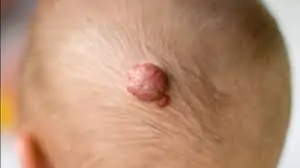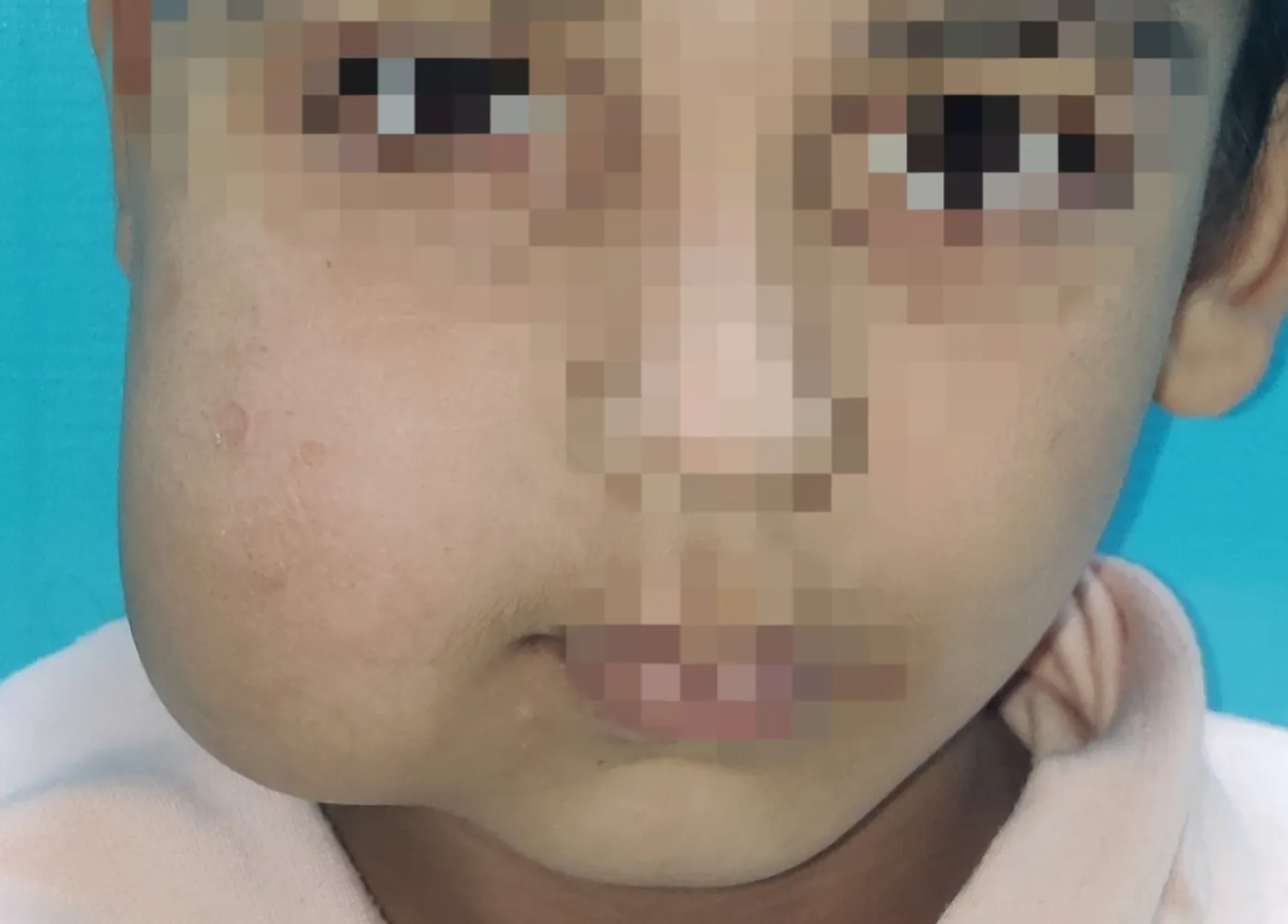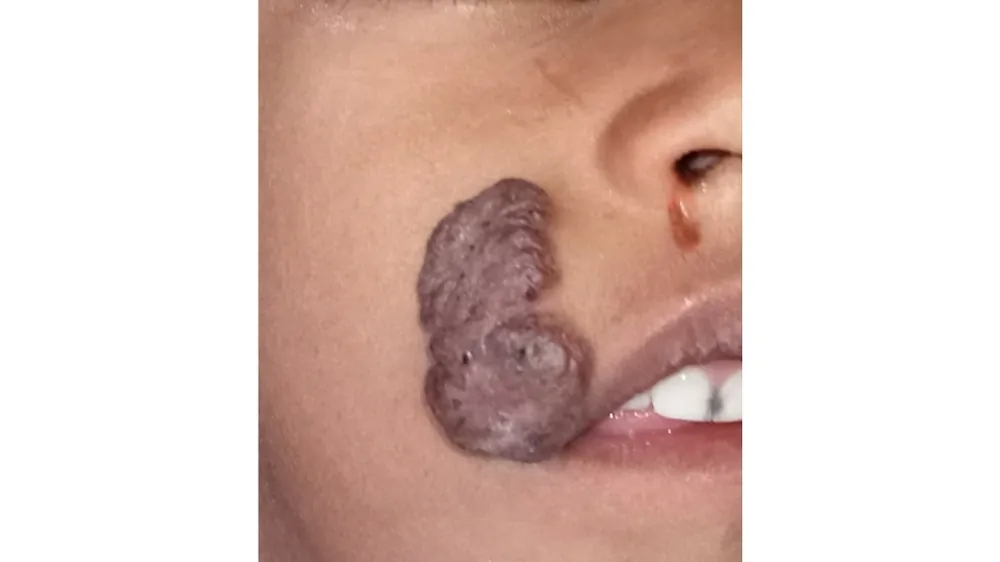
Hemangiomas are benign vascular tumors that commonly affect infants and children, primarily appearing on the face. The good news is that many hemangiomas naturally regress over time, with no threat to life expectancy. For parents, the main concern is often the cosmetic aspect. They are non-cancerous so there is nothing to worry about the life expectancy of the children.
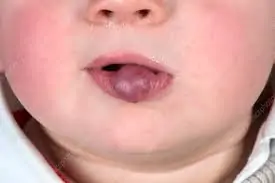
Hemangiomas are the most prevalent benign tumors in infants, with an incidence of 4% to 10% by the age of 1 year. Low birth weight and premature infants have a higher risk, up to 23%. These tumors typically don’t pose health issues but may rarely bleed or become painful.
Infantile Hemangiomas- More common, present in 70% of cases, develop after 2 to 8 weeks of birth, grow rapidly for 6 to 12 months, and slowly involute/ disappear eventually up to 10 years of age
Congenital Hemangioma – Less common, present in 30% of cases, present at the time of birth, grows proportionately with the child’s growth, is either rapidly self-resolving or self-shrinking (within 12 to 18 months), or does not resolve at all.
Diagnosis is usually made after a detailed history by the parents and physical examination of the child. Sometimes an Ultrasound, CT scan or MRI scan is done to see its extent and nature.
These tumors usually develop within the first few weeks of life but these usually resolve spontaneously by the age of 10 years. Depending on their size and location, they may be disfigured too.
Proper diagnosis by a trained plastic surgeon is a must.
A single, small hemangioma usually requires no treatment. It’ll likely go away on its own. Total involution occurs in 50% of hemangiomas by 5 years, in 70% by 7 years, and in 90% by 9 years.
However, some children may require treatment, such as skin hemangiomas that develop ulcerations or bleeding or are in specific areas on the face such as the lip, near the eyes. They can be treated with medications, laser, or surgery. Surgery is preferably avoided in babies and is done only if absolutely necessary.
a) Propranolol- is the first line of drug. It is used for its effect on the ACE enzyme expressed on immature capillaries of growing hemangioma. It induces apoptosis (self-eating of cells) and the development of fat in the hemangioma.
b) Steroids- arrest growth of hemangioma but will not cause regression.
c) Sclerotherapy- injection of the sclerosing agent into the Hemangioma will regress the growth and arrest further development.
2. Pulsed dye and Nd: YAG lasers can be used in the treatment of superficial hemangiomas, and a few ulcerated hemangiomas and for removing residual color from regressed hemangiomas. However, it is not a common modality of treatment.
3. Surgery: Hemangiomas within the body may require surgery only if they grow too large cause problems in vision or feeding or if it is bleeding. Surgery is typically delayed until the child is of school age and beginning to experience psychological consequences.
1. Surgery is preferably avoided in children with hemangiomas as they can cause more severe deformities or scars after surgery.
2. Surgery is usually reserved for hemangiomas in children or babies if the medical treatment has failed and the tumor threatens important structures or functions like-
a) Visual obstruction
b) Ulceration/ bleeding
c) Airway obstruction
d) Ear canal obstruction
3. Surgery is more commonly done for regressed hemangiomas during adolescent and teenage years after the tumor has resolved and left a residual scar or deformity over the region.
Surgery of choice is the Excision of residual tumor or scar left by the hemangioma. The skin coverage is by multiple scar revisions or skin grafting with or without flap cover. For bigger scars, tissue expansion can be done.
The post-operative recovery is rapid and would require 3-4 days of hospitalization.
Are you ready for a consultation?
Your treatment will be performed by board certified plastic surgeon. Schedule your appointment now!
Are you ready for a consultation?
Your treatment will be performed by board certified plastic surgeon. Schedule your appointment now!
A True Devotion to Healing
Where Compassionate Care Meets Advanced Medicine, Guiding You on the Path to Recovery and Well-being.
24/7 Patient Support
We understand that questions and concerns don’t have office hours. That’s why we offer round-the-clock support, ensuring you have access to the care and information you need, whenever you need it.
Premium Quality Materials
We commit to only using the highest-grade materials and the latest technology in your procedures. This commitment is our promise to you for superior outcomes and your utmost satisfaction.
Safety and Hygiene Promise
Your well-being is our top priority. Across our practice, we adhere to stringent safety and hygiene protocols, reassuring you of your safety and comfort at every step of your journey with us.
Hemangiomas are common vascular birthmarks characterized by a collection of blood vessels. In children, they typically appear as a raised, red or purplish lump on the skin.
The exact cause of Hemangiomas is not fully understood, but they are believed to result from abnormal growth of blood vessels. They often appear in the first few weeks of life.
Hemangiomas can be superficial (on the skin’s surface) or deep (within the tissues). They can also be classified as strawberry hemangiomas, which are red and raised, or cavernous hemangiomas, which are bluish and deeper in tissue.
Hemangiomas are typically benign and pose no immediate health threat. However, they can grow rapidly and may interfere with a child’s function or appearance, which may necessitate treatment.
Diagnosis is typically based on a clinical examination by a healthcare professional. Imaging studies like ultrasound or MRI may be used to assess the Hemangioma’s characteristics.
Treatment options may include medication, laser therapy, or surgical removal, depending on the Hemangioma’s type, size, and location. Treatment is considered if the Hemangioma poses risks or functional issues.
Privacy is of utmost importance to us. Rest assured, all your personal and medical information is handled with strict confidentiality.
TRUST
Our Surgeon is highly qualified and internationally certified with a team of skilled staff to perform any surgical or non-surgical treatment on your body.
SAFETY
Safety is our priority. We maintain stringent protocols to ensure a secure environment for all patients and staff members.
Breast augmentation and breast reduction are two very different procedures. Augmentation (breast enlargement) increases breast volume and alters shape, usually for cosmetic or reconstructive goals. Reduction removes breast tissue and skin to make breasts smaller and relieve symptoms. In general, augmentation is chosen by patients who want fuller, more symmetrical breasts (or as reconstruction after…
Rhinoplasty, commonly known as a “nose job,” is a surgical procedure to reshape the nose. It can be performed for cosmetic enhancement of appearance or for functional improvement of breathing (and often both). If you’re medically informed and considering rhinoplasty, it’s important to understand the types of rhinoplasty, what the surgery involves, and how the…
When diet and exercise don’t address certain stubborn fat deposits, liposuction can be a safe and effective solution—when chosen for the right reasons and in the right patient. As a commonly performed body-contouring procedure, liposuction reshapes specific areas of the body rather than serving as a weight-loss method. At Kayakriti Plastic Surgery & Dental Center…