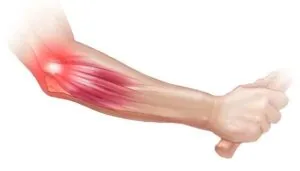

Tennis elbow, clinically known as lateral epicondylitis, refers to the pain experienced on the outer aspect of the elbow joint, often interfering with daily activities. This condition results from overuse of the elbow joint in specific repetitive motions, leading to an overload of the tendons attached to the bone. Consequently, the affected tendons become inflamed and may tear. Tennis elbow can affect anyone.

Tennis elbow is most common among individuals aged 30 to 50 and can affect both men and women. It typically affects the dominant hand, which is the one most frequently used for work or activities. People who regularly engage in repetitive tasks that strain the forearms, wrists, or hands are more susceptible. This condition is prevalent among professional athletes, including tennis and baseball players, but is not limited to them. Other professions prone to tennis elbow include auto mechanics, chefs, carpenters, cleaners, plumbers, dentists, and musicians.
Tennis elbow is a painful inflammatory condition occurring on the outer part of the elbow, whereas golfer’s elbow, or medial epicondylitis, affects the inner side of the elbow. The latter is more commonly observed in golf players. Golfers with this condition experience pain radiating down the arm and may also have finger numbness and tingling. Interestingly, golfers can also develop tennis elbow, just as tennis players can develop golfer’s elbow.
Tennis elbow can be diagnosed through a physical examination. An acutely painful point on the outer aspect of the elbow, intensifying with twisting and turning forearm movements, is diagnostically significant. Additional investigations may include X-rays to rule out other conditions, such as arthritis or fractures, and imaging methods like ultrasonography, MRI, or CT scans to assess tendon and muscle damage near the elbow joint.
Tennis elbow is a painful condition requiring prompt attention. While it may resolve spontaneously, full recovery may take up to 18 months. Delayed treatment can result in chronic elbow joint pain. Effective nonsurgical methods are available, including:
Rest: Several weeks of rest to allow the tendon time to heal. It’s crucial not to push through pain, as pain is the body’s way of signaling distress.
Nonsteroidal anti-inflammatory drugs (NSAIDs) to alleviate pain and inflammation.
Braces: A removable support brace, called a counterforce brace, can alleviate tension on tendons and muscles.
Muscle-stimulating techniques like ultrasound may reduce pain and enhance function.
Physical therapy exercises can strengthen forearm muscles and improve grip.
Injectable corticosteroids provide temporary relief from joint pain and inflammation.
Avoiding activities that worsen pain or inflammation.
Around 95% of individuals with tennis elbow experience improvement through nonsurgical treatments and can resume their activities. It may take six to 12 months for symptoms to fully dissipate.
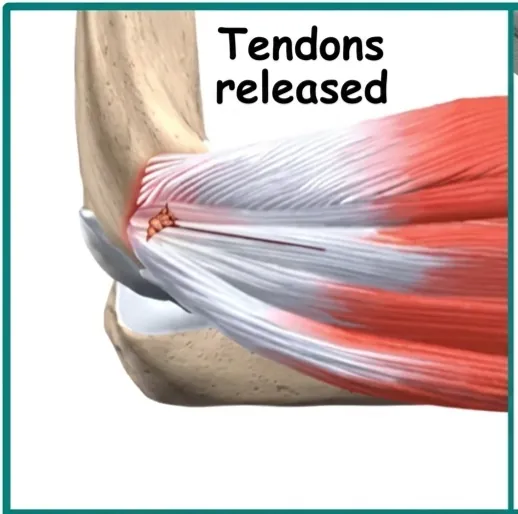
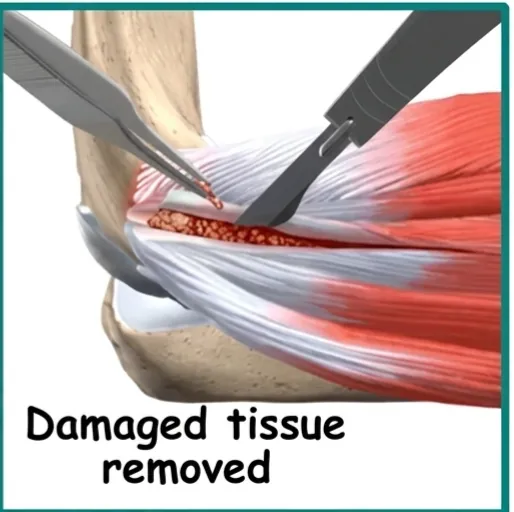
If symptoms persist after six to 12 months of nonsurgical treatment, surgery may be recommended. This surgical procedure, typically performed under brachial block or general anesthesia, involves open debridement of the tendon. The injured tendon and muscle are removed, and recovery may take four to six months.
Are you ready for a consultation?
Your treatment will be performed by board certified plastic surgeon. Schedule your appointment now!
Are you ready for a consultation?
Your treatment will be performed by board certified plastic surgeon. Schedule your appointment now!
A True Devotion to Healing
Where Compassionate Care Meets Advanced Medicine, Guiding You on the Path to Recovery and Well-being.
24/7 Patient Support
We understand that questions and concerns don’t have office hours. That’s why we offer round-the-clock support, ensuring you have access to the care and information you need, whenever you need it.
Premium Quality Materials
We commit to only using the highest-grade materials and the latest technology in your procedures. This commitment is our promise to you for superior outcomes and your utmost satisfaction.
Safety and Hygiene Promise
Your well-being is our top priority. Across our practice, we adhere to stringent safety and hygiene protocols, reassuring you of your safety and comfort at every step of your journey with us.
Tennis Elbow, also known as lateral epicondylitis, is a condition characterized by pain and inflammation on the outer part of the elbow. It differs from other elbow conditions due to its specific location and the activities that often trigger it.
Tennis Elbow is typically caused by repetitive stress on the forearm muscles and tendons. Activities such as playing tennis, gardening, or using tools can contribute to its development.
Symptoms of Tennis Elbow include pain and tenderness on the outer part of the elbow, as well as weakened grip strength. These symptoms can limit an individual’s ability to perform various daily tasks.
Diagnosis is typically based on a clinical examination by a healthcare professional. In some cases, imaging studies like X-rays or MRI may be used to rule out other conditions or assess the extent of tissue damage.
Kayakriti Clinic specializes in Tennis Elbow management with a focus on conservative treatments like physical therapy, pain management, and, when necessary, minimally invasive interventions. Their approach includes a team of experts experienced in treating elbow conditions.
Kayakriti Clinic offers a patient-centric approach to Tennis Elbow treatment, providing individualized care plans that may include non-surgical approaches to alleviate pain and restore function.
Privacy is of utmost importance to us. Rest assured, all your personal and medical information is handled with strict confidentiality.
TRUST
Our Surgeon is highly qualified and internationally certified with a team of skilled staff to perform any surgical or non-surgical treatment on your body.
SAFETY
Safety is our priority. We maintain stringent protocols to ensure a secure environment for all patients and staff members.
Breast augmentation and breast reduction are two very different procedures. Augmentation (breast enlargement) increases breast volume and alters shape, usually for cosmetic or reconstructive goals. Reduction removes breast tissue and skin to make breasts smaller and relieve symptoms. In general, augmentation is chosen by patients who want fuller, more symmetrical breasts (or as reconstruction after…
Rhinoplasty, commonly known as a “nose job,” is a surgical procedure to reshape the nose. It can be performed for cosmetic enhancement of appearance or for functional improvement of breathing (and often both). If you’re medically informed and considering rhinoplasty, it’s important to understand the types of rhinoplasty, what the surgery involves, and how the…
When diet and exercise don’t address certain stubborn fat deposits, liposuction can be a safe and effective solution—when chosen for the right reasons and in the right patient. As a commonly performed body-contouring procedure, liposuction reshapes specific areas of the body rather than serving as a weight-loss method. At Kayakriti Plastic Surgery & Dental Center…