When the lower jaw fuses with the skull bone at its joint (the condyle of the mandible fuses with the glenoid fossa of the temporal bone), it is called Temporomandibular joint ankylosis. It leads to the obliteration of normal articulation and finally immobile lower jaw (mandible).
TMJ ankylosis limits the ability of the person to open the mouth. This creates difficulty in eating food, maintaining hygiene, and even speaking.
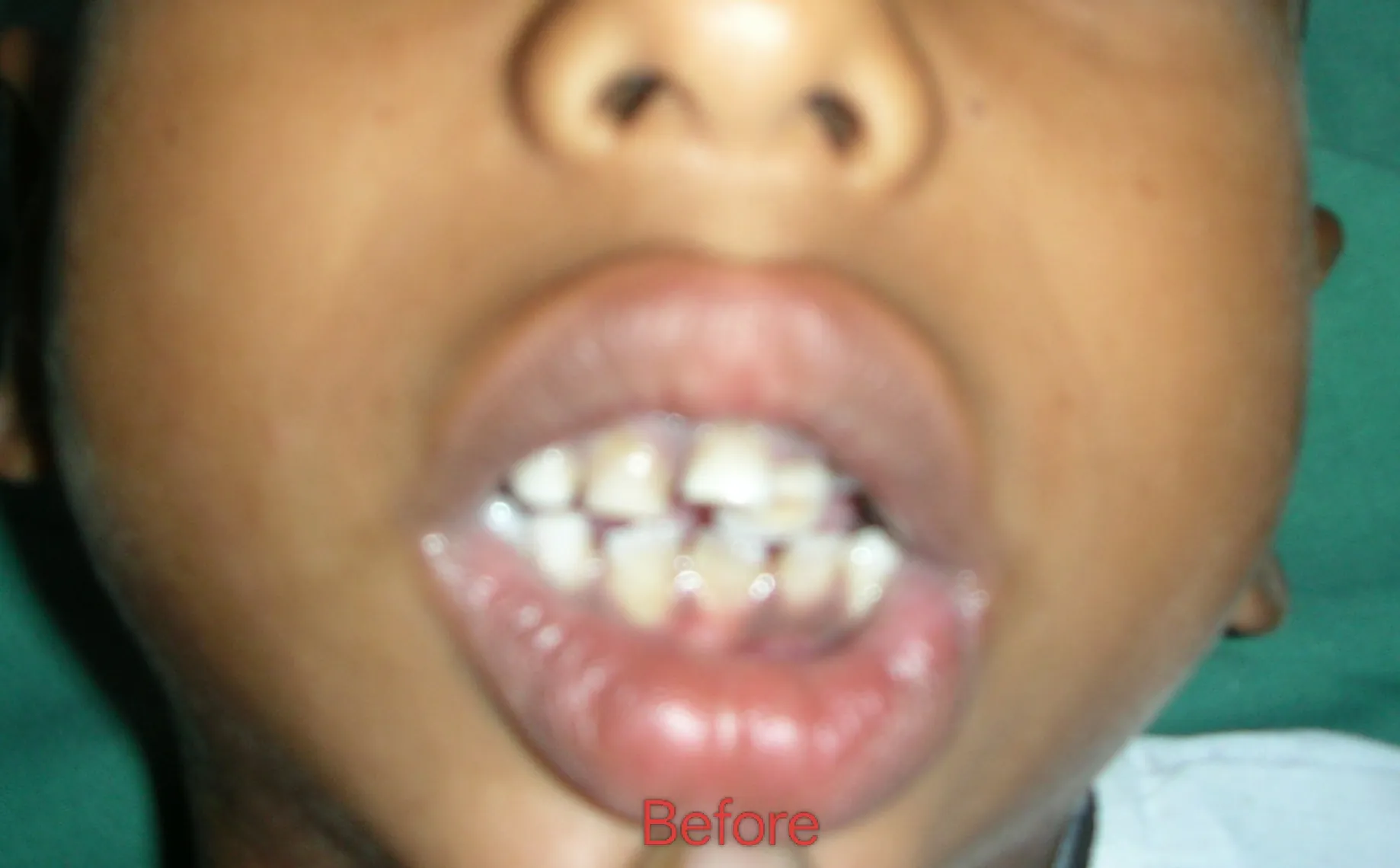
It can also lead to impaired growth of the lower jaw and various dental problems.
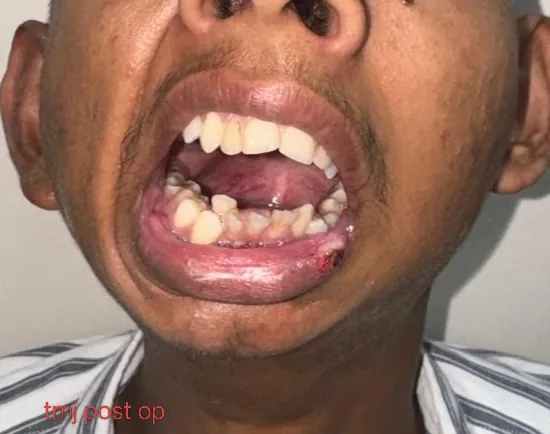
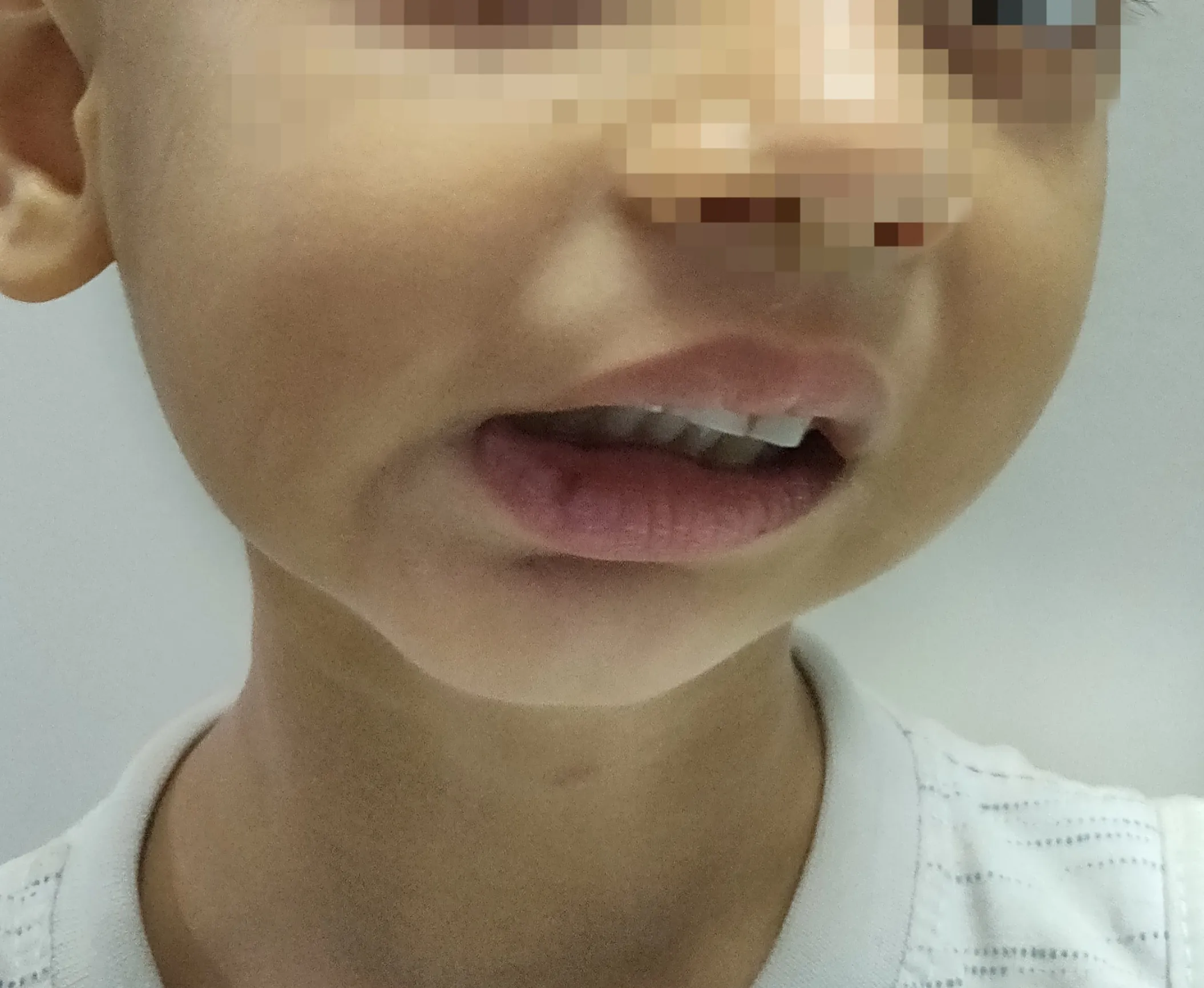
It is very commonly seen in children. Usually, they come with zero mouth opening and deformity of the lower jaw. Ankylosis leads to arrest of growth of the lower jaw, so facial asymmetry is common in children
Most of the time, patients or parents of the affected children would have consulted many physicians but the correct diagnosis would not have been reached.
Diagnosis of TMJ ankylosis is mostly clinical but it is supplemented with a few investigations like
Orthopantomogram of the mandible (OPG X-ray)- This X-ray will show the bony fusion between both bones.
A 3D CT Scan of the face- is the gold standard investigation for TMJ Ankylosis. It not only shows the Bone fusion but also the extent of the Bone block and the jaw deformity.
TMJ Ankylosis is completely treatable with surgery. Restoration of mouth opening is the primary aim of treatment. The lower jaw (mandibular) deformity, if present, is usually corrected later during second-stage surgery.
The patient is admitted one day before surgery and all preoperative investigations are done.
Anesthetizing the patient with TMJ ankylosis is very challenging as mouth opening is nil and nasal intubation must be done. We have a very competent intensivist and anesthetist in our team who has managed an innumerable number of such cases till now.
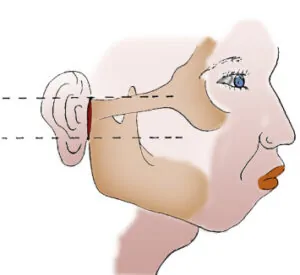
During surgery, an incision is given in front of the ear within its folds so that the incision is very well hidden and not visible to the human eye.
The Bony block is removed and space is created between the mandible below and the temporal bone above to achieve a normal mouth opening of 4 cm.
This gap between the bones is usually filled by a facial flap harvested from the scalp region so that the ankylosis does not recur. If TMJ Ankylosis is present on both sides, then the same procedure is repeated on the other side.
The incision is closed over a drain which is removed on postoperative day 2.
The patient is discharged from the hospital after the drains are removed.
Sutures are removed on the 7th day after the surgery.
Regular Jaw-opening exercises must be done for a minimum of 6 months to maintain the surgical correction.
There are chances of temporary paresis or paralysis of the facial nerve or one of its branches during the surgery leading to paralysis of one side of the face which happens in 5 to 10% of cases. The recovery takes around 3 to 6 months and is usually complete. Permanent damage to the facial nerve occurs in only 1 to 2% of the cases with abnormal anatomy and a more widespread diseased segment.
Orthognathic surgery is usually done as a second-stage procedure when the children have completed their skeletal maturity i.e., 14 to 16 years for girls and 16 to 18 years for boys.
Genioplasty or chin surgery is a single cosmetic procedure that gives the maximum cosmetic correction in boys and girls with receding chins. It is usually combined with BSSO.
Are you ready for a consultation?
Your treatment will be performed by board certified plastic surgeon. Schedule your appointment now!
Are you ready for a consultation?
Your treatment will be performed by board certified plastic surgeon. Schedule your appointment now!
A True Devotion to Healing
Where Compassionate Care Meets Advanced Medicine, Guiding You on the Path to Recovery and Well-being.
24/7 Patient Support
We understand that questions and concerns don’t have office hours. That’s why we offer round-the-clock support, ensuring you have access to the care and information you need, whenever you need it.
Premium Quality Materials
We commit to only using the highest-grade materials and the latest technology in your procedures. This commitment is our promise to you for superior outcomes and your utmost satisfaction.
Safety and Hygiene Promise
Your well-being is our top priority. Across our practice, we adhere to stringent safety and hygiene protocols, reassuring you of your safety and comfort at every step of your journey with us.
TMJ Ankylosis is a condition where the temporomandibular joint becomes fused, limiting jaw movement. It differs from other TMJ and jaw conditions due to the specific fusion of the joint.
TMJ Ankylosis can result from various causes, including trauma, infections, or genetic factors. Contributing factors may involve untreated jaw injuries or infections.
Symptoms of TMJ Ankylosis include limited jaw movement, pain, and difficulty in chewing and speaking. These symptoms can have a significant impact on an individual’s quality of life.
Diagnosis typically involves a clinical examination by a healthcare professional, along with imaging studies like X-rays or CT scans to confirm the ankylosis and determine its extent.
Management of TMJ Ankylosis often involves a surgical intervention to release the joint fusion and restore jaw mobility. After surgery, post-operative rehabilitation and physiotherapy may be required.
Kayakriti Clinic specializes in TMJ Ankylosis management, offering surgical options and post-operative care. They provide a patient-centric approach to restore normal jaw function and improve the quality of life for affected individuals.
Privacy is of utmost importance to us. Rest assured, all your personal and medical information is handled with strict confidentiality.
TRUST
Our Surgeon is highly qualified and internationally certified with a team of skilled staff to perform any surgical or non-surgical treatment on your body.
SAFETY
Safety is our priority. We maintain stringent protocols to ensure a secure environment for all patients and staff members.
Breast augmentation and breast reduction are two very different procedures. Augmentation (breast enlargement) increases breast volume and alters shape, usually for cosmetic or reconstructive goals. Reduction removes breast tissue and skin to make breasts smaller and relieve symptoms. In general, augmentation is chosen by patients who want fuller, more symmetrical breasts (or as reconstruction after…
Rhinoplasty, commonly known as a “nose job,” is a surgical procedure to reshape the nose. It can be performed for cosmetic enhancement of appearance or for functional improvement of breathing (and often both). If you’re medically informed and considering rhinoplasty, it’s important to understand the types of rhinoplasty, what the surgery involves, and how the…
When diet and exercise don’t address certain stubborn fat deposits, liposuction can be a safe and effective solution—when chosen for the right reasons and in the right patient. As a commonly performed body-contouring procedure, liposuction reshapes specific areas of the body rather than serving as a weight-loss method. At Kayakriti Plastic Surgery & Dental Center…