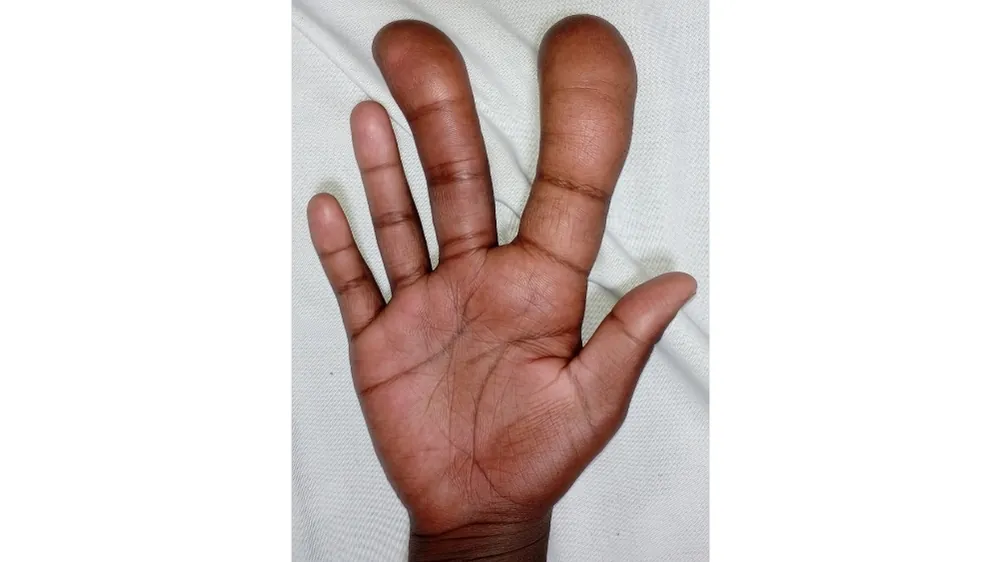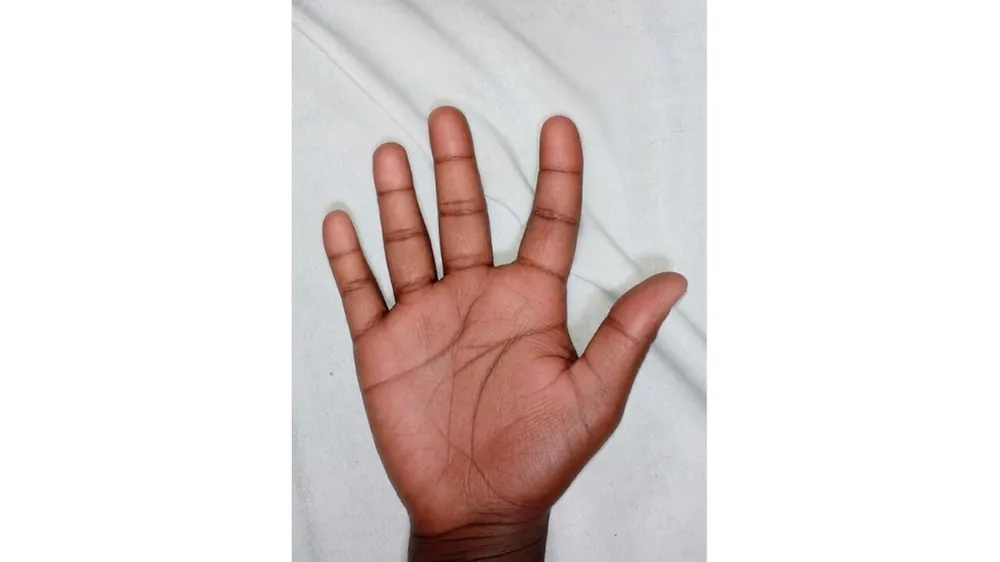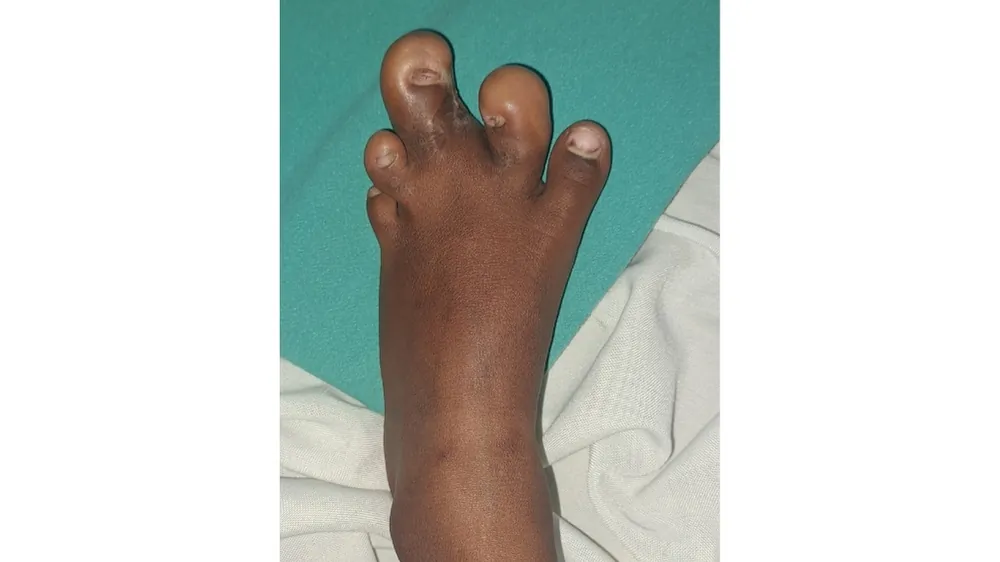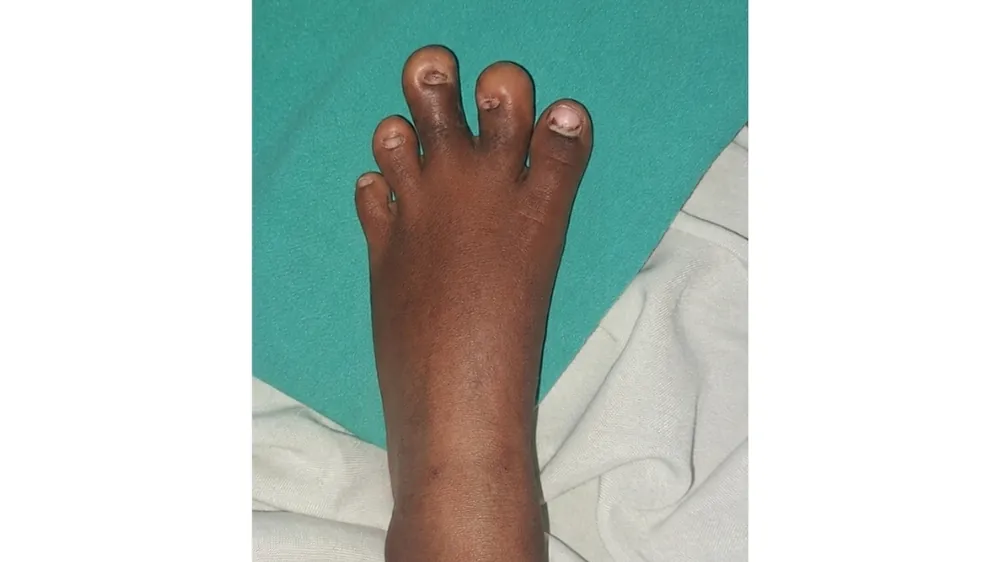
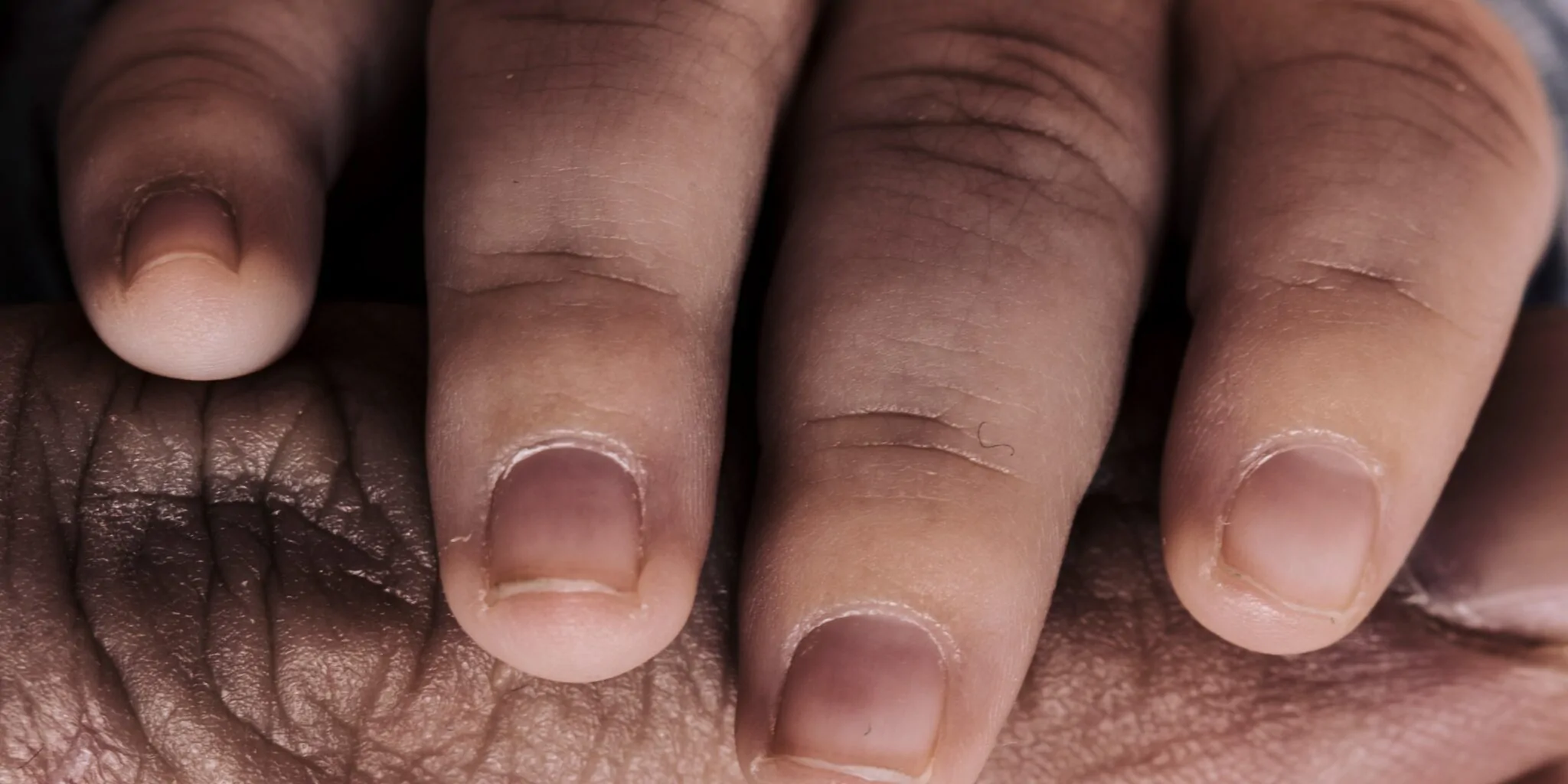
Macrodactyly is the overgrowth of a finger or toe, often resulting it to be abnormally large. It is seen in children and adolescents. This disproportionate overgrowth of the bony and fibrofatty tissue of a finger or toe of the child is usually present since birth.
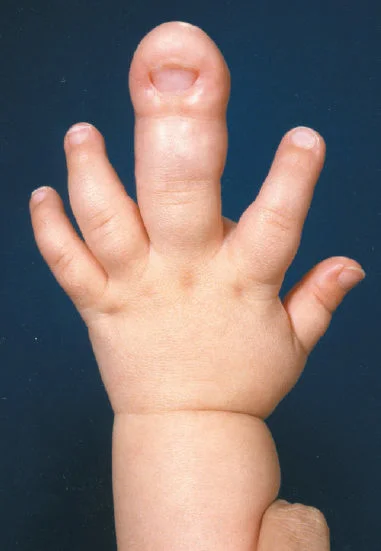
The exact cause is not known. It is definitely not hereditary means it does not run in families. It is related to lipofibromatosis (overdevelopment of the tissues) of the nerve of the finger, vascular malformations, or bony overgrowth.
Macrodactyly can manifest in 2 main forms, including:
Static (enlargement at birth with proportional growth as the child grows)- the rate of growth of the finger or toe is roughly the same as the growth of other fingers or toes.
Progressive (disproportionate growth as the child grows)- the rate of growth of the finger is much more than the growth of the rest of the hand or foot.
The presentation of macrodactyly varies with each patient.
A. If the child has static macrodactyly, the affected fingers or toes will be about one and a half times the length and width of the normal adjoining fingers.
B. If the child has progressive macrodactyly, then the involved digits may be huge. This can lead to severe deformities of the foot or hand and can lead to functional impairment also making the child not able to use the hand or foot well.
The following features are seen in the hand or the foot-
The hand/foot may show overgrowth with excessive formation of fat.
Affected digits may be stiff and curved.
The fingers often deviate away from each other.
Overgrowth in the palm and forearm or sole area of the foot is often seen.
Excessive fatty tissue is commonly seen along the median nerve in the hand.
The best treatment of Macrodactyly is with surgery but the Timing of surgery is patient-specific.
Macrodactyly is a difficult problem to treat and would require multiple surgeries so that the overgrown finger or toe looks quite normal and natural as other fingers and toes.
The main goal of the surgery is to maximize the function of the finger and a better cosmetic match with the other fingers or toes.
In mild cases, only careful observation is advised with regular follow-ups.
In severely deformed fingers or toes or with progressive macrodactyly, surgery is advised which will be done in stages. The surgery cannot be done in a single stage in Macrodactyly as all the components (nerve, vessel, bone, skin, and fat) are larger in the digit.
Epiphysiodesis of the bone– In the first stage, epiphysiodesis is done to arrest the growth of the digit along with the excision or debulking of the involved digital nerve.
Debulking procedure for soft tissue: Debulking is usually done to decrease the width of the finger or toe. It is usually done in multiple stages and the interval should be at least 3 months between sessions. Excision of the involved digital nerve may slow down the overgrowth as believed (TSUGE).
Shortening procedure for the bone- If the growth arrest is not satisfactory or if the digit is much overgrown, then corrective osteotomy (cutting of bone) of the middle bone (phalanx) and the distal bone (phalanx) with removal of bone and fixation with k-wire is done.
Arthrodesis of the joints of the involved fingers or toes can also be attempted.
Amputation of the finger or toe has been tried in overgrown digits with stiffness and limited function or those that interfere with the function of the other normal digits.
Your treatment will be performed by board certified plastic surgeon. Schedule your appointment now!
Are you ready for a consultation?
Your treatment will be performed by board certified plastic surgeon. Schedule your appointment now!
A True Devotion to Healing
Where Compassionate Care Meets Advanced Medicine, Guiding You on the Path to Recovery and Well-being.
24/7 Patient Support
We understand that questions and concerns don’t have office hours. That’s why we offer round-the-clock support, ensuring you have access to the care and information you need, whenever you need it.
Premium Quality Materials
We commit to only using the highest-grade materials and the latest technology in your procedures. This commitment is our promise to you for superior outcomes and your utmost satisfaction.
Safety and Hygiene Promise
Your well-being is our top priority. Across our practice, we adhere to stringent safety and hygiene protocols, reassuring you of your safety and comfort at every step of your journey with us.
Macrodactyly is a rare congenital condition characterized by the overgrowth of one or more fingers or toes. It differs from other hand or finger conditions due to the excessive size of the affected digits.
Macrodactyly is generally considered a congenital anomaly and can result from genetic mutations or spontaneous developmental factors. Contributing factors may include variations in tissue growth during fetal development.
Symptoms of Macrodactyly include disproportionately large fingers or toes, which can impact an individual’s hand function and appearance. The specific symptoms vary based on the affected digits and the degree of overgrowth.
Diagnosis typically involves a clinical examination by a healthcare professional, along with imaging studies like X-rays or MRI to evaluate the size and bone structure of the affected digits.
Kayakriti Clinic specializes in macrodactyly management with a focus on surgical reduction and reconstruction to improve function and aesthetics. Their approach includes a team of experts experienced in hand and foot deformity treatment.
Kayakriti Clinic offers a patient-centric approach to macrodactyly treatment, providing personalized surgical plans, rehabilitation, and post-operative care to optimize digit appearance and function.
Privacy is of utmost importance to us. Rest assured, all your personal and medical information is handled with strict confidentiality.
TRUST
Our Surgeon is highly qualified and internationally certified with a team of skilled staff to perform any surgical or non-surgical treatment on your body.
SAFETY
Safety is our priority. We maintain stringent protocols to ensure a secure environment for all patients and staff members.
Breast augmentation and breast reduction are two very different procedures. Augmentation (breast enlargement) increases breast volume and alters shape, usually for cosmetic or reconstructive goals. Reduction removes breast tissue and skin to make breasts smaller and relieve symptoms. In general, augmentation is chosen by patients who want fuller, more symmetrical breasts (or as reconstruction after…
Rhinoplasty, commonly known as a “nose job,” is a surgical procedure to reshape the nose. It can be performed for cosmetic enhancement of appearance or for functional improvement of breathing (and often both). If you’re medically informed and considering rhinoplasty, it’s important to understand the types of rhinoplasty, what the surgery involves, and how the…
When diet and exercise don’t address certain stubborn fat deposits, liposuction can be a safe and effective solution—when chosen for the right reasons and in the right patient. As a commonly performed body-contouring procedure, liposuction reshapes specific areas of the body rather than serving as a weight-loss method. At Kayakriti Plastic Surgery & Dental Center…