Vascular malformations involve the abnormal development of blood vessels in various parts of the body. These malformations can be categorized based on the volume of blood they allow to pass through.
There are two types:
a) Low-flow vascular malformations are lymphatic or venous.
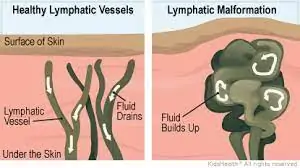
Low-flow VMs are formed by either venous or lymphatic or both of the blood vessels. These are called Low flow vascular malformations considering the speed of flow of fluid in them. They are the abnormal bunch of vessels conducting blood or lymph fluid within them and forming a mass-like appearance.
They can develop small stones like nodules within them because of the slow speed of the fluid passing through them.
If left untreated, the swelling can become so large that it can involve major blood vessels or vital organs completely. In such cases, surgery is avoided and not done because it may lead to dysfunction of the involved organ which may cause more severe complications.
Diagnosis involves a clinical examination to assess features such as soft consistency, bluish color, and increased size with a change in body position. Additionally, an MRI scan is routinely performed to determine the anatomical extent of the lesion in all dimensions.
The surgical procedure for low-flow VM can be highly challenging and technically demanding if it is big and widespread. Surgery is the treatment of choice for low-flow vascular malformations inaccessible locations like the face and is usually done by plastic surgeons.
The procedure requires a lot of preparation from both the patient and the doctor.
During the surgery, feeder vessels are identified, ligated and mass is debulked or excised.
1. Possible complications – should be discussed at length with Dr Amit Agarwal as the low-flow vascular malformations can be quite deep and involve a lot of nearby important structures.
2. Requirement of more than one stage in excision- Sometimes in few cases-
a) if the extent of the malformation is too extensive and deep and
b) if the excision requires the sacrifice of major vessels or nerves or
c) If it endangers the survival of the part,
Then complete excision is not done and part of the malformation which is near the vital structures is left behind so that the function of the part is less disturbed.
The remaining part can be exercised in a separate stage after a few months.
3. The method of coverage of the created defect after the excision of malformation should be agreed upon by the patient and his or her attendants.
After removal of the malformation, a defect may be created which may require simple skin suturing or post-surgical reconstruction with flap/skin graft cover.
Skin grafting may be done if the defect is not very deep and vitals structures are embedded deep and not exposed.
Flap Reconstruction which is usually done when any critical part is exposed like bones, tendons, and joints and it becomes really important to preserve them for normal functioning. This can be done with the local flap or microsurgical-free flaps. A well-blood-supplied tissue is taken from the adjacent area or from other areas of the body to cover the part of the limb with it.
The recurrence rate is high in LARGE and GIANT low-flow malformations as complete excision is not possible in such cases and debulking is done to lessen the symptoms of the malformation on the body.
Are you ready for a consultation?
Your treatment will be performed by board certified plastic surgeon. Schedule your appointment now!
Are you ready for a consultation?
Your treatment will be performed by board certified plastic surgeon. Schedule your appointment now!
A True Devotion to Healing
Where Compassionate Care Meets Advanced Medicine, Guiding You on the Path to Recovery and Well-being.
24/7 Patient Support
We understand that questions and concerns don’t have office hours. That’s why we offer round-the-clock support, ensuring you have access to the care and information you need, whenever you need it.
Premium Quality Materials
We commit to only using the highest-grade materials and the latest technology in your procedures. This commitment is our promise to you for superior outcomes and your utmost satisfaction.
Safety and Hygiene Promise
Your well-being is our top priority. Across our practice, we adhere to stringent safety and hygiene protocols, reassuring you of your safety and comfort at every step of your journey with us.
Low-Flow Vascular Malformations are characterized by abnormal blood vessel development with slow blood flow. They differ from high-flow malformations due to the reduced blood flow rate and absence of arterial-venous connections.
The exact cause of Low-Flow Vascular Malformations is often unknown. They can be present at birth and may result from genetic factors or spontaneous developmental abnormalities.
Symptoms of Low-Flow Vascular Malformations can vary widely, but they often include pain, swelling, and cosmetic concerns. The impact on an individual’s health depends on the size, location, and complications associated with the malformation.
Diagnosis involves a clinical evaluation, along with imaging studies like ultrasound, MRI, or angiography. These methods help determine the location, size, and impact of the vascular malformation.
Treatment options may include observation, medication, sclerotherapy, or surgical intervention, depending on the malformation’s size, symptoms, and location. Treatment is recommended if the malformation causes significant symptoms or complications.
Kayakriti Clinic specializes in the management of Low-Flow Vascular Malformations and offers a range of treatment options. Their multidisciplinary approach ensures comprehensive care for individuals with these malformations.
Privacy is of utmost importance to us. Rest assured, all your personal and medical information is handled with strict confidentiality.
TRUST
Our Surgeon is highly qualified and internationally certified with a team of skilled staff to perform any surgical or non-surgical treatment on your body.
SAFETY
Safety is our priority. We maintain stringent protocols to ensure a secure environment for all patients and staff members.
Breast augmentation and breast reduction are two very different procedures. Augmentation (breast enlargement) increases breast volume and alters shape, usually for cosmetic or reconstructive goals. Reduction removes breast tissue and skin to make breasts smaller and relieve symptoms. In general, augmentation is chosen by patients who want fuller, more symmetrical breasts (or as reconstruction after…
Rhinoplasty, commonly known as a “nose job,” is a surgical procedure to reshape the nose. It can be performed for cosmetic enhancement of appearance or for functional improvement of breathing (and often both). If you’re medically informed and considering rhinoplasty, it’s important to understand the types of rhinoplasty, what the surgery involves, and how the…
When diet and exercise don’t address certain stubborn fat deposits, liposuction can be a safe and effective solution—when chosen for the right reasons and in the right patient. As a commonly performed body-contouring procedure, liposuction reshapes specific areas of the body rather than serving as a weight-loss method. At Kayakriti Plastic Surgery & Dental Center…


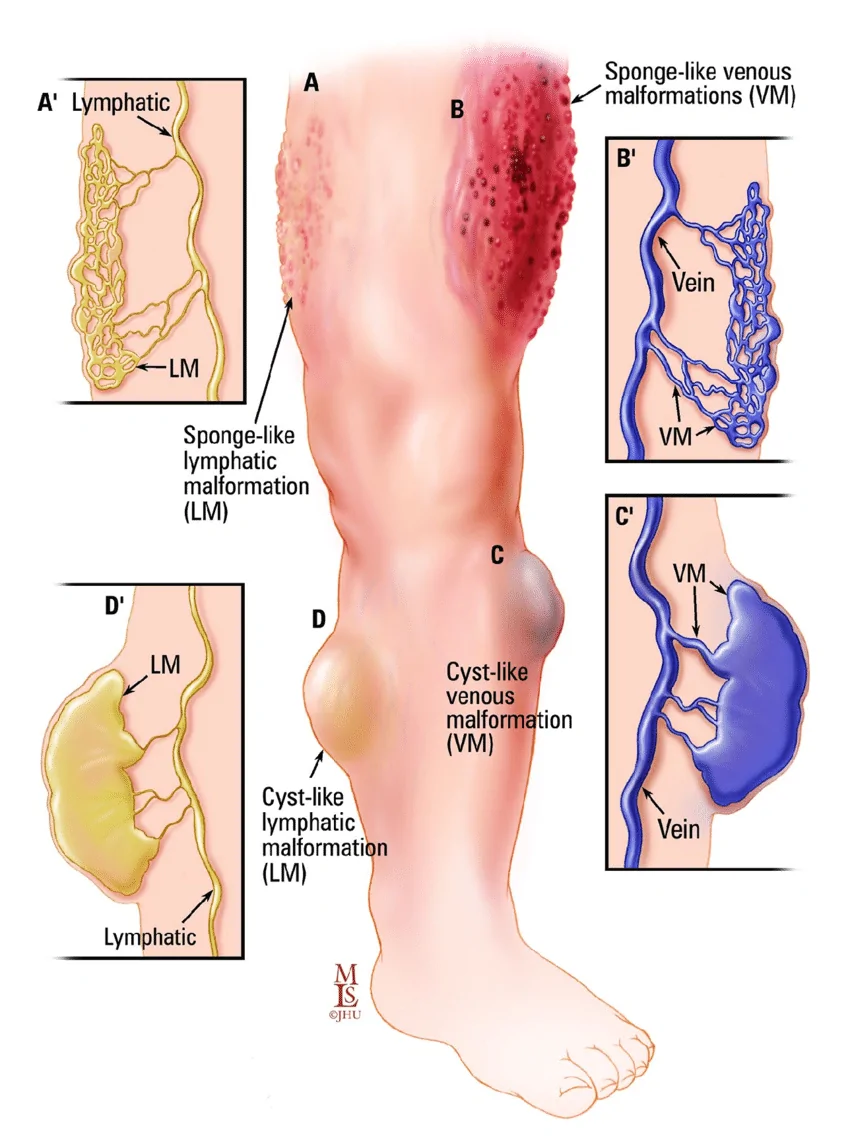
 They may cause complications such as: