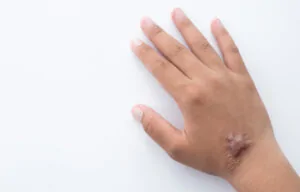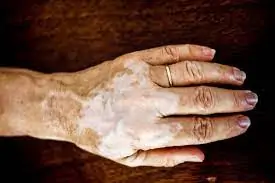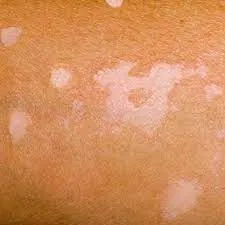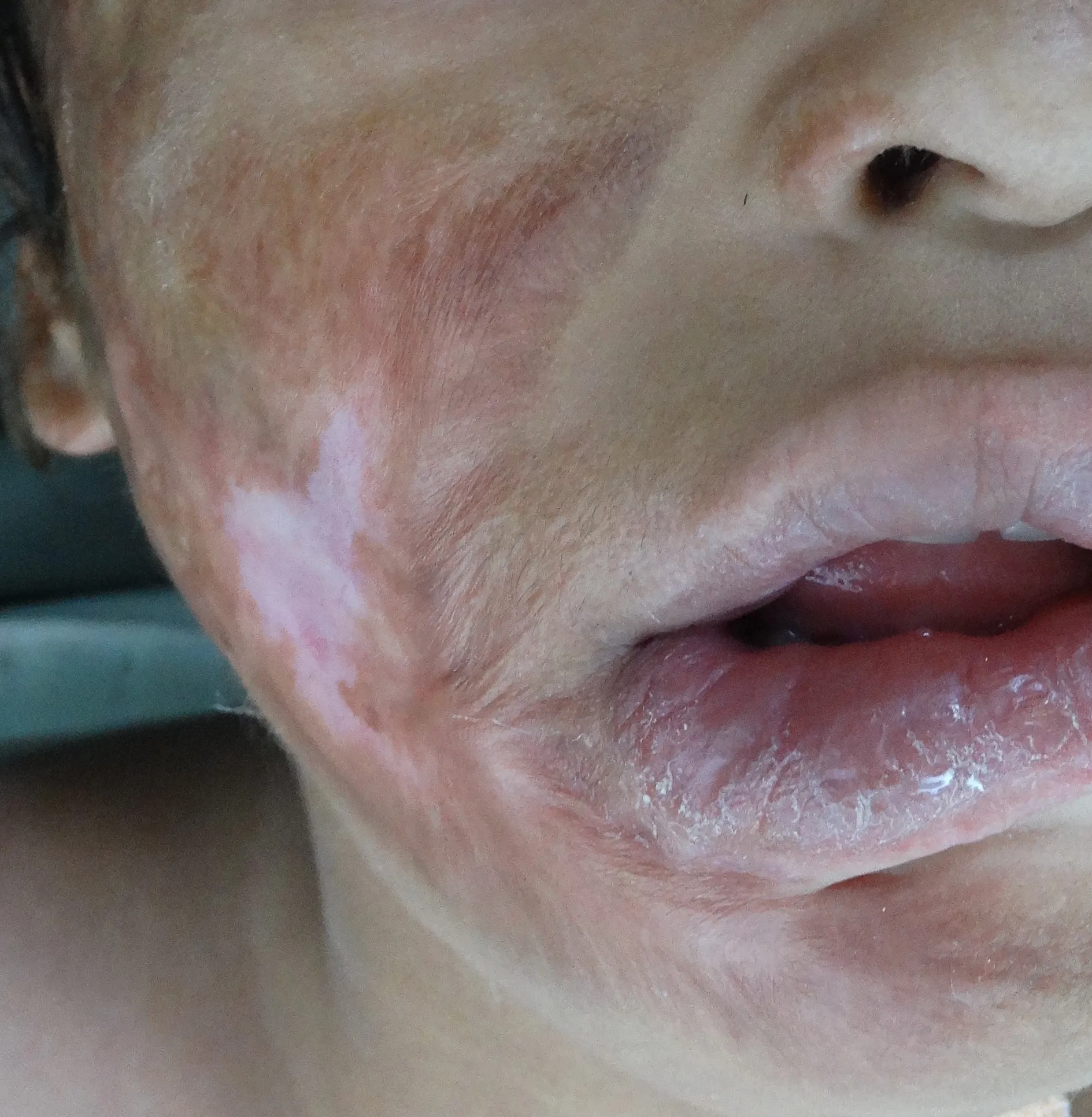
After experiencing burn injuries, individuals may notice a lingering issue, a white patch, commonly known as post-burn vitiligo. This white patch appears at the center of the scar and is caused by the absence of melanocytes, the pigment-producing cells responsible for skin color. Post-burn vitiligo can be a significant social concern, sometimes overshadowing the original burn scar itself. The primary method for addressing this issue is through surgical intervention.
Patients often seek medical intervention from dermatologists for post-burn vitiligo, hoping for treatment through medications and topical creams. However, it’s essential to note that post-burn vitiligo does not typically respond to medication or creams.
Effective treatment for post-burn white patches typically involves surgical methods. At Kayakriti, this condition is addressed through dermabrasion, wherein the vitiligo patch is superficially removed. Following dermabrasion, the exposed area is treated using one of two methods:
Ultra-Thin Skin Graft: In this approach, an ultrathin skin graft is placed over the raw area, resulting in skin color closely matching the surrounding area. This method treats the patch entirely in a single stage, although some patients may experience temporary side effects such as itching and small cysts over the grafted area.
Melanocyte Suspension: Alternatively, the dermabrasion method can be followed by applying a suspension of melanocytes, the skin color pigment-producing cells, to the exposed area. The first dressing is typically removed on the 7th day, with visible skin color changes taking around 5 to 6 weeks to appear. This method offers the advantage of a relatively lower requirement for grafts, with a lower likelihood of inclusion of cysts. However, it may sometimes fail to fully restore color to the patch.
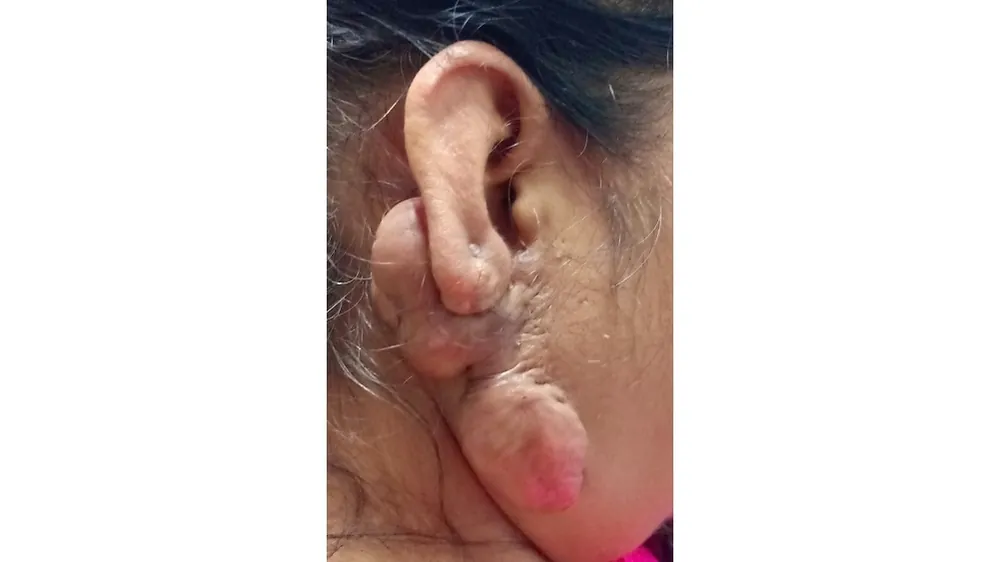
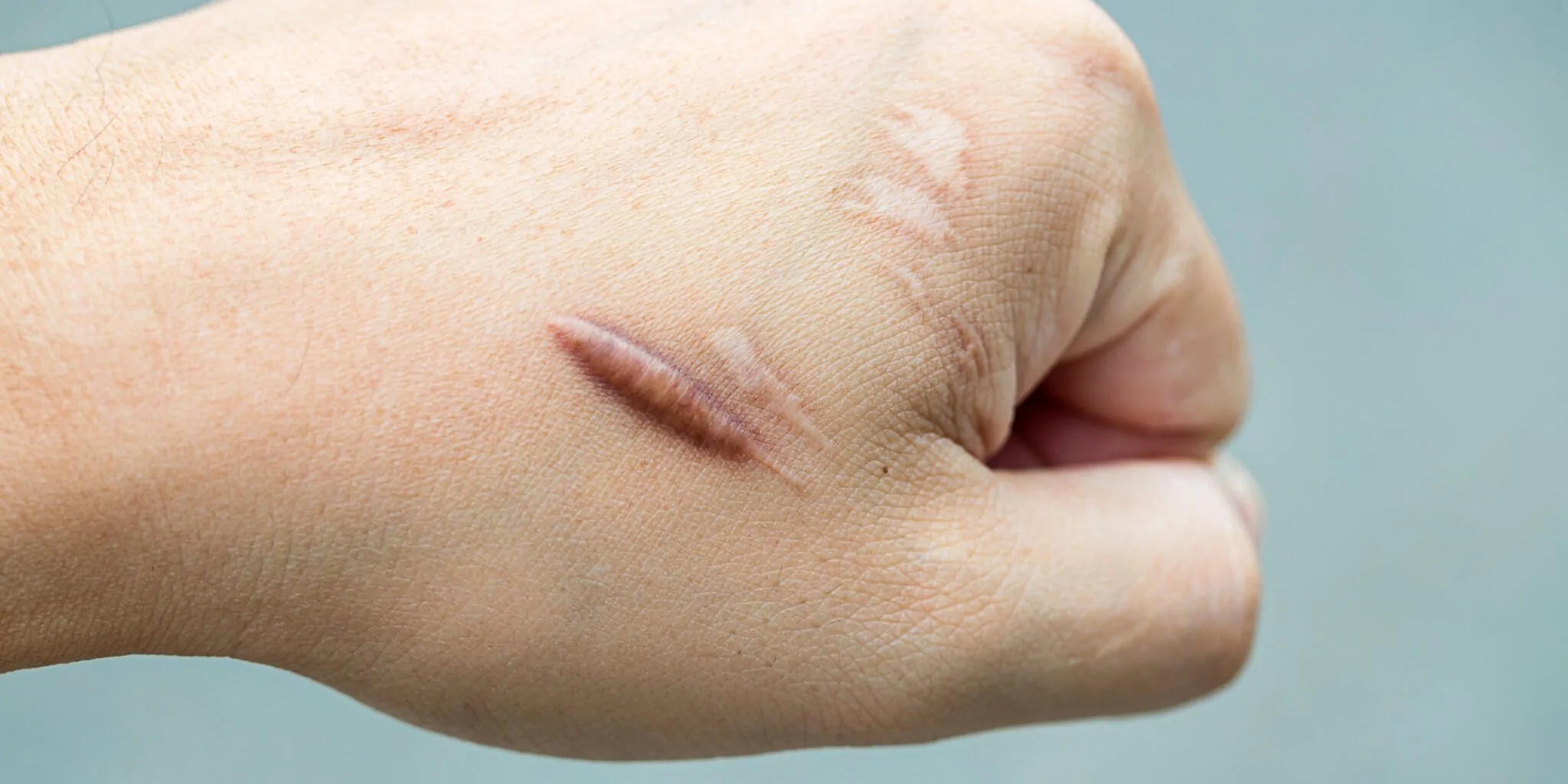
In some individuals, there is a genetic predisposition to develop keloids or hypertrophic scars. Hypertrophic scars are raised and firm but do not cause structural deformities. Keloids, on the other hand, are more aggressive, growing beyond the original scar boundaries and potentially causing itching, redness, and cosmetic distortion.
To prevent keloid formation in burn cases, it is essential to promptly assess the burn wound and take necessary actions, such as skin grafting during the initial stage of the burn. Additional prevention methods include pressure garments, massage therapy, and the application of silicone gel/sheets. These methods are also the primary treatments for hypertrophic scars.
At Kayakriti, the treatment of keloid scars often begins with intralesional triamcinolone injections given at monthly intervals. This treatment approach has a high success rate, reducing the size of hypertrophic scars and keloids while alleviating itching and redness.
In cases where keloids are refractory to injection treatment, low-dose radiotherapy can be considered. As a last resort, surgical excision followed by both low-dose radiotherapy and intralesional injections of triamcinolone may be performed in highly refractory cases that cause discomfort to the patient due to symptoms and disfigurement.
Are you ready for a consultation?
Your treatment will be performed by board certified plastic surgeon. Schedule your appointment now!
Are you ready for a consultation?
Your treatment will be performed by board certified plastic surgeon. Schedule your appointment now!
A True Devotion to Healing
Where Compassionate Care Meets Advanced Medicine, Guiding You on the Path to Recovery and Well-being.
24/7 Patient Support
We understand that questions and concerns don’t have office hours. That’s why we offer round-the-clock support, ensuring you have access to the care and information you need, whenever you need it.
Premium Quality Materials
We commit to only using the highest-grade materials and the latest technology in your procedures. This commitment is our promise to you for superior outcomes and your utmost satisfaction.
Safety and Hygiene Promise
Your well-being is our top priority. Across our practice, we adhere to stringent safety and hygiene protocols, reassuring you of your safety and comfort at every step of your journey with us.
Burn White Patches are areas of the skin that lose pigmentation after a burn injury, resulting in a white or light-colored patch. Keloid Scars are raised, thickened, and often itchy scars that may develop after a burn or other skin injury.
Burn White Patches can occur after burn injuries, while Keloid Scars are often linked to an overproduction of collagen in response to skin trauma, such as burns, cuts, or surgical incisions.
Burn White Patches result in depigmented skin areas that may be more sensitive to the sun. Keloid Scars are raised, firm, and may cause itching, tenderness, and cosmetic concerns.
Diagnosis involves a clinical examination by a healthcare professional to identify the presence and characteristics of Burn White Patches or Keloid Scars.
Kayakriti Clinic specializes in Burn White Patch and Keloid Scar management with a focus on personalized treatment plans, which may include laser therapy, steroid injections, or surgical revision for Keloid Scars.
Kayakriti Clinic offers a patient-centric approach to treating Burn White Patches and Keloid Scars, providing options for scar revision, skin restoration, and post-treatment care to optimize results.
Privacy is of utmost importance to us. Rest assured, all your personal and medical information is handled with strict confidentiality.
TRUST
Our Surgeon is highly qualified and internationally certified with a team of skilled staff to perform any surgical or non-surgical treatment on your body.
SAFETY
Safety is our priority. We maintain stringent protocols to ensure a secure environment for all patients and staff members.
Breast augmentation and breast reduction are two very different procedures. Augmentation (breast enlargement) increases breast volume and alters shape, usually for cosmetic or reconstructive goals. Reduction removes breast tissue and skin to make breasts smaller and relieve symptoms. In general, augmentation is chosen by patients who want fuller, more symmetrical breasts (or as reconstruction after…
Rhinoplasty, commonly known as a “nose job,” is a surgical procedure to reshape the nose. It can be performed for cosmetic enhancement of appearance or for functional improvement of breathing (and often both). If you’re medically informed and considering rhinoplasty, it’s important to understand the types of rhinoplasty, what the surgery involves, and how the…
When diet and exercise don’t address certain stubborn fat deposits, liposuction can be a safe and effective solution—when chosen for the right reasons and in the right patient. As a commonly performed body-contouring procedure, liposuction reshapes specific areas of the body rather than serving as a weight-loss method. At Kayakriti Plastic Surgery & Dental Center…