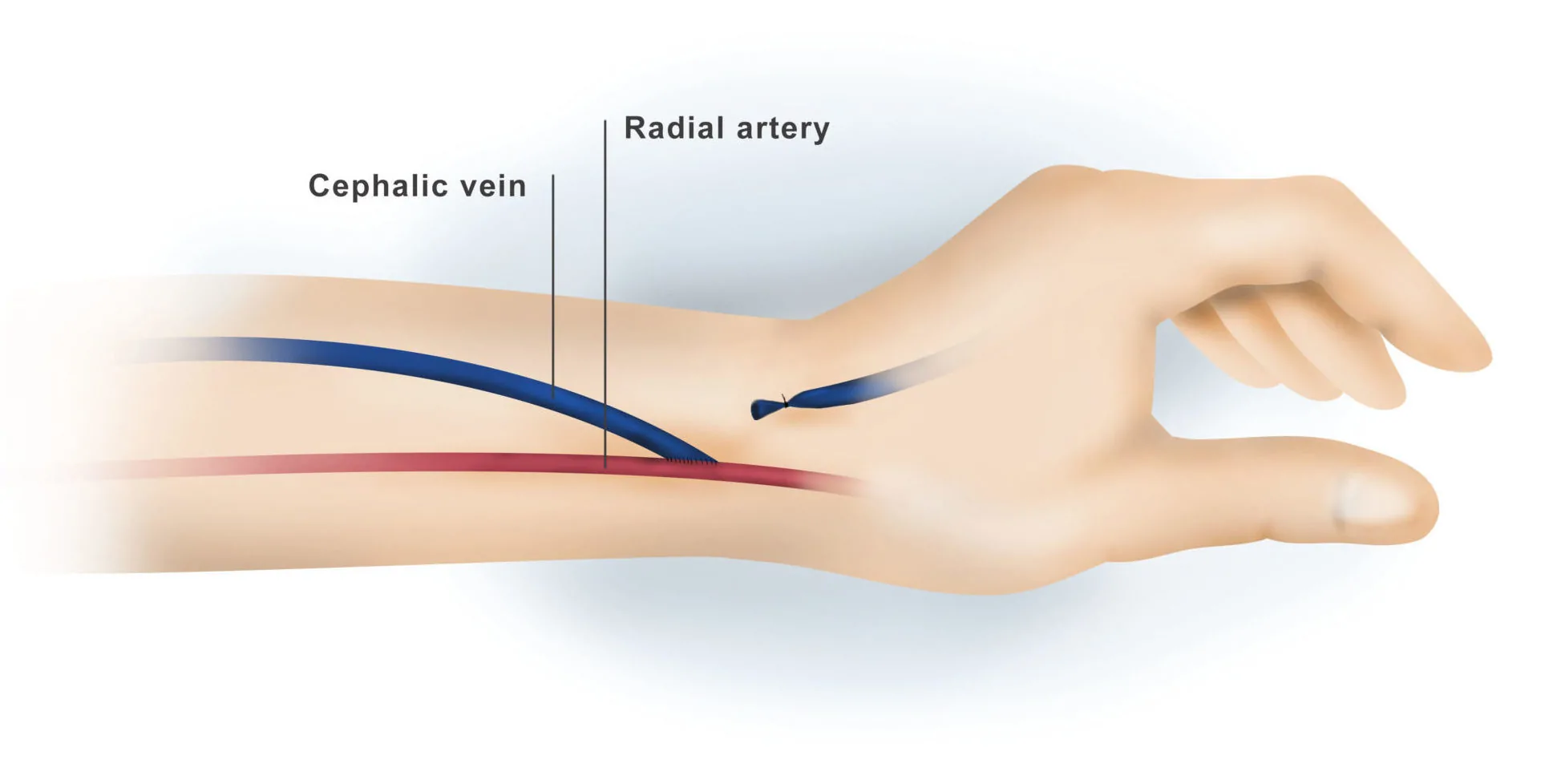
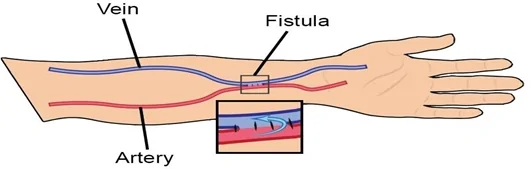
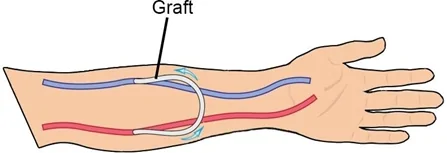
An arteriovenous (AV) fistula is a surgical procedure that involves connecting an artery and a vein, commonly performed to provide vascular access for patients requiring dialysis due to kidney diseases.
Dialysis is necessary for patients with kidney failure because it replicates the function of the kidneys in filtering and purifying toxins from the blood. When the kidneys fail, they cannot effectively remove these toxins, leading to a buildup in the bloodstream. Chronic (end-stage) kidney disease leads to a decrease in urine output, making it necessary for patients to undergo dialysis.
Dialysis is carried out using a dialysis machine. This machine draws impure blood from the patient’s body, purifies it externally, and then returns the purified blood to the patient. Two lines of intravascular access are required in the patient’s body for this process to take place.
An arteriovenous (AV) fistula is considered the most durable and effective type of dialysis access for patients with kidney failure. It creates a vascular access point in the body for the dialysis machine. The AV fistula surgery involves connecting a vein and an artery under the magnification of a microscope to facilitate the removal of blood by the machine and its return to the patient’s body.
The primary benefits of AV fistula surgery are:
Ease of Dialysis: With an AV fistula in place, blood can be drawn and returned with greater ease during dialysis, benefiting both the patient and the technician.
Reduced Pain: Without an AV fistula, technicians need to introduce two intravenous cannulas, one for venous access and one for arterial access, which can be more painful for the patient and requires highly skilled technicians.
The success of AV fistula surgery is influenced by the condition of the chosen artery and recipient veins in the arms and forearms. Patients who undergo AV fistula surgery often have had multiple intravenous accesses for antibiotics and blood transfusions, which can damage the vein walls and affect the quality of the AV fistula. In such cases, additional surgeries may be required to establish a viable fistula at a different site.
Before AV fistula creation, normal blood flow in the arm artery is around 85 to 110 milliliters per minute (mL/min). After the AV fistula is formed, blood flow immediately increases to 400–500 mL/min, and within one month, it can reach 700–1,000 mL/min. Fistulas created at the elbow can carry a larger blood volume compared to those at the wrist.
Once an AV fistula is established, it typically takes several weeks, around six weeks, to mature and be ready for dialysis. It needs this time to adapt and withstand the pressure and blood flow of the dialysis machine.
One of the complications associated with AV fistulas is the development of a pseudoaneurysm. This condition involves a localized swelling and leakage of blood near the site of the AV fistula.
Are you ready for a consultation?
Your treatment will be performed by board certified plastic surgeon. Schedule your appointment now!
Are you ready for a consultation?
Your treatment will be performed by board certified plastic surgeon. Schedule your appointment now!
A True Devotion to Healing
Where Compassionate Care Meets Advanced Medicine, Guiding You on the Path to Recovery and Well-being.
24/7 Patient Support
We understand that questions and concerns don’t have office hours. That’s why we offer round-the-clock support, ensuring you have access to the care and information you need, whenever you need it.
Premium Quality Materials
We commit to only using the highest-grade materials and the latest technology in your procedures. This commitment is our promise to you for superior outcomes and your utmost satisfaction.
Safety and Hygiene Promise
Your well-being is our top priority. Across our practice, we adhere to stringent safety and hygiene protocols, reassuring you of your safety and comfort at every step of your journey with us.
An AV Fistula is a surgical procedure that involves connecting an artery and a vein to create a high-flow, efficient access point for dialysis. It allows for the removal and return of blood during hemodialysis treatment for patients with kidney diseases.
Common conditions include end-stage renal disease (ESRD). An AV Fistula is preferred because it provides a reliable, long-lasting access point with fewer complications compared to other access methods.
Benefits include enhanced blood flow, fewer complications, and reduced infection risk. An AV Fistula allows for more efficient and comfortable dialysis sessions, improving the overall experience for patients.
Suitability is determined by a vascular surgeon or nephrologist. Factors considered include the patient’s vascular health, vein quality, and the expected duration of dialysis treatment.
The process involves an evaluation, surgical creation of the AV Fistula, and a maturation period to allow the fistula to develop. During each stage, patients can expect regular check-ups and monitoring.
Recovery is usually a few weeks to allow the fistula to mature. Post-operative care includes wound care, monitoring for complications, and education on protecting and maintaining the access for dialysis.
Privacy is of utmost importance to us. Rest assured, all your personal and medical information is handled with strict confidentiality.
TRUST
Our Surgeon is highly qualified and internationally certified with a team of skilled staff to perform any surgical or non-surgical treatment on your body.
SAFETY
Safety is our priority. We maintain stringent protocols to ensure a secure environment for all patients and staff members.
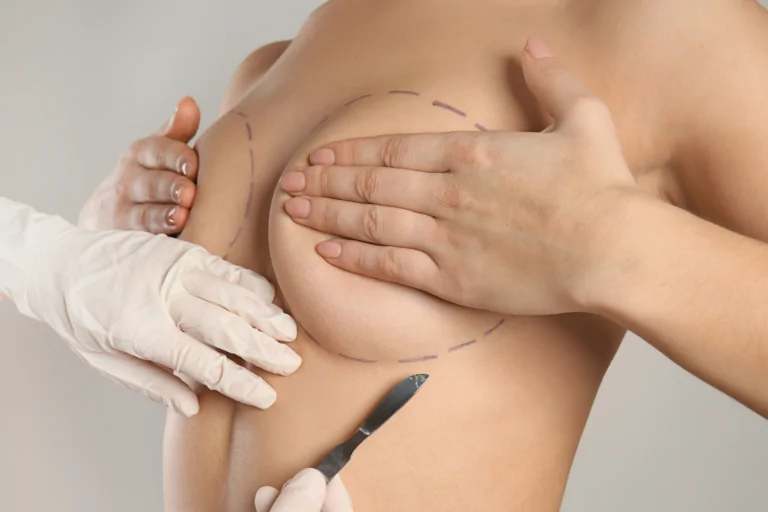
Breast augmentation and breast reduction are two very different procedures. Augmentation (breast enlargement) increases breast volume and alters shape, usually for cosmetic or reconstructive goals. Reduction removes breast tissue and skin to make breasts smaller and relieve symptoms. In general, augmentation is chosen by patients who want fuller, more symmetrical breasts (or as reconstruction after…
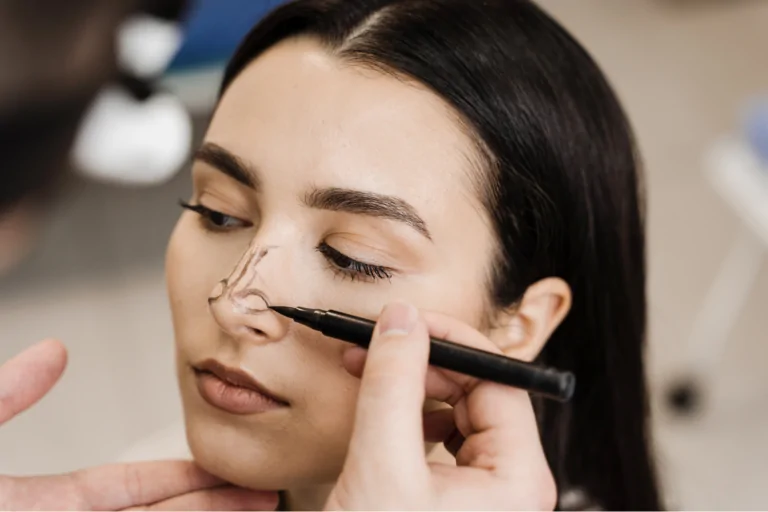
Rhinoplasty, commonly known as a “nose job,” is a surgical procedure to reshape the nose. It can be performed for cosmetic enhancement of appearance or for functional improvement of breathing (and often both). If you’re medically informed and considering rhinoplasty, it’s important to understand the types of rhinoplasty, what the surgery involves, and how the…
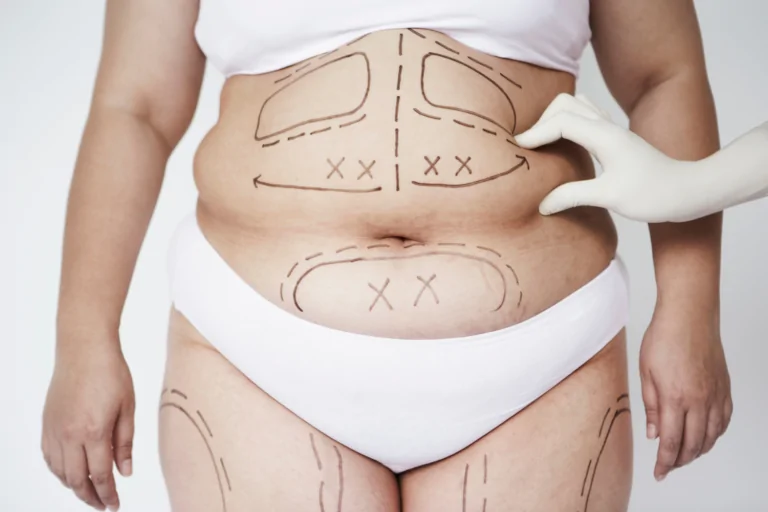
When diet and exercise don’t address certain stubborn fat deposits, liposuction can be a safe and effective solution—when chosen for the right reasons and in the right patient. As a commonly performed body-contouring procedure, liposuction reshapes specific areas of the body rather than serving as a weight-loss method. At Kayakriti Plastic Surgery & Dental Center…