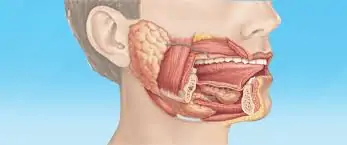
Jaw tumors refer to growths within the upper and lower jaw bones, which can be either benign or cancerous. These tumors often lead to significant discomfort, affecting functions such as eating, speaking, and swallowing.
Jaw tumors encompass various types, including Ameloblastoma, Aneurysmal bone cysts, and Giant cell tumors. Additionally, cancers like osteosarcoma, chondrosarcoma, and Ewing’s sarcoma can affect the jaws.
Surgical excision of a jaw tumor with the removal of a segment of the jaw can cause serious issues in the management of air passages of the person’s face. Other problems faced by the individual include difficulty in chewing, speech, and cosmesis.
After the removal of the jaw, it becomes imperative to restore the continuity of bone. Jaw reconstruction will also enable its functioning to allow a person to eat, swallow, and speak as before while giving the surgical site a more cosmetic appearance.
Jaw reconstruction is most commonly performed with the help of microvascular transfer of bone and soft tissue taken from the leg and fixed with reconstruction plates and screws. It is a highly specialized microvascular surgery procedure consisting of the harvest of a bone flap, shaping and fixation of bone, insetting of skin and soft tissues, microvascular anastomoses, and external skin closure.
Once the jaw is fixed with the bone flap, artificial teeth can be implanted into the bone after one year of the surgery. This will enable the patient to chew food from that side of the jaw and improve the cosmesis of their face and smile.
Jaw Reconstruction can be done at the time of jaw removal surgery or after a few months or years as a separate surgery.
Primary Reconstruction- This is performed at the time of the surgical excision of the tumor.
Secondary Reconstruction- This is performed as a separate procedure after the tumor removal.
Primary Reconstruction is the best treatment as it restores the structure and function rapidly, reducing the number of operations and the overall duration of stay in the hospital.
Jaw Reconstruction aims to restore the continuity of the mandible/maxilla, the height of bone-bearing teeth, reconstruct lower facial contours if the lower jaw is removed or midfacial contours if the upper jaw is removed, preserve the Temporomandibular Joint, and restore adjacent soft tissue defects.
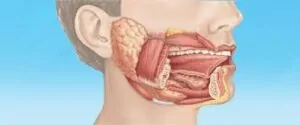
It can be either lower jaw (mandible) or upper jaw (maxilla) excision depending on the location of the tumor.
A. Lower Jaw (Mandibular) Excision/Mandibulectomy: It is the surgical removal of all or part of the lower jawbone. It can be of 3 types:
Marginal mandibulectomy: When the upper margin of the bone of the lower jaw is removed and the lower rim is kept intact. No reconstruction is usually required.
Segmental Mandibulectomy: When a complete segment of the lower jaw is removed. Reconstruction is required.
Hemimandibulectomy: When half of the lower jaw is removed. Reconstruction is required.
B. Upper Jaw (Maxilla) Excision/Maxillectomy: It is the surgical removal of all or part of the upper jawbone. It can be of 3 types:
Partial Maxillectomy: When a partial portion of the upper jaw is removed. No reconstruction is required.
Subtotal Maxillectomy: When the complete upper jaw is removed but the orbital floor is kept intact. Reconstruction is required.
Total maxillectomy: When the complete upper jaw is removed with a floor of the orbit. Reconstruction is required.
Initially, general anesthesia is administered by a very competent anesthetist and intensivist. A tracheostomy is done if required. A Ryles’s nasogastric tube is inserted through the nose, and a urinary catheter is placed for draining urine and monitoring. Jaw resection is done through an appropriate incision.
Reconstruction of both the lower and upper jaw is challenging, but reconstruction of the upper jaw is more difficult.
Reconstruction with Plate only: This is not done and advised by Dr. Amit Agarwal for individuals who are medically unfit for major surgery or have a poor prognosis.
Reconstruction using Bone Grafts: This technique is used in defects less than 3-4cm in length, but the soft tissues need to be in very good condition with a good blood supply. This is also not the best method of reconstruction as the chances of bone absorption and disappearance are very high.
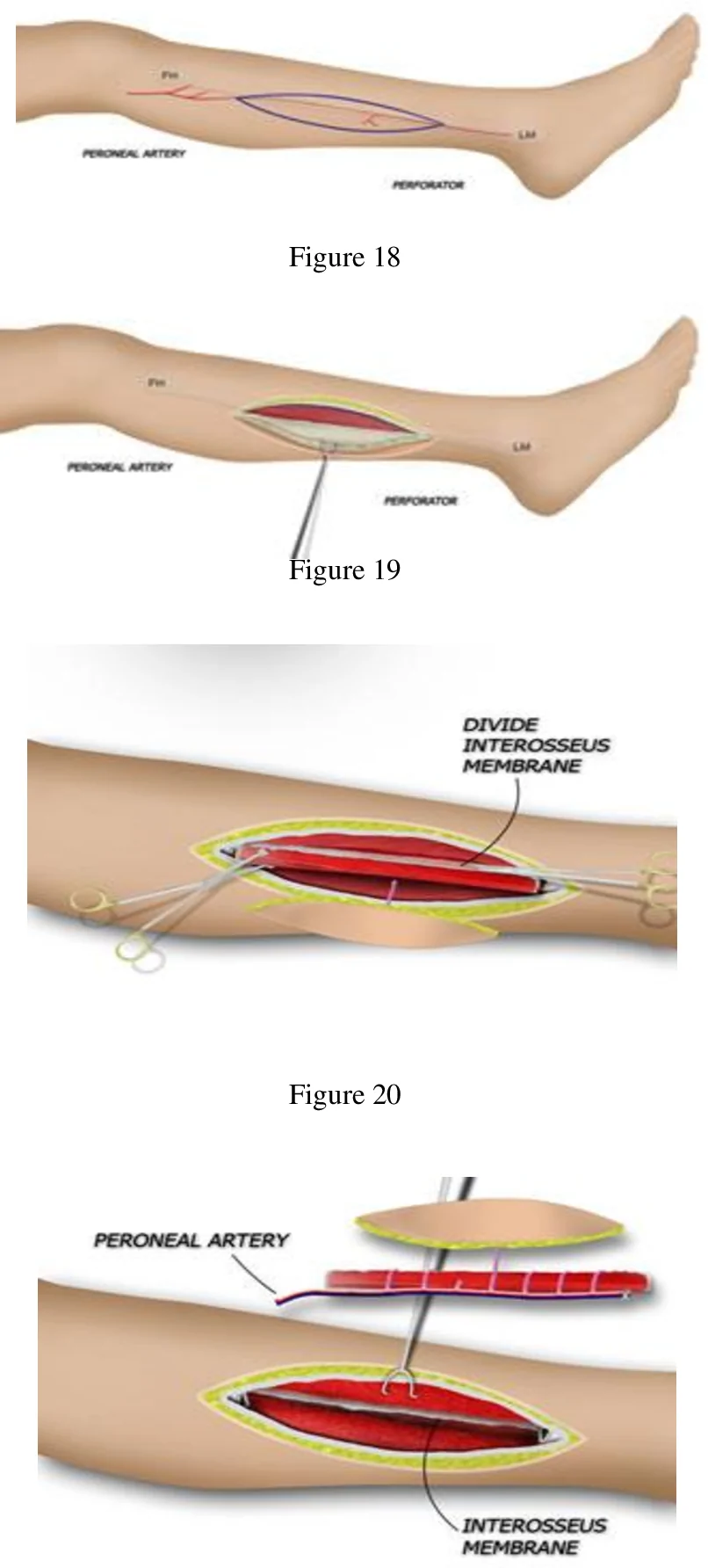
Reconstruction using Microsurgical Bone Flaps (Best method): Reconstruction using microsurgical bone flaps is the best method and is done by taking tissues and bone from the leg, Free Fibula Flap.
The fibula bone, which is the smaller one of the two bones present in the leg, can be used to reconstruct both the lower and upper jaw. The bone is harvested with its artery, vein, and skin. The flap is then transferred to the head and neck region. The bone is reshaped and is fixed with the remaining jawbone with plates. Skin and soft tissues taken with the bone are inset in the defect created after the excision, and the vessels are anastomosed at the recipient site with an appropriate artery and vein.
The donor site is covered with the help of a skin graft taken from the thigh.
Removing part of the fibula bone from the leg does not create any problem in walking or movements of the leg and foot.
Whether radiotherapy is given before planning reconstruction or not.
Post-operative recipient site complications.
Intraoral communication.
This surgery needs surgical expertise and a good working team. Dr. Amit Agarwal specializes in microsurgical reconstruction and has reconstructed innumerable jaws with free fibula bone.
The patient should be kept in ICU for a minimum of one to 2 days. There could be a possibility that the patient is kept on a ventilator for one day.
The flap is monitored frequently post-surgery.
The patient is kept on antibiotics, IV fluids, and analgesics for pain.
Head end elevation is to be maintained for the next 3 weeks. Ryle’s tube feeding will be given through the nose to bypass the mouth for healing of the sutures in the mouth if the oral mucosa is reconstructed with the jaw.
After the surgery, the patient is bedridden for 2-3 weeks. No ambulation is advised, and the limb has to be elevated by using pillows underneath. After several dressings, when the operated site is completely stable, the patient is given pressure garments, and ambulation is started.
Further treatment in the form of radiotherapy and/or chemotherapy depends on the final histopathology report.
The success rate of free fibula reconstruction is quite good, around 95% in the hands of Dr. Amit Agarwal. It means 95 out of 100 jaws are successfully reconstructed. The results of microsurgical reconstruction can be quite unpredictable as they depend on multiple factors like the status of blood vessels, the level of immunity of the patient, their health status, and protein levels to withstand the procedure.
Risks related to anesthesia. General Anesthesia is very safe in present times and with the best machines and a qualified anesthetist, the chances of encountering any complication are less than 1 percent in a healthy individual.
Risks related to Microsurgical reconstruction of flap techniques like thrombosis or blood clots in the vessels of the flap, re-exploration / re-surgery to remove these clots and flap failure are seen in less than 5 percent of cases.
Few patients develop some degree of skin slough or partial flap necrosis. This was more often the case in smokers, in people with multiple diseases, and also in patients having undergone anastomotic revision.
Oro-cutaneous fistula – there is a possibility of developing communication between the cavity of the mouth and the external skin through the sutures of the neck. The chances increase with advancing age, bad nutritional status, and disease of the patient. This can lead to catastrophic consequences if not treated in time. This might require revision surgery in terms of fistula closure.
Rare chances of infection which respond to prolonged antibiotic therapy.
Bleeding or hematoma formation can occur which might require drainage.
Poor wound healing because of poor blood supply of the flap. Seen more commonly in smokers, diabetes, hypothyroidism, and individuals with multiple comorbidities. Poor wound healing can lead to skin discoloration which can cause marginal or total skin necrosis.
Scars will be there along the incision line which will fade with time. Scars can get hypertrophied if you are prone to it.
Rare events of Deep vein thrombosis and pulmonary or cardiac complications can occur or precipitate in patients with multiple pre-existing diseases diagnosed or undiagnosed by routinely available standard tests.
Possibility of revision surgery in case of flap failure and graft loss.
Your treatment will be performed by board certified plastic surgeon. Schedule your appointment now!
Are you ready for a consultation?
Your treatment will be performed by board certified plastic surgeon. Schedule your appointment now!
A True Devotion to Healing
Where Compassionate Care Meets Advanced Medicine, Guiding You on the Path to Recovery and Well-being.
24/7 Patient Support
We understand that questions and concerns don’t have office hours. That’s why we offer round-the-clock support, ensuring you have access to the care and information you need, whenever you need it.
Premium Quality Materials
We commit to only using the highest-grade materials and the latest technology in your procedures. This commitment is our promise to you for superior outcomes and your utmost satisfaction.
Safety and Hygiene Promise
Your well-being is our top priority. Across our practice, we adhere to stringent safety and hygiene protocols, reassuring you of your safety and comfort at every step of your journey with us.
Privacy is of utmost importance to us. Rest assured, all your personal and medical information is handled with strict confidentiality.
TRUST
Our Surgeon is highly qualified and internationally certified with a team of skilled staff to perform any surgical or non-surgical treatment on your body.
SAFETY
Safety is our priority. We maintain stringent protocols to ensure a secure environment for all patients and staff members.
Breast augmentation and breast reduction are two very different procedures. Augmentation (breast enlargement) increases breast volume and alters shape, usually for cosmetic or reconstructive goals. Reduction removes breast tissue and skin to make breasts smaller and relieve symptoms. In general, augmentation is chosen by patients who want fuller, more symmetrical breasts (or as reconstruction after…
Rhinoplasty, commonly known as a “nose job,” is a surgical procedure to reshape the nose. It can be performed for cosmetic enhancement of appearance or for functional improvement of breathing (and often both). If you’re medically informed and considering rhinoplasty, it’s important to understand the types of rhinoplasty, what the surgery involves, and how the…
When diet and exercise don’t address certain stubborn fat deposits, liposuction can be a safe and effective solution—when chosen for the right reasons and in the right patient. As a commonly performed body-contouring procedure, liposuction reshapes specific areas of the body rather than serving as a weight-loss method. At Kayakriti Plastic Surgery & Dental Center…