
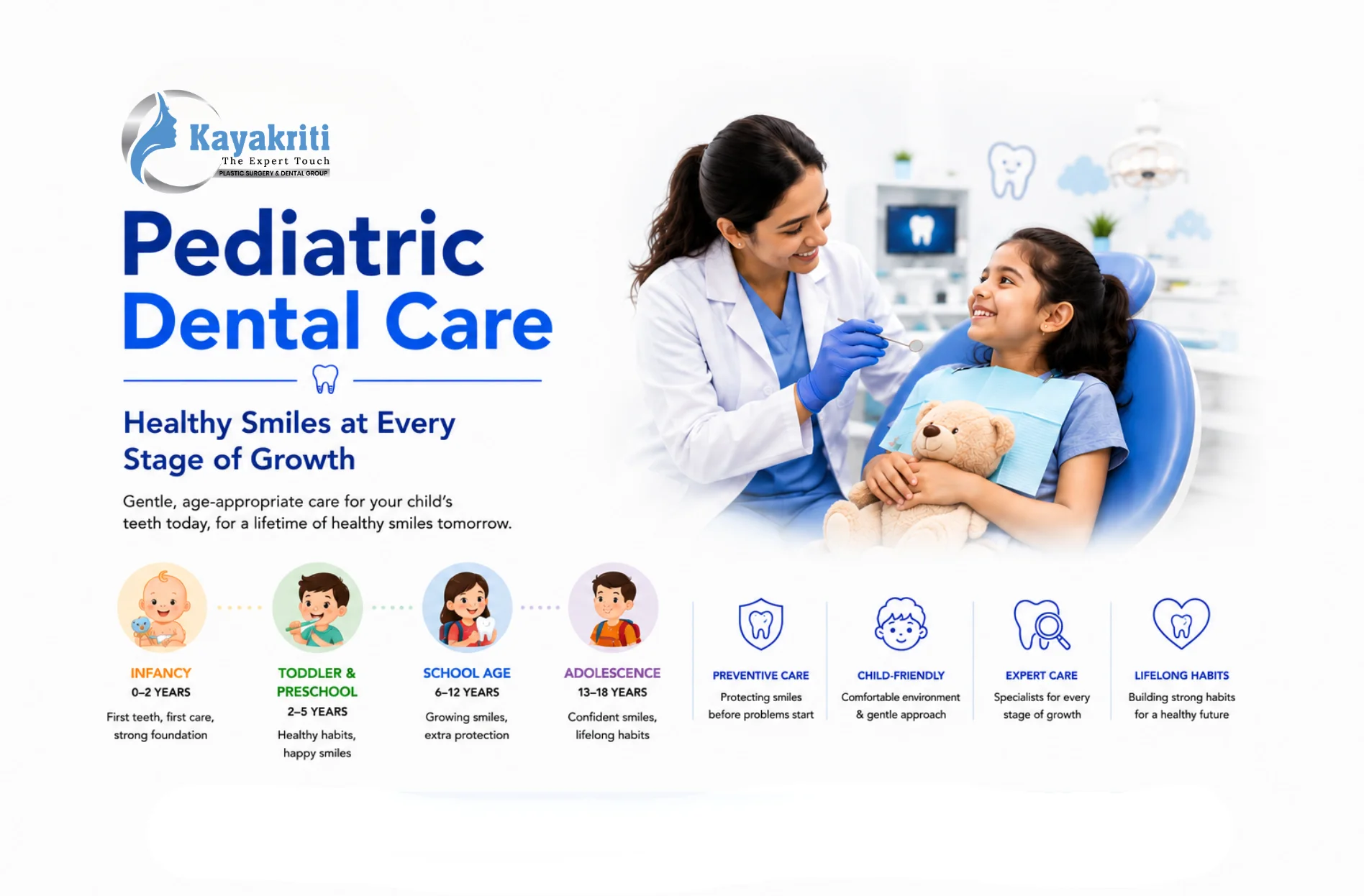

Learn how pediatric dental care changes as your child grows — from first teeth to teens. A stage-by-stage guide by Dr. Shweta Jain at Kayakriti, Lucknow.
A child's mouth changes dramatically between the first tooth and the last wisdom tooth, and the care needed to keep it healthy changes right along with it. The brushing routine that suits a toddler is not what a ten-year-old needs, and the habits that protect a teenager began years earlier. This is why pediatric dental care is best understood as a journey through stages rather than a single checklist — each age brings its own milestones, risks and simple wins.
This guide from Kayakriti walks parents through what children need at every stage of growth, from a baby's very first gum wipe to an adolescent learning to manage braces. You will learn how dental care needs shift with age, when to start dental visits, how to care for primary and permanent teeth, and which preventive steps matter most at each point. Written with input from the child-friendly dental team led by Dr. Shweta Jain, it is designed to make children's dentistry feel simple, calm and doable for busy families.
How Does Pediatric Dental Care Change as a Child Grows?
Pediatric dental care changes with each stage of childhood. In infancy, it focuses on wiping gums and caring for the first tooth; in the toddler and preschool years, on gentle brushing and primary teeth; during school age, on erupting permanent teeth and sealants; and in adolescence, on braces, wisdom teeth, and building lifelong oral hygiene habits.
Think of your child's dental journey in four broad phases. Each one has a clear focus, and understanding them helps parents stay one step ahead rather than reacting to problems. The rest of this guide unpacks each stage in turn, but here is the big picture:
-
Infancy (0–2 years): Cleaning gums, welcoming the first teeth and the very first dental visit.
-
Toddler and preschool (2–5 years): Establishing brushing habits, protecting all 20 primary teeth and easing off dummies and thumbs.
-
School age (6–12 years): Guiding the switch from baby to permanent teeth, sealing new molars and watching alignment.
-
Adolescence (13–18 years): Supporting independence, managing braces and wisdom teeth, and locking in lifelong routines.
Modern pediatric dentistry matches its advice to these developing needs, which is why age-appropriate, ongoing care is more appropriate than relying on one-off fixes. Consistent dental care for children at each stage builds strong teeth and, just as importantly, a positive, fear-free relationship with the dentist that lasts into adulthood.
Infancy (0–2 Years): Building the Foundation Before the First Tooth
Good kids' dental care begins before a single tooth appears. A baby's gums and emerging teeth set the stage for everything that follows, so small, gentle habits in the first two years pay off for a lifetime.
-
Caring for Your Baby’s Gums and First Teeth
Even before teeth arrive, wipe your baby's gums with a clean, damp cloth after feeds to clear away bacteria. The first tooth usually appears around six months. As soon as it does, brush twice a day using a soft, baby-sized toothbrush and a smear of fluoride toothpaste no bigger than a grain of rice. Teething can make babies fussy and drool more, but a fever or diarrhoea is not a normal part of teething and should be discussed with your doctor.
-
The First Dental Visit and Bottle Habits
Dentists recommend a child's first dental visit within six months of the first tooth appearing, and no later than the first birthday. Early visits are gentle, help children become comfortable in the dental chair, and let the dentist offer tailored advice. This stage is also where preventive habits matter most: never put your baby to bed with a bottle of milk or juice, as pooled sugars cause early childhood tooth decay, sometimes called baby-bottle decay. Simple, consistent oral hygiene for children at this age prevents painful problems later.
What Dental Care Is Recommended for Toddlers and Preschool Children?
For toddlers and preschool children, dental care means brushing twice daily with a rice-grain smear of fluoride toothpaste under age three and a pea-sized amount from ages three to six. Parents should supervise brushing, limit sugary snacks and drinks, encourage giving up thumb-sucking, and continue routine dental checkups.
Between the ages of two and five, your child gains a full set of 20 primary teeth, usually by around age three. These baby teeth are not just placeholders — they help your child chew, speak clearly, and hold space for the permanent teeth that follow, so protecting them is important. Here is what strong preventive dental care for children looks like at this stage:
-
Right amount of toothpaste: A rice-grain smear under age three; a pea-sized amount from ages three to six. Supervise brushing and teach your child to spit, not swallow.
-
Twice-daily brushing: Morning and before bed, for two minutes. Children need an adult's help until they can brush thoroughly on their own, usually around age six or seven.
-
Smart snacking: Limit sweets, biscuits, and sugary or fizzy drinks. Offer water and milk, and keep juice to mealtimes.
-
Easing off habits: Gently encourage giving up thumb-sucking and dummies by around age three, as prolonged habits can affect how teeth and the bite develop.
-
Regular visits: Keep up routine children's dental checkups so the dentist can track development and apply preventive treatments.
Making brushing playful – with songs, timers, or letting your child pick a toothbrush – can turn good dental care for children into a habit they enjoy rather than resist.
When Should Children Begin Getting Dental Checkups Regularly?
Children should begin regular dental checkups by their first birthday, or within six months of their first tooth appearing. After that first visit, most children benefit from a dental checkup every six months, so the dentist can track development, apply preventive treatments and catch any problems early.
Regular visits are the backbone of good pediatric dental care. A six-monthly rhythm lets the dentist spot early decay, guide brushing technique, monitor how teeth and jaws are growing, and build a trusting relationship so your child never learns to fear the dentist. Routine children's dental checkups also open the door to age-appropriate preventive treatments, including:
-
Fluoride varnish: A quick, painless coating that strengthens enamel and is proven to help prevent cavities in young children.
-
Dental sealants: A thin protective layer applied to the grooved chewing surfaces of back teeth, sealing out decay once the permanent molars arrive.
-
Cleaning and monitoring: Professional cleaning plus tracking of eruption, spacing and bite so small issues are managed before they grow.
If your child has a higher risk of decay, the dentist may suggest more frequent visits. Starting early and staying consistent is one of the most important investments in your child's oral health and a core part of quality pediatric dental services.
School Age (6–12 Years): When Primary and Permanent Teeth Share the Mouth
Around age six, a big transition begins. The first permanent molars push through at the back of the mouth, and baby teeth start to loosen and fall out in a fairly predictable order. For several years, your child has a mix of primary and permanent teeth — a stage dentists call 'mixed dentition' — which need a little extra attention.
This is a golden window for prevention. The new permanent molars have deep grooves that trap food and are highly prone to decay, so dental sealants are especially valuable now. It is also the ideal time to reinforce independent brushing and flossing and to introduce a mouthguard if your child plays contact sports. Many dentists suggest a first orthodontic assessment by around age seven, when it is easiest to spot and gently guide any alignment or bite concerns. This preventive focus is exactly where good pediatric dentistry proves its value, and strong oral hygiene for children during these years protects teeth that must last a lifetime.
What Should Parents Monitor When Permanent Teeth Start Erupting?
When permanent teeth start erupting around age six, parents should monitor whether baby teeth are falling out in the right order, watch for crowding or misalignment, and keep the new molars clean, as they are prone to decay. Any pain, delayed eruption, or double rows of teeth should be checked by a dentist.
As permanent teeth come through, a few things are worth keeping a close eye on. Catching these early keeps treatment simpler and gentler:
-
Order and timing: Baby teeth should loosen and fall out before or as permanent teeth arrive. Significantly delayed or very early loss is worth a dentist's review.
-
Double rows of teeth: If a permanent tooth erupts behind a baby tooth that has not fallen out (sometimes called “shark teeth”), have it checked.
-
Crowding and alignment: Watch for obvious crookedness, gaps or a bite that looks off, and mention it at your next visit.
-
Decay on new molars: Freshly erupted molars are vulnerable; keep them clean and ask about sealants.
-
Pain or swelling: Any persistent discomfort, swelling or difficulty chewing should be assessed promptly.
You do not need to diagnose anything yourself — simply noticing and reporting changes at routine children's dental checkups can help the dentist identify concerns at the appropriate time. This partnership between parents and the dental team is the heart of effective children's dentistry.
Adolescence (13–18 Years): Independence, Braces and Lifelong Habits
Teenagers own their routines — and their risks. Busy schedules, sugary and fizzy drinks, and snacking can raise decay rates just as appearance starts to matter more. Good dental care for children in the teen years is about supporting independence while keeping the safety net in place. Key priorities include:
-
Braces and aligners: Many alignment issues are treated now. Braces need careful cleaning around brackets and wires to avoid decay and staining.
-
Wisdom teeth: These usually appear from the late teens; the dentist monitors whether they are coming through cleanly or may need attention.
-
Sports and lifestyle: A custom mouthguard protects teeth during sport, and honest conversations about smoking, vaping and sugary drinks pay off.
-
Ownership of habits: Twice-daily brushing, daily flossing and regular checkups become the teen's own responsibility, with gentle parental support.
Establishing these habits before adulthood is one of the most valuable outcomes of consistent, stage-by-stage kids' dental care.
Age-Specific Preventive Dental Care: A Quick Parent’s Roadmap
If you remember nothing else, remember this stage-by-stage summary of preventive dental care for children:
-
0–2 years: Wipe gums; brush the first tooth with a rice-grain smear of fluoride toothpaste; first dental visit by age one; no bottle in bed.
-
2–5 years: Supervised twice-daily brushing (pea-sized paste from age three); limit sugar; ease off thumb-sucking; six-monthly check-ups.
-
6–12 years: Seal new molars; encourage independent brushing and flossing; consider an orthodontic assessment by age seven; use a mouthguard for sports.
-
13–18 years: Support brace care and wisdom-tooth monitoring; reinforce lifelong oral hygiene for children turning into adult habits.
Every child is different, so treat this as a friendly framework rather than a rigid rulebook. Your dentist will personalise it to your child's needs.
Why Parents in Lucknow Choose Kayakriti for Children’s Dentistry
Choosing the right dental home for your child is about trust, gentleness, and appropriate expertise. Kayakriti offers pediatric dental services in a calm, welcoming and child-friendly setting, so young patients feel at ease from their very first visit. As a well-regarded dental clinic in Lucknow, the centre is a natural choice for families seeking dependable, unhurried dental care for children.
-
Expertise Led by Dr. Shweta Jain
The dental practice is led by Dr. Shweta Jain — MDS, MBA (Hospital Administration) and PGDC in Cosmetic Dentistry — with more than 13 years of experience and a track record of caring for over 3,000 patients. A former lecturer at Saraswati Dental College, Lucknow, and Kasturba Medical College, Mangalore, she is known for a patient-centred, gentle approach that suits children especially well. Verifiable qualifications like these are an important signal of professional expertise in pediatric dentistry — far more meaningful than ratings alone.
-
The Reassurance of a Full Surgical Centre
Kayakriti is a plastic surgery and dental centre in Rajajipuram, Lucknow, home to a full surgical team led by Dr. Amit Agarwal — FRCS (Edinburgh), American Board Certified, MCh and DNB — and Project Director for Smile Train. This means that in rare, more complex cases, families have access to surgical expertise on site. Over 16+ years, the centre has cared for more than 15,000 patients across 150+ procedures, and it welcomes families with a free first video consultation – offering honest answers with no pressure.
Whether your child needs a routine checkup, a first visit or ongoing kids' dental care, you can explore the clinic's full dental services or read more about the children's dentistry offering online.
Conclusion: The Right Care at the Right Age
From a baby's first gum wipe to a teenager's braces, your child's smile passes through clear, predictable stages – and meeting each stage with the right habits can make a meaningful difference. That is the essence of pediatric dental care: not a single routine, but age-appropriate attention that grows alongside your child. When first teeth, primary teeth, permanent teeth and lifelong habits are each cared for at the right moment, healthy smiles become the natural result.
If you would like a trusted partner on that journey, the child-friendly team at Kayakriti Clinic, led by Dr. Shweta Jain, is here to help at every stage. As a caring dental clinic in Lucknow offering gentle, age-appropriate pediatric dental services, Kayakriti helps make children's dentistry an informed and more comfortable experience for the whole family.
Book a free consultation and give your child the confident, healthy smile that starts with the right care at the right age.
Disclaimer:
This blog is intended for general educational purposes only and is not a substitute for professional dental advice, diagnosis or treatment. Every child is different, so please consult a qualified dentist at Kayakriti for guidance tailored to your child’s specific needs.
Frequently asked questions
At what age should a child first see a dentist?
How often should children have dental checkups?
How much toothpaste should I use for my child?
Are baby teeth really that important if they fall out anyway?
What preventive dental treatments do children need?
What should parents monitor when permanent teeth start erupting?
When should my child first see an orthodontist?
How can I help my child build good oral hygiene habits?
How do I choose the right pediatric dentist in Lucknow?
Have a question about this?
Free first consultation with our FRCS-certified surgical team. No obligation. Totally confidential.
Book a consultation