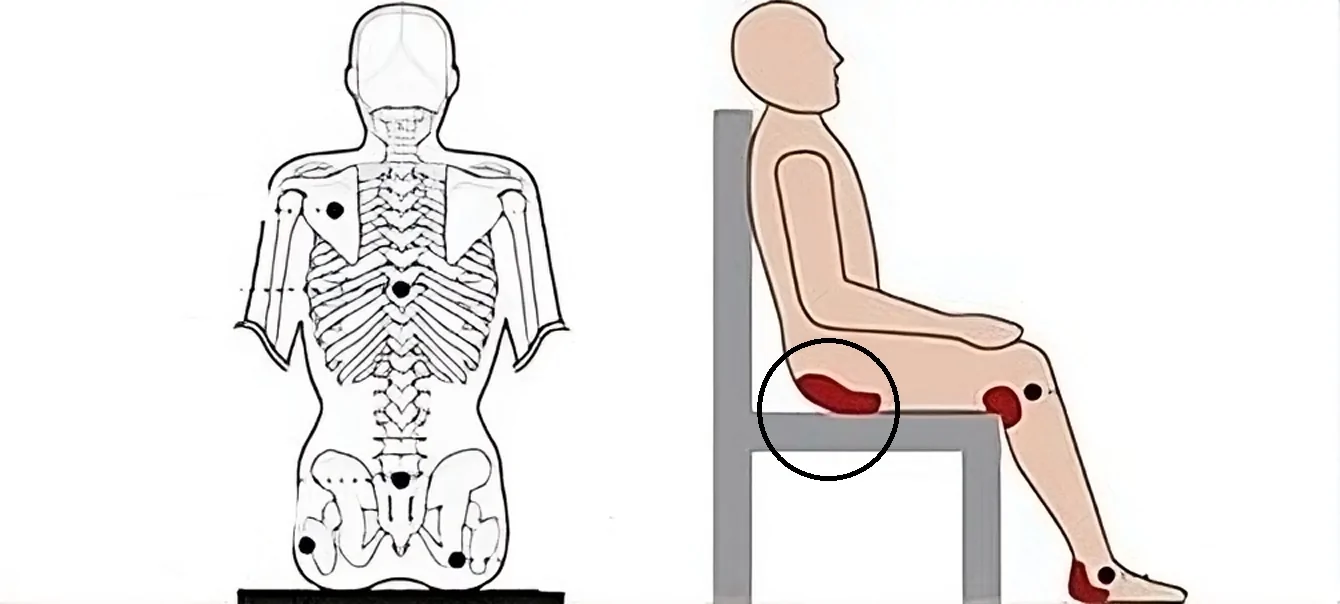
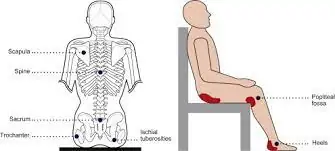
For Categories I and II:
Patients with Category I or II ischial bed sores may not require admission if other comorbidities and factors are well controlled. They are educated about wound management, and specific dressings are advised. Follow-up is typically scheduled every week initially, and later, once or twice a month for three months after complete healing.
For Categories III and IV:
Patients with Category III or IV ischial bed sores require hospital admission. A comprehensive evaluation of their nutritional status and surgical fitness is conducted. After admission, a pre-anesthetic checkup is performed. Clearances from specialists, such as neurologists, cardiologists, and physicians, are obtained to ensure surgical fitness. Once the patient is vitally stable and medically cleared, surgical correction is planned.
- Single-Stage Surgery: In most cases, a single-stage surgery is performed, involving proper debridement. The procedure includes the total excision of the bedsore , removal of the infected ischial bone, and closure of the defect with a flap in the same sitting.
- Local Flap Closure: Closure of the wound is typically achieved with local flaps, using the skin and soft tissue from the surrounding normal area. Common flaps used for closure include the banner flap, posterior thigh flap, gluteus maximus muscle flap with overlying skin, and rotation flap. Dr. Amit Agarwal offers a variety of flap options for the coverage of ischial pressure sores.
In cases where the wound is severely infected and requires further debridement or the patient is too ill to undergo flap coverage in the same sitting, two-stage surgery may be considered. In the first stage, debridement is performed, and Negative Pressure Wound Therapy (VAC) is applied for 5-7 days. After approximately a week, the VAC is removed. If there are no signs of active infection and the patient’s condition has improved, a flap cover surgery is planned for the second stage.