What are Jaw Tumors?
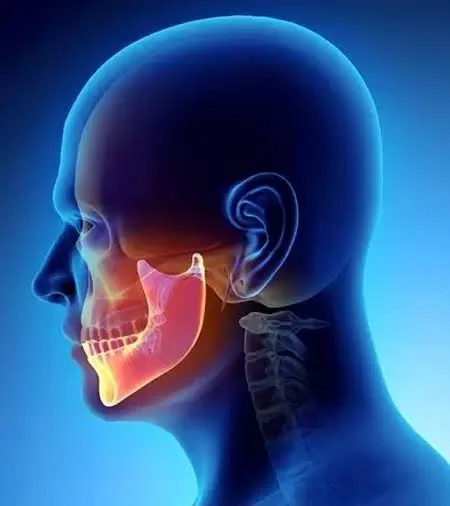
Jaw tumors refer to growths within the upper and lower jaw bones, which can be either benign or cancerous. These tumors often lead to significant discomfort, affecting functions such as eating, speaking, and swallowing.
Jaw tumors refer to growths within the upper and lower jaw bones, which can be either benign or cancerous. These tumors often lead to significant discomfort, affecting functions such as eating, speaking, and swallowing.
Procedure explainers, surgeon Q&A, and patient stories — straight from Dr. Amit Agarwal.
This video is for educational purposes only. Treatments are individualised according to each patient's condition and needs. Similar results cannot be guaranteed for every individual.
Jaw tumors refer to growths within the upper and lower jaw bones, which can be either benign or cancerous. These tumors often lead to significant discomfort, affecting functions such as eating, speaking, and swallowing.
Jaw tumors encompass various types, including Ameloblastoma, Aneurysmal bone cysts, and Giant cell tumors. Additionally, cancers like osteosarcoma, chondrosarcoma, and Ewing’s sarcoma can affect the jaws.
Common symptoms of jaw tumors include:
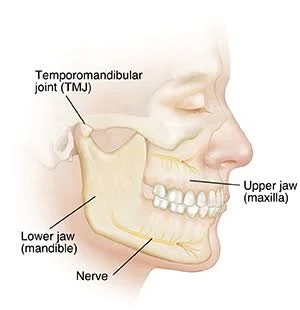
Surgical excision of a jaw tumor with the removal of a segment of the jaw can cause serious issues in the management of air passages of the person’s face. Other problems faced by the individual include difficulty in chewing, speech, and cosmesis.
After the removal of the jaw, it becomes imperative to restore the continuity of bone. Jaw reconstruction will also enable its functioning to allow a person to eat, swallow, and speak as before while giving the surgical site a more cosmetic appearance.
Jaw reconstruction is most commonly performed with the help of microvascular transfer of bone and soft tissue taken from the leg and fixed with reconstruction plates and screws. It is a highly specialized microvascular surgery procedure consisting of the harvest of a bone flap, shaping and fixation of bone, insetting of skin and soft tissues, microvascular anastomoses, and external skin closure.
Once the jaw is fixed with the bone flap, artificial teeth can be implanted into the bone after one year of the surgery. This will enable the patient to chew food from that side of the jaw and improve the cosmesis of their face and smile.
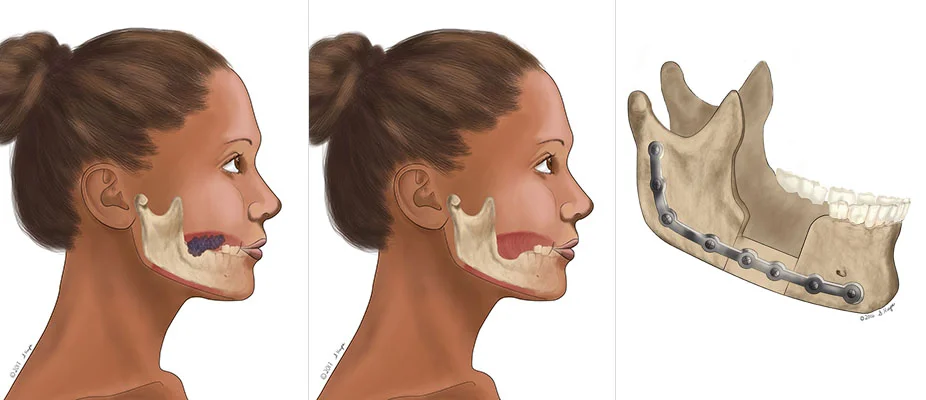
Jaw Reconstruction can be done at the time of jaw removal surgery or after a few months or years as a separate surgery.
Primary Reconstruction- This is performed at the time of the surgical excision of the tumor.
Secondary Reconstruction- This is performed as a separate procedure after the tumor removal.
Primary Reconstruction is the best treatment as it restores the structure and function rapidly, reducing the number of operations and the overall duration of stay in the hospital.
Jaw Reconstruction aims to restore the continuity of the mandible/maxilla, the height of bone-bearing teeth, reconstruct lower facial contours if the lower jaw is removed or midfacial contours if the upper jaw is removed, preserve the Temporomandibular Joint, and restore adjacent soft tissue defects.
During the consultation, Dr. Amit Agarwal focuses on:
Surgical excision of the tumor with the removal of the segment of the jaw, along with the reconstruction of the jaw, is done in the same sitting.
It can be either lower jaw (mandible) or upper jaw (maxilla) excision depending on the location of the tumor.
A. Lower Jaw (Mandibular) Excision/Mandibulectomy: It is the surgical removal of all or part of the lower jawbone. It can be of 3 types:
B. Upper Jaw (Maxilla) Excision/Maxillectomy: It is the surgical removal of all or part of the upper jawbone. It can be of 3 types:
Initially, general anesthesia is administered by a very competent anesthetist and intensivist. A tracheostomy is done if required. A Ryles’s nasogastric tube is inserted through the nose, and a urinary catheter is placed for draining urine and monitoring. Jaw resection is done through an appropriate incision.
Reconstruction of both the lower and upper jaw is challenging, but reconstruction of the upper jaw is more difficult.
The fibula bone, which is the smaller one of the two bones present in the leg, can be used to reconstruct both the lower and upper jaw. The bone is harvested with its artery, vein, and skin. The flap is then transferred to the head and neck region. The bone is reshaped and is fixed with the remaining jawbone with plates. Skin and soft tissues taken with the bone are inset in the defect created after the excision, and the vessels are anastomosed at the recipient site with an appropriate artery and vein.
The donor site is covered with the help of a skin graft taken from the thigh.
Removing part of the fibula bone from the leg does not create any problem in walking or movements of the leg and foot.
This surgery needs surgical expertise and a good working team. Dr. Amit Agarwal specializes in microsurgical reconstruction and has reconstructed innumerable jaws with free fibula bone.
The success rate of free fibula reconstruction is quite good, around 95% in the hands of Dr. Amit Agarwal. It means 95 out of 100 jaws are successfully reconstructed. The results of microsurgical reconstruction can be quite unpredictable as they depend on multiple factors like the status of blood vessels, the level of immunity of the patient, their health status, and protein levels to withstand the procedure.
Drag the handle to compare. All photos are real patients shared with consent.


Images shown are intended to provide general treatment insight only. Every patient is unique, and outcomes may vary depending on individual condition and treatment plan.
"Kayakriti Plastic Surgery & Dental Clinic is one of the best clinics — excellent doctors and a very professional team. The clinic is clean, well-maintained, and uses advanced technology. Doctors explain everything clearly and make you feel comfortable throughout the treatment. Highly recommended for both plastic surgery and dental care."
"My big brother had a critical accident in August 2025 — his right foot was injured badly. Thanks to Dr Amit, the plastic surgery was a great success and now he is walking on his feet. Dr Amit is polite, humble, and guided us like family."
"Dr Amit Agarwal is really a very good plastic surgeon — he operated on my leg. The treatment is really very good and the staff behaviour is very nice."
"Dr Amit Agarwal performed surgery for diabetic foot on my father. We were very troubled before going to him; after his treatment the condition is much better. He debrided all the infection and did grafting on the same."
"Dr Amit Agarwal operated on my patient for a congenital defect. A renowned plastic surgeon of Uttar Pradesh with excellent post-operative results. He explains every step of the treatment very nicely and is very determined towards his work."
"Dr Amit is very approachable, so it is easy to talk to him and ask all our queries. Before operating he explains the entire process with all the pros and cons. His staff is well-trained and well-behaved — I had a wonderful experience."
"Dr Amit Agarwal operated on my sister who got burnt two years back, leaving burn scars in her neck area. With the help of tissue expanders he has cured her scars to the utmost. Thank you sir for the treatment."
"Dr Amit Agarwal operated on my child for a congenital defect and has delivered brilliant results. We are completely satisfied with his treatment and recommend him to everyone."
"I consulted Dr Amit Agarwal for my son's gynaecomastia operation. His results have been very good — now my son is much more confident and comfortable with his looks after the operation."
"Dr Amit operated on my patient for a lip augmentation surgery to give her lips a proper cosmetic shape. The post-operative results are very good — she is very satisfied."
"Dr Amit Agarwal operated on my son for gynaecomastia. Due to the puffiness in his chest he felt very embarrassed in public. Thanks to Dr Amit's treatment my son feels much better aesthetically and has gained a lot of confidence about his looks."
"We consulted Dr Amit for cosmetic correction of my daughter's facial profile. He brought her upper jaw forward, surgically improving her appearance. It was a tough operation but the results are phenomenal — we are really satisfied with the look now."
"My son had his fingers joined since birth, causing a lot of functional problems. Dr Amit Agarwal performed syndactyly release on him. Now he is much better and there were no issues regarding post-operative complications."
"I got my rhinoplasty done under Dr Amit. The shape of my nose wasn't nice and my facial profile was getting hampered. Dr Amit elevated my nose to give it proper shape — now it is looking fine and I am very satisfied."
"Dr Amit Agarwal operated on my patient for deformed lips. He gave my patient a very aesthetic appearance and we are highly satisfied by the surgery. The cosmetic correction was successful with no complications."
"Dr Amit Sir is really a very good plastic surgeon — great nature, very cooperative staff, excellent scope for cosmetic treatment. Very happy and satisfied with the treatment. It really changed my life and enhanced my confidence."
"Dr Amit Agarwal performed cosmetic surgery on my nephew, who was facing a lot of issues with confidence due to gynaecomastia. After Dr Amit's treatment he is much better and has a boosted confidence level."
"I met a road accident two months back and my ring finger fractured. My orthopaedic doctor recommended Dr Amit for the joint fracture management. After he operated, my condition is much better."
"Dr Amit Agarwal operated on my patient for vascular malformation. He removed the complete swelling through an operation which went well and the results are good. The staff kept us well informed at every step and the whole process went smoothly."
"My patient wasn't satisfied with the aesthetic appearance of her lips. Dr Amit performed a lip augmentation surgery — it made her lips look more full and richer. She is very satisfied with the results."
"We were very troubled after my son met a road accident in which his jaw got fractured. Dr Amit confirmed the diagnosis quickly and proceeded for the surgery — through plating he joined the bones of the jaw and stabilised it. The condition now is much better."
"My brother is diabetic and hurt his leg; the wound was not healing for a long time. Dr Amit debrided all the infected part and covered it with a flap. The wound is now healed — we are lucky we got the correct treatment on time."
Personalised face injuries planning with our FRCS-certified surgical team in Lucknow.
Read morePersonalised facial fractures planning with our FRCS-certified surgical team in Lucknow.
Read morePersonalised oral cancer planning with our FRCS-certified surgical team in Lucknow.
Read morePersonalised parotid tumor planning with our FRCS-certified surgical team in Lucknow.
Read morePersonalised oral submucous fibrosis (osmf) planning with our FRCS-certified surgical team in Lucknow.
Read morePersonalised hemifacial atrophy planning with our FRCS-certified surgical team in Lucknow.
Read morePersonalised facial nerve palsy planning with our FRCS-certified surgical team in Lucknow.
Read moreOne free video consultation. Honest answers. No pressure.
or call us at +91 96 95 94 0009 +91 96 95 94 0006